Known as the Convention on Biodiversity, the agreement was announced after hectic negotiations early Monday towards the end of 15th UN conference on biodiversity in Montreal.


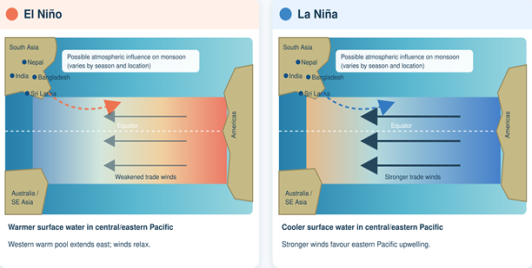
AI may genuinely extend the horizon over which seasonal climate risk can be estimated. For communities across South Asia living under the influence of the monsoon, a longer view could mean the difference between a farmer adjusting her planting in time and a family receiving a flood warning too late to act.
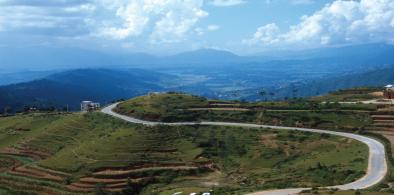
The broader lesson for South Asia is equally important. Hilly regions cannot be developed simply by transferring lowland infrastructure models into mountainous terrain. Investment has to respond to local economic systems, geography and environmental risks.

The UN's 2026 report warns that “long-term water use has exceeded renewable inflows and safe depletion limits,” leaving some water supplies beyond recovery. As the world’s largest groundwater extractor, India sits at the centre of this reckoning
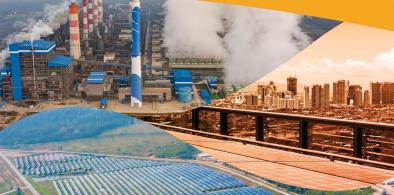
The larger economic choice for South Asia is therefore broader than whether to participate in carbon trading. The region can remain primarily a supplier of relatively inexpensive mitigation outcomes, or it can also develop the technology, professional capacity, financial products and verification systems that determine what those outcomes are worth.
Known as the Convention on Biodiversity, the agreement was announced after hectic negotiations early Monday towards the end of 15th UN conference on biodiversity in Montreal.
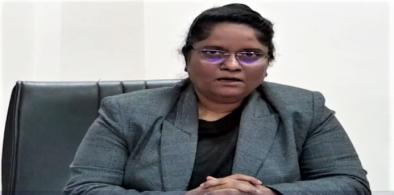
She said, “We the victims of 26/11 Mumbai attacks continue to wait for justice. As the sponsors of these dastardly attacks remain free even after 14 years. “Too many lives have been lost. Too many children have been orphaned”.
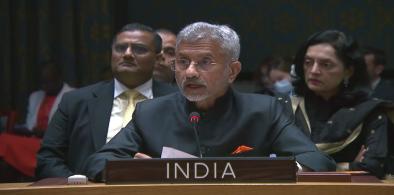
It is because about a decade ago when Sanaulah was a minister, Hillary Clinton who was visiting Pakistan warned him about terrorism and said that if you have snakes in your backyard, you can't expect them to bite only your neighbours because eventually, they will bite the people who keep them, Jaishankar said.
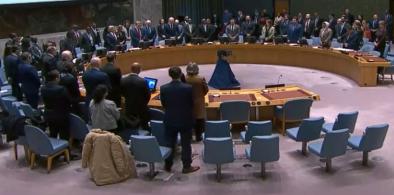
Before Jaishankar spoke, Anjali Vijay Kulthe, a nurse from Cama and Albless Hospital in Mumbai, told the Council about her face-to-face encounter with Pakistan-based terrorists on 26/11 and how she worked to save mothers, mothers-to-be and newborns at the medical centre.
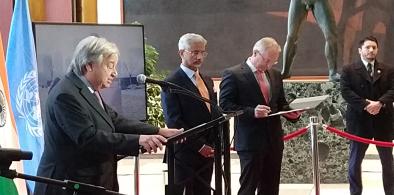
“Recognizing that diversity is one of India’s greatest assets, he strove for harmonious relations between religions, cultures and communities”, Guterres added.
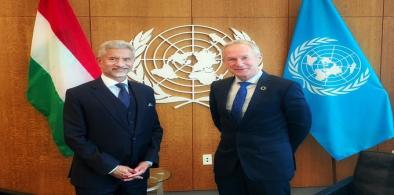
India is using its prerogative as the president of the Council – in the last month of its two-year elected membership – to take the long-delayed and contentious issue right to its chamber.
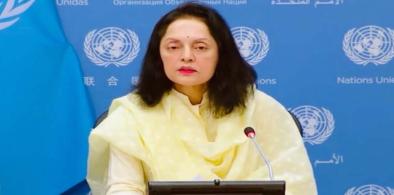
After abstaining, India’s Permanent Representative Ruchira Kamboj called the move a “mockery” of the UN sanctions on terrorist groups and warned, “Such exemptions must not facilitate 'mainstreaming' of terror entities in the political space in our region”.
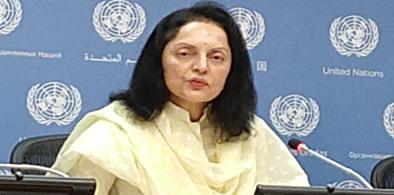
“We don't need to be told what to do on democracy”, she said here on Tuesday when an Italian journalist raised the criticism that press freedom was being eroded in the country.
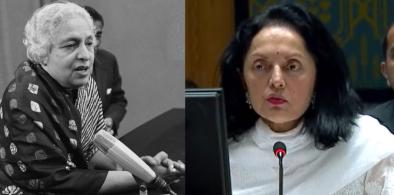
At the Security Council, Kamboj is the chair of its high-profile Counter-Terrorism Committee and organised in India a rare special session outside the headquarters to bring home the dangers of international terrorism.
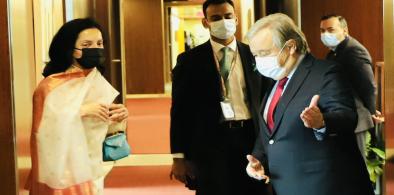
India last presided over the Council in August last year when T.S. Tirumurti was the permanent representative and before that in 2011 and 2012 during current Petroleum Minister Hardeep Singh Puri’s tenure as the envoy to the UN.
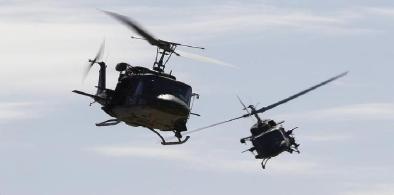
Several countries have pulled out of or announced plans to withdraw from the peacekeeping operations in Mali. MINUSMA is one of the deadliest operations having claimed the lives of 292 peacekeepers.
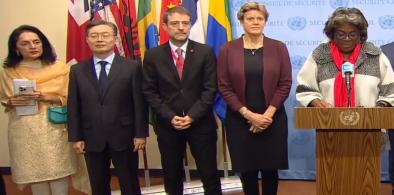
Kamboj’s mention of nuclear and missile technology proliferation putting India at risk is a reference to the well-documented swap of Pakistan's clandestine nuclear technology for North Korea's missile technology, although she did not name the countries.
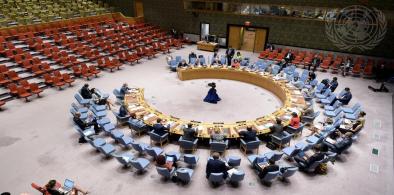
The paralysis of the Council, the UN’s highest decision-making body that is charged with taking action to end conflicts and ensure international peace, has brought a sense of urgency to the reform process.
We keep mentioning and talking about our unpleasant experiences often. They are also frequently important to bring focus on specific issues, but it is also equally important to speak about the good ones - ones that make you happy and amazed at the same time.
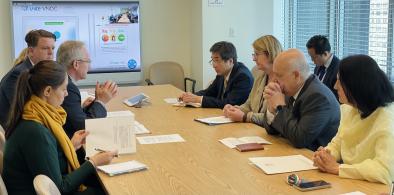
The barrier to UN reforms is a group of 13 countries led by Italy and which included Pakistan that has blocked the adoption of a negotiating text on which to base the discussion.