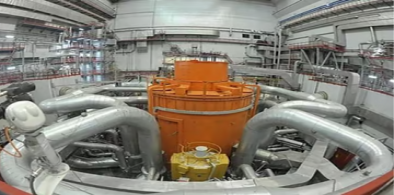


Kalpakkam fast breeder reactor

India's Fast Breeder Reactor: A Civilisational Bet on Nuclear Self-Reliance and Sustainability

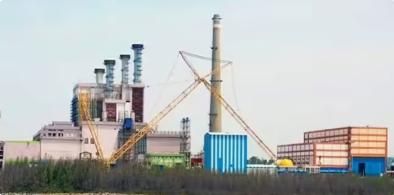
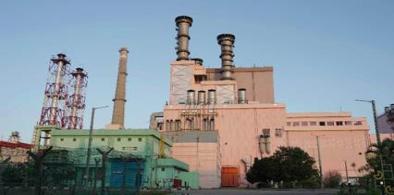
The reactor that has now gone critical at Kalpakkam, on the Bay of Bengal coastline in Tamil Nadu, is not the end of that journey. It is, more precisely, the end of the beginning. The real test is whether India can now scale fast breeder capacity rapidly enough to make a material difference to its energy-mix building on the Kalpakkam template, the industrial supply chains it has validated, and the engineering confidence it has earned. 

Dying Rivers, Disappearing Species: Zoological Cost of Pollution in Pakistan and India

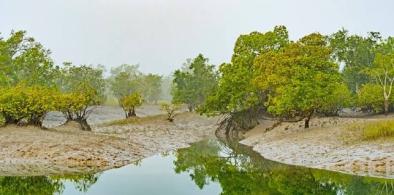
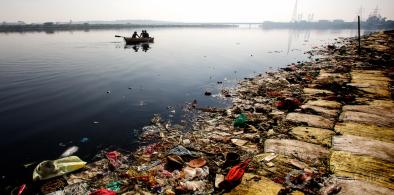
The Indus and the Ganges are dying slowly, and with them disappear species that evolved over thousands of years within these waters. If current patterns continue, future generations may inherit rivers that exist geographically but are biologically empty. South Asia still has an opportunity to reverse this trajectory, but only if environmental protection becomes a shared regional priority rather than an afterthought.

Climate Migration: The Next Global Humanitarian Crisis?

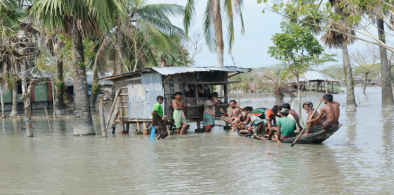
Climate migration isn’t just about the loss of land. It is about the loss of memory, culture and home. When people are driven out of the places where they were born, few things that matter are merely economic. Over the next decades, the world will confront a fundamental dilemma. Can humankind handle the climate crisis in a surer way? Or will the future consist of millions searching for a new place to call home?

India Should Scale up its Fast Breeder Reactor Program to Meet Rising Energy Needs

The constraint on India’s expansion is fissile inventory, particularly between 2035-2045. At present, the breeder program depends on plutonium from a limited set of eight unsafeguarded reactors. Meanwhile, India has accumulated spent fuel from uranium imported for its safeguarded reactors. This significant plutonium is lying idle because we lack safeguarded reprocessing facilities. 

More on Climate, Sustainability and Energy

The Strategic Importance of the NPT Review Conference: Critical Test of Global Nuclear Order

The 11th NPT Review Conference is a pivotal moment for the global nuclear order. Its importance lies not only in the specific outcomes it may produce but also in what it represents: a test of the international community’s ability to cooperate in the face of shared existential risks. Success would reaffirm the relevance of the NPT. Failure would deepen existing divisions, weaken the treaty’s credibility, and increase the likelihood of a renewed nuclear arms race.

Who will rescue the UN — will it be a “Madam SG”?

The choice of the next SG will determine whether the UN regains relevance or slides further into insignificance. A woman leader would not only break a glass ceiling; it would show the UN retains the capacity for renewal. A male candidate seen as a P5 compromise would confirm fears that global leadership remains a private club for the powerful.

Sri Lanka gets two-year respite at UNHRC; Colombo calls resolution intrusive, damaging to South Asia

A revised version presented on 1 October reflects the Western double standards and the continuous desire of the UNHRC to bend over backwards to please the West. The most shocking aspect is that the recommendations in the report were made without consultation with the Government of Sri Lanka. 

US reiterates claim it deescalated India-Pakistan conflict, but India affirms at UNSC it was resolved bilaterally

Op Sindoor was motivated by the Security Council statement on “the need to hold perpetrators, organisers, financiers and sponsors” of the Pahalgam attack accountable and it targeted terrorist camps in Pakistan and Pakistan-occupied Jammu and Kashmir, he said.

'World on fire': Buddha’s teachings can show the way

Rulers and decision makers must deter aggression and a calculated pursuit of violence in today's world” by nations “impelled by political goals such as territorial expansion or domination, or by deviant nonstate actors and terrorists who sow fear and destruction due to their deviant belief systems”, he said.

Kashmir is termed 'nuclear flashpoint' but we are responsible and do not want escalation, says Islamabad's UN envoy

When asked about the Mumbai 26/11 attackers who came from Pakistan and the presence of internationally declared terrorists like Hafiz Saeed, the mastermind of that attack, and even Osama bi Laden in his country, his response was: “You know this is the kind of discussion I would like to avoid”.  

Is UNSC convening a meeting on India-Pakistan tensions?

India on principle would be opposed to a meeting of the Council on the issue because it considers that disputes with Pakistan are bilateral matters under the 1972 Simla Agreement between its leaders and there should be no third-party involvement. However, the Council is empowered under the UN Charter to convene a meeting on the issue. 

Guterres urges India, Pakistan to avoid escalation in South Asia

Pakistan’s Defense Minister Khawaja Muhammad Asif told a TV outlet that there was “an immediate threat” of a confrontation

UNSC asks all countries to cooperate in bringing Pahalgam terrorists, backers to justice; Pakistan plays along

Pakistan, which is on the Council as an elected member, went along with the sentiments of other members in endorsing the statement, committing itself – at least on paper – to bringing those involved to justice

UN seeks dialogue with insurgent group to resolve Rohingya problem

Amnesty International has documented the massacre of about 100 Hindus by ARSA at Ah Nauk Kha Maung Seik in Rakhine State in August 2017. It said that there were other killings of Hindus and abduction of Hindu women whose lives were spared when they agreed to convert to Islam. The massacre of Hindus took place on August 17 before ARSA launched a coordinated attack on several Myanmar security posts on August 25, setting off retaliatory attacks by Myanmar forces on Rohingya.

India says ranting by Pakistan on Kashmir won’t justify cross-border terror; condemns religious discrimination in any form

In keeping with the day’s theme, Harish also said, “We stand united with the UN membership in condemning incidents of religious intolerance against Muslims”.  “With over 200 million of its citizens practicing Islam, India is home to one of the largest Muslim populations in the world”, he asserted. 

Guterres seeks to make world organisation relevant with ‘UN80 Initiative’

Guterres, in his letter and the address to the General Assembly, did not mention the reform of the Security Council whose structure is ossified in post-World War II geopolitics that shut out all of Africa, Latin America and most of Asia from permanent membership.

UN chief to show solidarity with Rohingya refugees in Bangladesh

“The plight of the Rohingyas is something that is extremely close to his heart”, having “dealt directly with the Rohingya crisis” while in that office, he said. 

US breaks with Western allies, turns world order on its head

India made six abstentions — that is not taking any sides - on the resolutions proposed by the US and by Ukraine as well as on one amendment moved by Russia to the Ukraine-sponsored resolution and on the three amendments sponsored by France and others to the US resolutions.

India retains title of world’s fastest-growing large economy in UN report

“GDP in Bhutan and Nepal is projected to grow by over 5 per cent in 2025, but the economy of Bangladesh is expected to slow following unrest in mid-2024 and lingering political uncertainty”, it said