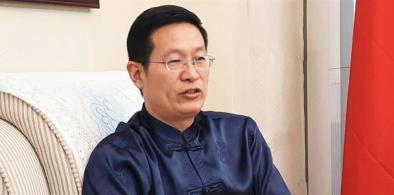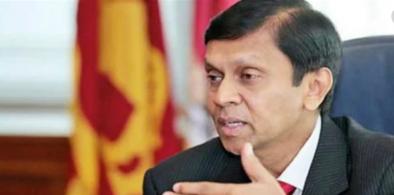
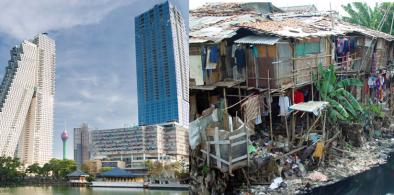

Maldivian Foreign Minister Abdulla Shahid, on Wednesday, said that strengthening the relations between Maldives and China is crucial for economic recovery
While low-level clashes may continue, the possibility of a large-scale conflict, as projected by recent U.S. intelligence reports, remains far-fetched. Both countries are acutely aware that they stand to lose far more than they can gain. Despite uneasy relations, several factors actively discourage conflict
The two incidents in India and Pakistan over the course of a week have shown that the coverage of terrorism by the Chinese media ecosystem largely reinforces the state’s foreign policy narratives and preferences for alignment in South Asia. Pakistan emerges as a clear preference for the public, which is reinforced by commentators and opinion makers on non-state news media platforms.
CPEC 2.0 is expected to serve as a major leverage tool for China to access Afghanistan’s untapped natural resources and enhance connectivity to Pakistan and Central Asia. However, for Afghanistan, the initiative may be more of a challenge than an opportunity. Countries such as Sri Lanka and the Maldives have already faced severe economic consequences from poorly structured Chinese-funded projects.
China's rise has, in the consensus view of most international relations scholars, fundamentally changed South Asia. The old, India-centric region is gone. Pakistan has tied its future to Beijing, seeing China as its ultimate guarantor. Bangladesh has played a smart game, using Chinese money for national development while maintaining its "friendship-to-all" foreign policy. The Teesta project shows Dhaka's new confidence in following its own national interest. For India, the challenge is immense, as it must now compete for influence in its own backyard.
Maldivian Foreign Minister Abdulla Shahid, on Wednesday, said that strengthening the relations between Maldives and China is crucial for economic recovery
Nepal's Foreign Minister Pradeep Gyawali on Wednesday said that there is no boundary dispute with China, referring to recent media reports that said China had encroached on Nepalese territory and built 11 buildings in Humla district on the Nepal-China border
The federal government has waived the guarantee fee on the Chinese loans being taken to construct two nuclear power plants in Karachi and also sought a report on the total outstanding employee-related liabilities of the Pakistan Steel Mills (PSM)
Chinese President Xi Jinping is relying on the United Front Work Department (UFWD)-a Mao-era contraption-to tighten his totalitarian grip on Chinas society and economy
After India, China is now embroiled in a fresh boundary dispute with Nepal in its remote Humla district that is close to the Nepal-Tibet border
A spontaneous protest erupted in front of the Chinese Embassy in Nepal's capital Kathmandu on Wednesday afternoon over encroachment of the Himalayan nation's territory by China in northwestern part of Humla district
Nepal and China are engaged in a boundary row in Humla after the Chinese side allegedly built 11 buildings in a remote part of the district that Nepal claims as its own territory
The National Command and Operation Centre (NCOC) on Tuesday announced that phase III clinical trials for the Covid-19 vaccine will be launched in Pakistan
India and China agreed to implement the consensus reached by their leaders over the border issue during the 14-hour-long diplomatic-military talks in Moldo to resolve border disputes, the Indian Army stated on Tuesday
Pakistan Prime Minister Imran Khan has said that the people in his country were keenly looking forward to welcoming Chinese President Xi Jinping, the media reported
China wants to build thousands of houses in Afghanistan, with an initial plan for an immediate construction of 1,400 residential units in Kabul
India and China held 14-hour long diplomatic-military talks in Moldo to resolve border disputes in Eastern Ladakh
Top Indian and Chinese military commanders will meet on Monday at Moldo to discuss the border dispute, especially in the Pangong Lake area, in eastern Ladakh, sources said. This would be the sixth meeting between two military commanders in the last four months
China has donated foodstuff including wheat and rice to the flood-affected people in Afghanistan, Afghan officials said
Afghanistan has signed a contract worth a whopping $2.2 billion with China to maintain original status of pine nuts and develops its markets globally