
Pakistan Agriculture

From Ecological Decline to Food Insecurity: Pollinator Loss has Long-Term Consequences for Pakistan Agriculture

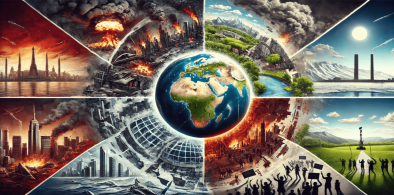
The decline of pollinators in Pakistan is not an isolated environmental issue. It is a structural signal of imbalance within agricultural ecosystems. It reflects how modern farming practices, if not carefully managed, can inadvertently weaken the very systems upon which they depend. The danger lies not in sudden collapse but in gradual erosion that goes unnoticed until productivity begins to decline in visible and irreversible ways.

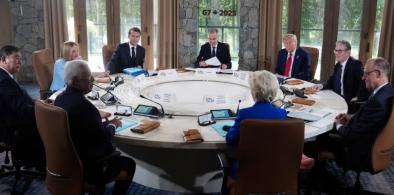
Gulf Crisis: Pakistan Hosts the Table; India Influences the Room (Part V)

India’s role in the Middle East crisis is defined not by presence at negotiation tables but by its ability to sustain stability around them.While Pakistan facilitates talks between the US and Iran in Islamabad, India underwrites the broader security architecture through its maritime presence, economic weight, and multi-aligned diplomacy.

Water Security and Regional Peace: Future of the Indus Waters Treaty in a Changing Climate

The Indus Waters Treaty has lasted more than 60 years, illustrating diplomacy's ability to handle one of South Asia's most sensitive resources. However, climate change and geopolitical tensions have called into question its significance. To guarantee that the treaty continues to prevent war and promote shared prosperity, Indian and Pakistani governments must update its provisions, invest in joint institutions, and view water as a shared strategic asset rather than a source of friction.

Iran at the Crossroads: In a Changing Region, Tehran’s Critical Choices Could Shape Change (Part IV)

Iran's demonstrated endurance to maintain its intrinsic rights to nuclear enrichment as an NPT state even under sanctions and its willingness to escalate without collapsing, is an important consideration for the Iranian regime. This issue was centre stage at the collapsed Islamabad negotiations. How Iran shapes its stand will be centre piece of future negotiations. 

More on Spotlight

Why peace continues to elude Manipur

The ethnic cleansing under Biren Singh’s watch broke all records – Kuki-Zo women paraded naked and subjected to mass rape publicly, with some token FIRs. This is also viewed as the reason why Prime Minister Narendra Modi has avoided visiting violence-stricken Manipur in the past 16 months.

India's patriarchal nightmare: The Kolkata horror, and illusion of justice

The Kolkata case is a stark reminder of the persistent failures of India's criminal justice system in addressing sexual violence against women. To truly address the issue of rape in India, there must be a holistic approach that includes legal reforms

Can a collaborative strategy work for South Asia's gold medal quest at the 2028 Olympics?

South Asia’s quest for gold medals at the 2028 Olympics requires a strategic and collaborative effort. By learning from the successes of sports legends like Michael Phelps and Caeleb Dressel, and addressing key areas such as infrastructure, coaching, and talent development, South Asia can enhance its Olympic performance.

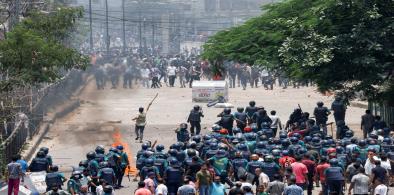
Bangladesh in the aftermath of a revolution: Need for political clarity to meet high expectations

The lesson from the Bangladesh protests reaffirm the fact that governments and their agencies should handle grievances of citizens promptly, with sincerity and fairness, or retributive justice will follow that is unhealthy for democracy. Currently, it is imperative for internal peace along with cultural safety to be restored in Bangladesh, or the nation will drift miles away from democracy.

Emerging practices in channelising green finance : Global learnings for South Asia

There is  a strong case to develop MVI for all countries of South Asia based on climate  and other vulnerability indicators so that  these countries could  access  and channelise green finance  to fulfil their SDG goals.

Democracy in transition: Bangladesh's political chessboard open to potential permutations and combinations

BNP’s push for early elections, Jamaat-e-Islami’s need for time to rebuild, the ambitions of smaller parties, and the rise of new political forces from the anti-discrimination movement all contribute to a highly volatile and unpredictable political environment. 

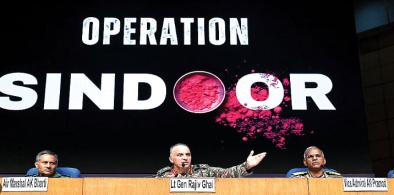
The arrest of former ISI chief echoes Pakistan’s continuing politico-military tussle

The reign of the "hybrid government" in Pakistan has ended with Gen Munir's military wresting its socio-economic and political control.  The arrest of the former ISI spymaster has been made into an example for those who dared act against the military. 

A tale of two Indias: The Ambani wedding highlighted the nation's yawning wealth disparity

The contrast between the Ambani wedding and the lives of millions of Indians struggling to meet basic needs is a stark indictment of this inequality. While the former was a celebration of excess, the latter is a grim reality marked by poverty, hunger, and lack of access to essential services.

Battle to dominate global communications: Pakistan should leverage US-China rivalry for national benefit

For South Asia, particularly Pakistan, this fragmentation poses challenges but also opportunities. Pakistan’s strategic investments in its digital infrastructure, supported by both Chinese and Western technologies, could position it as a bridge between these emerging digital spheres. By fostering regional connectivity and digital cooperation, Pakistan can mitigate the risks of fragmentation and ensure that its digital economy continues to thrive in a multipolar world.

Why climate change needs to figure more prominently in Indian political discourse

India needs to have a robust competitive framework where political parties ideate, brainstorm and debate on how to give more teeth to the Ministry of Environment Forest and Climate Change(MoEFCC), create bodies like the USA's EPA and ensure all environmental laws, disaster management work in tandem under the Gaia’s hypothesis highlighting the “One-Health Approach”.

The potential of regional social spending in India's soft power projection

Apart from being the largest country in the region in terms of geography and economy, New Delhi’s responsibilities as an important player in South Asia also rest on its efforts to improve the region's social and economic parameters. 

Challenges in building a new Bangladesh: Yunus has his work cut out

India offered unqualified support to Hasina over the last decade or so. For India, it will be a major challenge to see how it builds a relationship when a new democratic government emerges in Bangladesh. China had invested more in infrastructure in Bangladesh in the last decade or so; and the relationship was improving. But it did not interfere in domestic political issues.

The Kamala Harris story personifies rising Indian American aspirations in a changing America

M R Rangaswami, Silicon Vally entrepreneur, angel investor and philanthropist, and a community leader who founded Indiaspora, said: "I never thought in my wildest dreams that we would have an Indian American running for President of the United States but this is now a reality".

Hasina’s legacy: Stellar growth marred by political stagnation, stalled democracy

The considerable economic progress under Hasina's governance starkly contrasts with the stagnation in political reforms. Persistent issues such as limited press freedom, corruption, and inadequate improvements in democracy, rule of law, and human rights have marred her administration’s record

Bangladesh at crossroads: Expectations high from interim government on restoration of democracy

The interim government is led by civilian leadership. However, the extent of military control in this government remains unclear. According to some political observers, even if not officially present, the military will have a significant influence on this government.