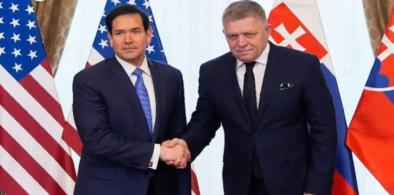

US Secretary of State Marco Rubio with Prime Minister of Hungary Viktor Orban.

New Civilisational Thesis of Western Renewal Risks Reviving Spectres of Colonialism and Racism

After Munich, Rubio travelled to Budapest and aligned himself warmly with Orbán’s government, praising Hungary’s trajectory. For European leaders committed to participatory democracy and the rule of law, the signal must have been disquieting. It suggested that Washington’s conception of Western solidarity may prioritise cultural homogeneity over liberal pluralism.

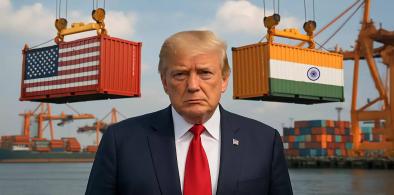
Trump’s Tariff Shock and India’s Export Reset: A Tech-Led Turn in the Making

The structural transformation of India’s export basket is no longer incremental—it is systemic. Technology-driven industries with higher value addition are steadily outpacing traditional sectors. If managed strategically, external tariff pressures could accelerate this transition. Rather than viewing tariff hikes solely as a threat, India can leverage them as a catalyst for deeper integration into global supply chains and stronger positioning in high-technology manufacturing. The reshaping of India’s export architecture is already underway. The tariff shock may simply fast-forward the process.

AI Encounters in Indian Higher Education: In Search of Humans in the Loop

Considering the potential of AI in solving complex questions and generating contents in individual writing styles, institutions need to ask a few fundamental questions - what is the role of academia in ensuring that the learners are not being slaves to AI, but masters who are aware of the potential bias and hallucinations that has a huge impact on knowledge acquisition and dissemination?  Should it be a social responsibility of higher educational institutions to ensure meaningful curriculum and assessment practices which make learners future ready in such a rapidly changing AI era?

Cryptocurrency and the Emergence of a Parallel Financial Architecture in South Asia

Recent global adoption indices confirms that South Asia has become one of the most dynamic regions for cryptocurrency engagement, with implications for remittance use. According to the 2025 crypto adoption index by Chainalysis, India secured the top position worldwide in overall crypto adoption across retail usage, reflecting pervasive grassroots digital activity. Pakistan and Bangladesh also feature prominently, with Pakistan ranking among top three in Asia and Bangladesh within top 20

More on Spotlight

BRICS and the Shifting Sands of Global Power: Can it Evolve into a Credible Counterweight to Western Dominance?

BRICS represents more than just an economic grouping; it symbolizes the emergence of agency in the Global South. For too long, the contours of the world order were drawn in the boardrooms of Washington, London, and Brussels. That era is drawing to a close.

India's Trade Hesitancy Can Undermine Global And Regional Standing

A sharp 60% drop in Chinese rare earth exports this April disrupted Indian electric vehicle manufacturing—highlighting just how brittle alternative supply routes still are. Despite diplomatic friction, India lacks the industrial depth to delink quickly from China

Is Bangladesh Showing Signs Of Economic Recovery?

It may be a little too early to declare economic recovery, but certainly the growing forex reserve, remittance inflow, and surging exports are symptoms of the recovery that Bangladesh is aiming for. Bangladesh appears on the right track, though many other challenges remain.

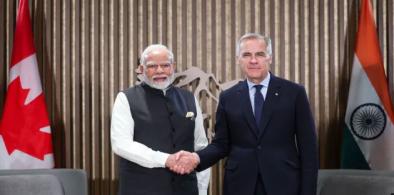
India’s Strategic Embrace of the Global South: Modi’s Outreach to Africa and South America

Modi’s tour is, therefore, more than a series of diplomatic engagements; it is a declaration of India’s readiness to lead, collaborate, and contribute to shaping a just and inclusive global order. By leveraging historical ties, cultural affinity, technological strengths, and political goodwill, India is expanding its diplomatic footprint across the Global South.

The Billionaire Dilemma: Can Wealth Creation and Social Responsibility Coexist?

The future of the South Asian region depends on building economies that are not just fast-growing, but fair. Ethical entrepreneurship and public oversight must go hand-in-hand. If the billionaires of today wish to be remembered not merely as tycoons, but as visionaries, their empires must rest on more than wealth. They must rest on justice.

Water, Trust, and Turmoil: Spectre of Water-Security Arms Race in South Asia

With Pakistan's legal challenge still underway and India building hydro-assets and fortifying its strategic position, a dangerous legal and diplomatic standoff is brewing. Simultaneously, China's upstream ambitions introduce a parallel set of water-power dynamics that could dictate the future of Himalayan water governance. 

When Storytelling Crosses Borders: Sultana Siddiqui on her TV series on ‘blasphemy’ violence in Pakistan

Sultana Siddiqui has always strongly favoured the inclusion of cross-border talent in Pakistani and Indian cultural productions. She has participated in various bilateral conferences and meetings, including those organised by Aman Ki Asha (Hope for Peace), a joint platform initiated in 2010 by the two biggest media groups of India and Pakistan respectively.

Andhra Pradesh and Karnataka can lead a new chapter in Indian para-diplomacy

The post-1991 era of economic liberalization catalyzed a paradigm shift in India's federal structure, empowering states like Andhra Pradesh and Karnataka to engage in para-diplomacy and craft their global economic narratives. Their early success in leveraging IT-led growth demonstrated the transformative potential of subnational diplomacy. 

Across South Asia Slum Dwellers Are Deprived Of Their Human Rights

Eviction of slum dwellers in South Asian nations cannot merely be dismissed as collateral damage of urban development and anti-encroachment drives. They reflect a larger, alarming trend of displacement of the urban poor and gross violations of their dignity and human rights.

South Asian Women To The Fore In Peacebuilding And Crisis Response

South Asian feminist voices are calling for a shift from tokenism to transformation. The path forward lies in institutionalising women’s participation across diplomatic, security, and environmental policymaking. Whether it’s building back peace in Sri Lanka, safeguarding water rights in the Indus basin, or protecting Rohingya women refugees in Bangladesh, South Asia’s feminist peacebuilders are not just responding to crises; they are redefining what peace means.

50 years of Emergency: Have any lessons been learnt?

The fateful March 1977 election vindicated Indian democratic traditions and proved the triumph of freedom over bread.  Ballot after regular ballot has shown that just because a man is poor and maybe cannot read does not mean he does not care for his liberty and human rights.

Israel and the 'Clash of Civilizations': The Case for a Muslim Nuclear Security Framework

The time has come to reject the mythology of civilizational war. It is time to reclaim the principles of sovereignty, multilateralism, and international cooperation. And it is time to imagine and construct a new security architecture for the Muslim world

Shifts And Realignments In India-Bangladesh Ties Post-Pahalgam

Had these events occurred during Sheikh Hasina’s tenure, Dhaka would likely have expressed solidarity with India and endorsed its right to self-defense. The current posture highlights a broader strategic shift under the interim leadership, raising questions about the future trajectory of India-Bangladesh security cooperation.

‘Himalayasia’: Reimagining South Asia beyond Mistrust and Division

The very name ‘Himalaya’ comes from two Sanskrit words Hima (snow) and Alaya (abode), a classical language of South Asia. The term 'Himalayasia'—comprising two names Himalaya and South Asia—does not privilege any one nation and is free from colonial discourse; it centers on a natural feature that has shaped the region’s ecology, mythology, and philosophy for millennia.

Global Carbon Tax Lessons for South Asia’s Green Transition

While carbon taxes are a key instrument in the climate policy toolkit, their limitations in the face of inelastic demand and global regulatory fragmentation suggest that complementary measures are essential. Subsidies for clean energy and research offer substantial emissions reductions while encouraging innovation and preserving economic competitiveness.