The rise of the Cockroach Janta Party is not only the rise of yet another protest group. It is testing how India's democratic system is secure enough to accommodate and to be questioned by the very same generation who will take over from it.


The young need not become another opposition. They could become an independent democratic force that questions every government but belongs to none; that protests when necessary but constructs continuously; that demands accountability from institutions while practising accountability itself.
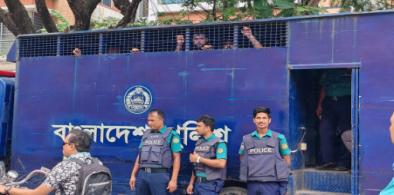
To what extent has the current BNP government been able to realise the vision that drove the 2024 mass uprising in Bangladesh? Will the BNP government, too, manipulate state mechanisms and law enforcement agencies to serve its own interests, much like the previous Sheikh Hasina regime, to suppress the opposition and silence critics? The government must therefore take serious steps to amend police laws and prevent deaths in police custody. This is one of the crucial reforms facing the administration.
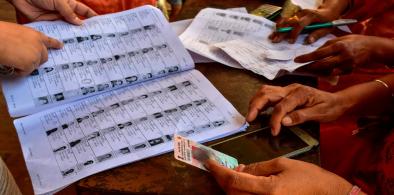
The Commission's authority rests ultimately on public confidence. Like Caesar's wife, the Election Commission must be above suspicion. It should welcome scrutiny and answer legitimate questions, especially when millions of voting rights are involved.
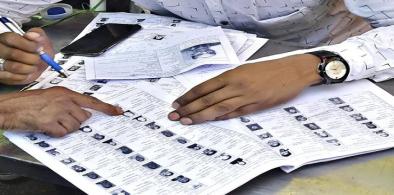
If the government and EC are confident, the answer is not a counter-letter but transparent data: a district-wise, gender-wise audit of deletions, restorations, reasons – all details to be placed on affidavit, as Lokur panel demands.

The rise of the Cockroach Janta Party is not only the rise of yet another protest group. It is testing how India's democratic system is secure enough to accommodate and to be questioned by the very same generation who will take over from it.
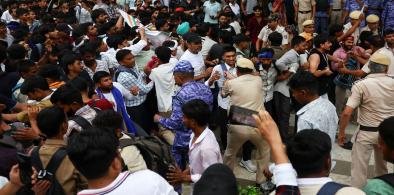
The Republic does not need a police force that teaches citizens to fear the State. It needs a citizens' police that gives them reason to trust the Constitution. Because the young person standing behind the barricade is not an enemy of the Republic. Sometimes, he has travelled more than a thousand kilometres simply because he still believes enough in Indian democracy to show up.

As Sri Lanka relies heavily on indirect taxes, even government (short term) efforts to stimulate economic activities will automatically reduce the living standards of low and middle income households. This is because any increase in economic activity results in a disproportionate increase in taxes.
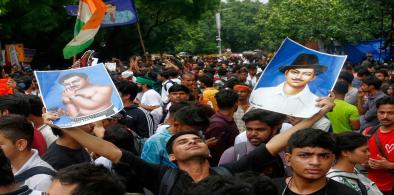
The sheer visual impact of the brutality of July 20 Jantar Mantar police action revealed yet again a society in profound ferment. It is not clear whether the government of Prime Minister Narendra Modi realizes the lasting damage such unbridled brutality does to India’s image. Irrespective of the merit of the cause of the protest—and it is obvious that this one is grounded in a legitimate cause—government at every level in India desperately needs to completely transform policing.
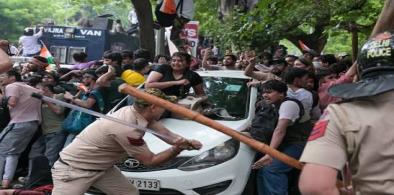
Democracy is not just about voting every five years. Democracy is about the ability to look your government in the eye and say “you are wrong” — without fear of being beaten for it.And yes, July 20 was a sad day for democracy. It was sad to see brutal force used against young citizens. It was sad to see the Delhi Police behave in a manner that shames the uniform.

Data from India's ministry of road transport and highways show that road crashes claim around 175,000 lives each year, with pedestrians bearing a disproportionate share of the toll. In 2024, as many as 36,526 pedestrians were killed, representing 20.6 per cent of all road fatalities.
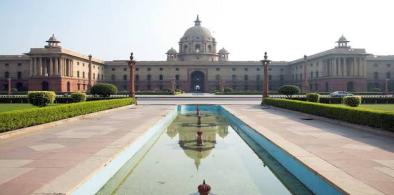
India must also deglamorise its bureaucracy. Bureaucrats occupy oversized office spaces, are allotted luxury housing, use oversized vehicles, get large numbers of support staff and personal assistants who work like personal valets and concierges. Political leaders across the globe carry their own bags. Here bureaucrats get servants to have their boots polished. This must clearly stop forthwith.
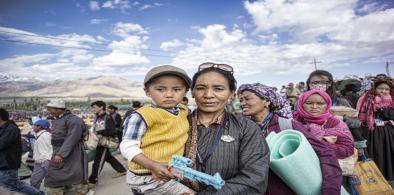
Few regions in India have such an extensive and layered system of representation. Ladakh is therefore not merely creating new councils. It is building a new model of governance based on geography, identity, participation and national interest. It is taking democracy beyond the main towns
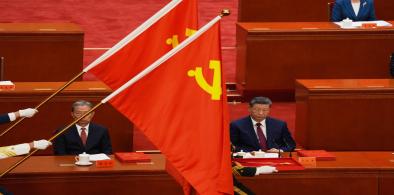
From the Indian perspective, the extraterritorial jurisdiction clause directly implicates the Tibetan exile community residing in India, potentially exposing CTA officials, Dharamsala based researchers and Tibetan advocacy networks to a Chinese claim of jurisdiction.

The Ahmedabad verdict should not be viewed merely as the culmination of one terrorism trial. It represents the maturation of India's institutional capacity to confront terrorism through both security and law. Over the past two decades, India has steadily strengthened its counter-terrorism architecture

The revival of shipbuilding has become a central pillar of national policy, extending across defence, commerce and industrial development. Indian shipyards today construct aircraft carriers, submarines, destroyers, offshore patrol vessels and a wide range of commercial vessels.
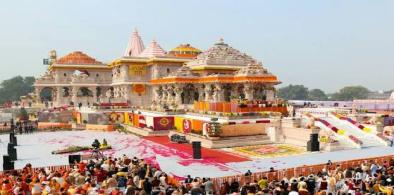
The scandal at Ayodhya is not a new low really. It is all too expected as the slippery slope of a journey focused only on the ends without caring for the means. The collapse at Ayodhya is thus a logical culmination of a system of leadership, governance and capture of power that believes in and lives by the edict that results matter and how we get to the results does not.
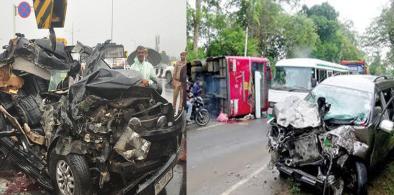
The core data architecture — a national road safety data lake, AI-powered enforcement, multilingual public awareness — is replicable at any scale, in any South Asian language, in any South Asian urban or rural road environment. The technology does not need to be reinvented for Dhaka, Kathmandu or Karachi. It needs to be validated in Colombo and Delhi first.
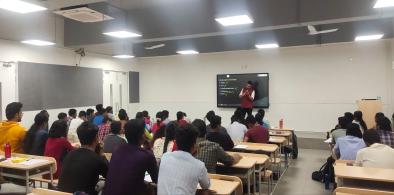
The deeper problem is India’s graduate unemployment crisis. Millions of young graduates are not working, earning or acquiring experience, but preparing for competitive exams. The government job has become a lottery ticket; the coaching class has become a waiting room
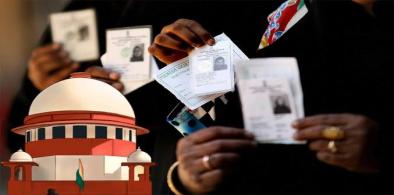
India is neither Nazi Germany nor Myanmar, and historical comparisons should never be employed simplistically. However, comparative political sociology reveals a recurring lesson: when citizenship becomes tied to ideological notions of national authenticity, minorities disproportionately bear the burden of proving belonging.