The Himalayas Need a Common Language of Warning

The Himalayas Need a Common Language of Warning: Emergency Cooperation Must be Institutionalised Into Durable Regional Architecture

A genuinely regional approach could eventually include - besides Nepal, China and India - Bhutan and, where relevant, downstream institutions in Bangladesh. Organisations with established Himalayan expertise, particularly the International Centre for Integrated Mountain Development in Kathmandu, could offer scientific and institutional support.

The Himalayas are Sending a Warning: Need for Timely Trans-Border Sharing of Environmental Information

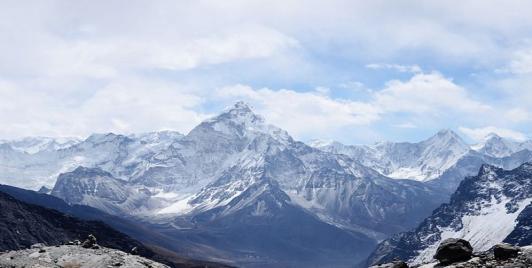
The Himalayas are not collapsing because humanity exists, but humanity is creating a warmer world in which the Himalayas are becoming less predictable. The real question is no longer whether climate change will alter the mountains. It already is. 

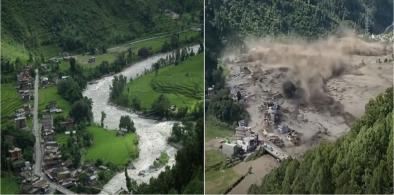
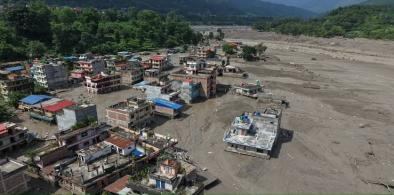
When an Entire Village and Bazaar in Nepal Disappeared in an Instant

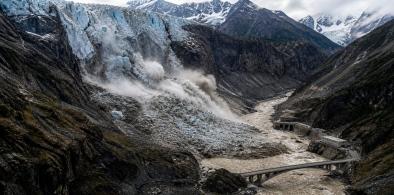
My eldest aunt was swept away. So was her son, my dai Madhu, and his wife. My other aunt — gone too, they told me. Her grandson Sijan and his wife, caught in the same water. His own son and daughter-in-law, unreachable, unaccounted for. My maternal uncle had gone out that morning to cut grass for the cattle. He never came back.

When the Mountain Moved: Nepal's Bhote Koshi Disaster and the Case for AI-Driven Early Warning

No technology can stop an avalanche. But the tragedy of events like Wednesday's is that the fatal interval between the trigger high in the mountains and the flood wave reaching villages downstream  is often 20 minutes to a few hours. That window is exactly where artificial intelligence, coupled with sensors and satellites, earns its keep.

More on Climate, Sustainability and Energy

China's growing clout at UN powered by its growing contributions

China pays almost 120 million to the annual budget of WHO the second highest contributor and has the third-largest voting power at the World Bank based on its shareholding. Beijing has made a concerted effort to have its nationals head international organisations,  and the West later organised a pushback.

'Delhi Declaration symbolises UNSC determination to fight terrorism': ISIS posing growing threat in South Asia

The report noted that the Dae’sh - or ISIS - has threatened to attack India’s diplomatic mission in Afghanistan. It said that the Dae’sh “remained a significant terrorist threat in Central and South Asia, and the group retained ambitions to conduct external operations” and that “it had positioned itself as the primary rival to the Taliban and was reportedly set to portray the Taliban as incapable of providing security in the country”.

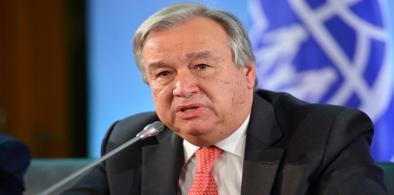
Guterres warns of dark days for the world; calls on G20 to come up with economic stimulus for Global South

Focusing on the Abrahamic faiths, Guterres said, “antisemitism, anti-Muslim bigotry, the persecution of Christians, racism and white supremacist ideology are on the march”, but left out the attacks on and threats faced by minorities belonging to religions like Hinduism, Sikhism and Bahaism.

India will remain world’s fastest-growing economy with 5.8% growth; overall South Asia outlook poor

For South Asia as a whole, the report said the region’s “economic outlook has significantly deteriorated due to high food and energy prices, monetary tightening and fiscal vulnerabilities” and it forecast a 4.8 per cent growth year and 5.9 per cent next year. 

Countries using cross-border terrorism should be held accountable: India alludes to Pakistani actions at UNSC

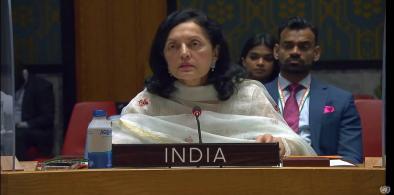
“The application of rule of law at the international level should protect the sovereignty and territorial integrity of States from aggression, including terrorism, and including cross border terrorism”, Kamboj said. The remarks were directed at Pakistan, but without mentioning it by name.

South Asians ‘15 times more likely die from climate change impact’: UN head

Guterres also brought up the issue of the international debt burden faced by some countries, notably Pakistan, which he called “a victim of the manmade disaster of a morally bankrupt global financial system”.

India’s leadership at UNSC draws wide praise from an array of nations

This month External Affairs Minister presided over two high-level meetings of the Council covered by India on reforming multinational organisations including the Council and on fighting terrorism, both of which have proved popular.

India sides with China, Russia to abstain on UNSC resolution on Myanmar

The complex situation in Myanmar requires “quiet and patient diplomacy”, Kamboj said. The welfare of the people of Myanmar is of “utmost priority” and at “the core of our efforts” there, she said.

UN chief says adding permanent members to Security Council ‘now seriously on the table’

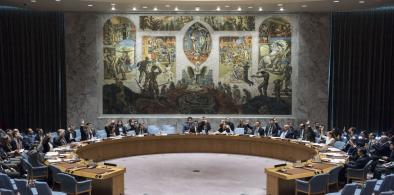
India is pressing for Council reforms, which have stalled for decades, and lobbying for a permanent seat. As its president this month, India convened a ministerial-level meeting of the Council on reforming the UN which put a spotlight on the Council’s basic architecture of permanent membership mired in post-World War II geopolitics which has changed dramatically in 75 years.

A War of the Vermin at UN - after ‘peace pact with nature’ in Montreal

Known as the Convention on Biodiversity, the agreement was announced after hectic negotiations early Monday towards the end of 15th UN conference on biodiversity in Montreal.

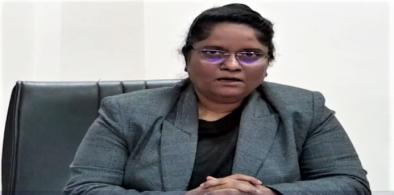
'I shiver even today': Valiant Mumbai nurse recounts to UNSC 26/11 night of hospital terror

She said, “We the victims of 26/11 Mumbai attacks continue to wait for justice. As the sponsors of these dastardly attacks remain free even after 14 years. “Too many lives have been lost. Too many children have been orphaned”.

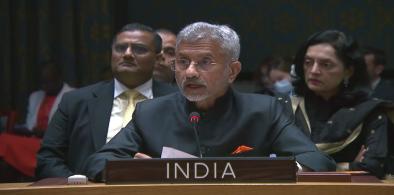
Pakistan must clean up its act, can't fool world any longer: Jaishankar

It is because about a decade ago when Sanaulah was a minister, Hillary Clinton who was visiting Pakistan warned him about terrorism and said that if you have snakes in your backyard, you can't expect them to bite only your neighbours because eventually, they will bite the people who keep them, Jaishankar said.

‘We cannot let another "9/11 of New York” or “26/11 of Mumbai" happen again’: Jaishankar hits out at ‘double standards’ of China, Pakistan

Before Jaishankar spoke, Anjali Vijay Kulthe, a nurse from Cama and Albless Hospital in Mumbai, told the Council about her face-to-face encounter with Pakistan-based terrorists on 26/11 and how she worked to save mothers, mothers-to-be and newborns at the medical centre.

Gandhi sculpture unveiled at UN HQ; hailed for vision guiding world body

“Recognizing that diversity is one of India’s greatest assets, he strove for harmonious relations between religions, cultures and communities”, Guterres added.

India to preside over high-level ministerial meeting for Security Council reforms

India is using its prerogative as the president of the Council – in the last month of its two-year elected membership – to take the long-delayed and contentious issue right to its chamber.