“Recognizing that diversity is one of India’s greatest assets, he strove for harmonious relations between religions, cultures and communities”, Guterres added.

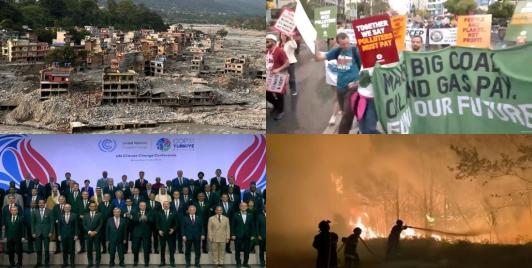
Nepal, along with Bhutan and Kyrgyzstan, has formally called for mountain and climate change to be added as an agenda item in the COP31 process. Bangladesh, India, and Pakistan are set to push for more climate grants, greater support for adaptation, and faster access to loss and damage funding.
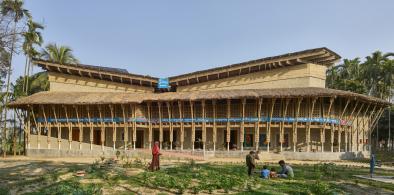
The global community is currently searching for viable ways to address the effects of climate change; the women of the Bengal delta have been engaged in a silent, yet persistent economic revolution that provides a proven, empirically supported model for other vulnerable countries around the world.
The September agreement by the Pakistan PMO gives these decisions a home: one partner leads research and evidence, the other brings delivery through its four pillars - education, employment, engagement and environment - and its Digital Youth Hub and nationwide Youth Development Centres, with private-sector partners expected to create internship and employment pathways.

Antalya's final decisions will matter. So will the credibility of finance, the protection of vulnerable communities and the direction of the energy transition. But the deepest test is whether COP31 leaves countries with more capacity to implement what they have promised.
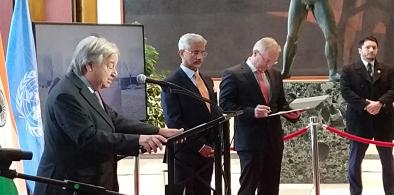
“Recognizing that diversity is one of India’s greatest assets, he strove for harmonious relations between religions, cultures and communities”, Guterres added.
India is using its prerogative as the president of the Council – in the last month of its two-year elected membership – to take the long-delayed and contentious issue right to its chamber.
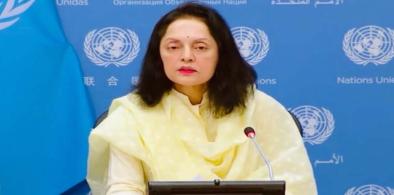
After abstaining, India’s Permanent Representative Ruchira Kamboj called the move a “mockery” of the UN sanctions on terrorist groups and warned, “Such exemptions must not facilitate 'mainstreaming' of terror entities in the political space in our region”.
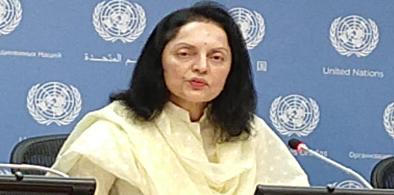
“We don't need to be told what to do on democracy”, she said here on Tuesday when an Italian journalist raised the criticism that press freedom was being eroded in the country.
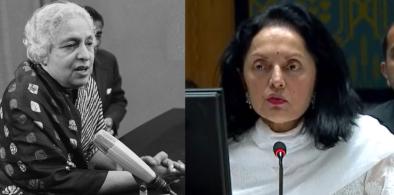
At the Security Council, Kamboj is the chair of its high-profile Counter-Terrorism Committee and organised in India a rare special session outside the headquarters to bring home the dangers of international terrorism.
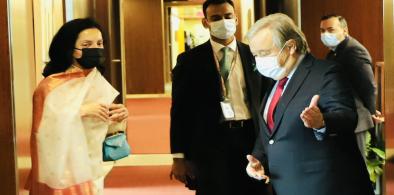
India last presided over the Council in August last year when T.S. Tirumurti was the permanent representative and before that in 2011 and 2012 during current Petroleum Minister Hardeep Singh Puri’s tenure as the envoy to the UN.
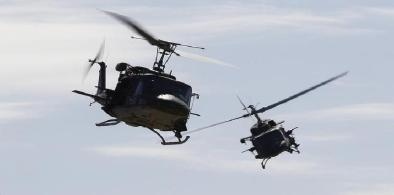
Several countries have pulled out of or announced plans to withdraw from the peacekeeping operations in Mali. MINUSMA is one of the deadliest operations having claimed the lives of 292 peacekeepers.
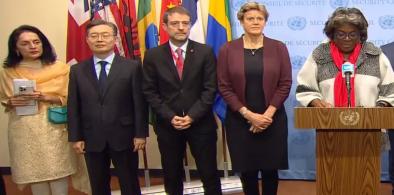
Kamboj’s mention of nuclear and missile technology proliferation putting India at risk is a reference to the well-documented swap of Pakistan's clandestine nuclear technology for North Korea's missile technology, although she did not name the countries.
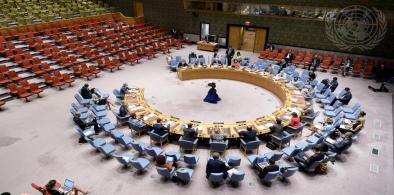
The paralysis of the Council, the UN’s highest decision-making body that is charged with taking action to end conflicts and ensure international peace, has brought a sense of urgency to the reform process.
We keep mentioning and talking about our unpleasant experiences often. They are also frequently important to bring focus on specific issues, but it is also equally important to speak about the good ones - ones that make you happy and amazed at the same time.
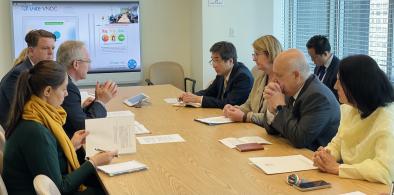
The barrier to UN reforms is a group of 13 countries led by Italy and which included Pakistan that has blocked the adoption of a negotiating text on which to base the discussion.

This was at least the 11th time India had abstained on a substantive resolution at the Security Council and the General Assembly involving Ukraine.

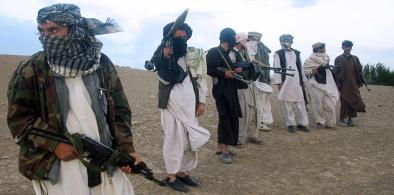
An Amnesty International investigation found that “up to 99 Hindu women, men, and children” had been massacred by ARSA fighters, who also abducted Hindu villagers in August 2017 in Myanmar’s Rakhine State.

A small group of countries - which includes Pakistan - have so far blocked the reform process by preventing the adoption of a negotiating text which has meant that the IGN functions without a proper agenda or a record of the negotiations.

US and India have asked the Security Council committee dealing with sanctions on the Islamic State and al-Qaeda along with affiliated groups like the L-e-T to impose sanctions on Mahmood, who runs its international operations.