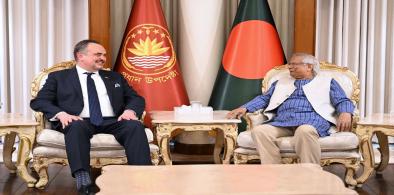
Sri Lanka has hosted two strategically important leaders from the region, President Mohamed Muizzu of the Maldives and Vietnamese President Tô Lâm, signaling

Two Visits and Strategic Signalling: Sri Lanka at Focal Point of Indian Ocean diplomacy

Nearly 80% of Asia’s energy imports and a large portion of global container traffic move through the Indian Ocean. With conflicts in the Middle East, disruptions in the Red Sea, and increasing great-power competition, freight security has become a strategic economic issue. Sri Lanka is positioning itself not merely as a recipient of investment, but as a regional connector between South Asia, Southeast Asia, and island maritime states.

One Year of Operation Sindoor: India’s Message of Strength and a New Normal

Military analyst Cooper argued that beyond battlefield outcomes, the operation exposed Pakistan’s inability to deter Indian strikes or mount a damaging counter‑response. He suggested the psychological impact of India’s operations triggered panic within Pakistan’s leadership, eventually driving Islamabad to seek international intervention.

Pakistan Needs Integrated Maritime Strategy: Fragmentation Carries Strategic Costs

Pakistan’s maritime domain offers multiple avenues for economic and strategic expansion. However, these remain underdeveloped. Coastal tourism has potential but lacks infrastructure and regulation. Offshore energy, including wind and tidal sources, remains largely unexplored. Marine biotechnology is another emerging sector with minimal investment. These gaps reflect a broader issue: the absence of long-term strategic planning

Climate Migration: The Next Global Humanitarian Crisis?

Climate migration isn’t just about the loss of land. It is about the loss of memory, culture and home. When people are driven out of the places where they were born, few things that matter are merely economic. Over the next decades, the world will confront a fundamental dilemma. Can humankind handle the climate crisis in a surer way? Or will the future consist of millions searching for a new place to call home?

More on Spotlight

Regional flux: India Can Help Shape New South Asian Order

Yet, no matter how effectively India strengthens its regional partnerships, the enduring challenge of Pakistan and rising Chinese influence cannot be overlooked. Geopolitical churn may reshape alignments, but Islamabad’s propensity for misadventures continues to demand vigilance, alongside engaging in backchannel diplomacy.

Demographic Dividend: Why South Asia Is Not Able to Fully Reap It

Demographic data show South Asia’s working-age population rose from 66.7% (2019) to 67.9% (2024), while the share in high-income countries fell from 65.6% to 64.7%. South Asia’s vast diaspora can further strengthen the region by leveraging knowledge networks, remittances, and investment flows.⁸

Taliban Delegation’s India Visit: A New Chapter in Indo-Afghan Engagement

New Delhi recently received an official delegation from the Taliban government, led by Afghanistan’s Acting Foreign Minister — the first such visit since the formation of the Islamic Emirate in 2021

Dhaka–Delhi Trade Frictions: Call For Urgent Reset And Regional Cohesion

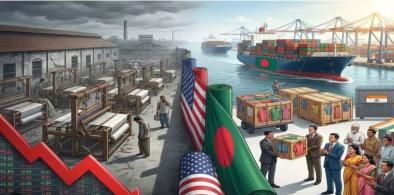
If trade tensions intensify, they could unravel years of progress in regional connectivity and energy integration. The same border that once symbolized shared progress could become a faultline of friction. Safeguarding these gains requires renewed dialogue, predictability, and partnership. Trade must be the foundation, not the faultline, of the Dhaka–Delhi relationship.

The Gen Z Revolt: Youth-led Political Upheavals in South Asia

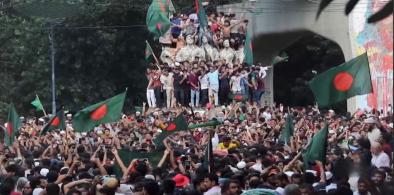
The movements in Sri Lanka, Bangladesh, and Nepal are a powerful reminder that South Asia's political landscape is being reshaped. A new generation, technologically savvy and politically aware, is unwilling to accept the status quo. The challenges are immense, but the opportunity for a more democratic, prosperous, and just future for the region is undeniable.      

India’s Taliban Gamble: Why Keeping Americans out of Bagram Is Critical For Regional Stability

As Afghanistan struggles to rebuild, Bagram stands as both a scar and a lesson, a reminder of how intervention failed and how fragile independence can be. For India, backing the idea that no foreign power should return to that base is a way of saying the region must take responsibility for its own peace. 

Engaging With The Taliban: India’s Soft Power Offers An Alternative Template For Cooperation

The time has come for New Delhi to consider formally recognizing the Taliban as Afghanistan’s legitimate government. The downsides are minimal; the strategic dividends substantial. Engagement would not mean endorsement of ideology but acknowledgment of geopolitical reality.

Should India be seen deferring to the Taliban?

Taliban’s human rights record, particularly its regressive misogynistic policies are well known. No doubt developing relations with Taliban is a geostrategic requirement. But why did India have to ban women reporters from attending the joint press conference by the two foreign ministers? 

A Reset in the Making? Modi, Trump Reboot India-US Trade Ties

The Modi-Trump conversation may appear transactional, but its implications are strategic. If the trade agreement concludes by November, it could mark a turning point, redefining not just tariffs, but the trajectory of India’s global engagement.

Post-Hasina Bangladesh : Perils and Promise of a Crossroads Nation

The Yunus-led interim government appears, at present, to be leaning toward China. That makes sense in the short term: Beijing offers quick cash, infrastructure projects, and military hardware without raising questions about democracy or human rights. Yet the government’s near-total neglect of India is strategically reckless. Geography cannot be wished away

Trump’s Tariff Gambit: Will It Make Global South Emerge Stronger?

Far from isolating Russia, weakening China, or bending India and Brazil to Washington’s will, Trump's policies are uniting the Global South in ways unthinkable just a decade ago. They are creating new supply chains, strengthening regional blocs, and forcing nations to embrace economic self-determination.

Can China Circumvent Washington’s Containment Policy? South Asia New Frontline Of Great-Power Rivalry

For now, Washington still holds the advantage at sea. Its fleets and bases across the Indo-Pacific keep Malacca under watch, reminding Beijing that maritime power remains America’s strongest card. But on land, China is advancing incrementally, building assets and leverage that could at some point tilt the balance. The contest between the American thalassocracy and China’s continental reach has only just begun. 

New Delhi's Taliban Tilt: Afghan Women Bitter Over Muttaqi Visit To India

While there would be several strategic reasons for India to invite Muttaqi to India, New Delhi’s decision is being seen by women of Afghanistan as a betrayal. Under the Taliban’s misogynist edicts, women have been deprived of most human rights, including the right to education and assembly, reduced to faceless entities in the background where the world appears to have forgotten they exist.

Can India’s New Potato Centre Feed and Unite South Asia?

India is the world's second-largest producer and consumer of potatoes, with 51.30 million tons harvested in 2020. China leads the way, producing 78.24 million tons of potatoes in 2020. Together, the two nations account for more than one-third of global potato output (359.07 MT).

Mishandling Ladakh: Is Wangchuk Being Scapegoated?

The politico-corporate nexus in India is a reality; corporates are given prized land since they substantially fund elections, because of which enormous bank loans given to them are written off periodically. In 2020, the government allotted 150 sq km of Ladakh pasture land to corporates with no safeguard to locals, who fear this may increase further, aggravating climate change and adversely affecting ecology.