Representational Photo

Crunch Point For World Cricket: Power Politics And Double Standards Unfairly Rob Bangladesh Of Participation

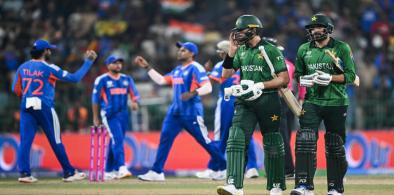
Ultimately, Bangladesh’s absence from the 10th edition of the T20 World Cup was the result of the BCCI’s ego and the ICC’s double standards where power politics and selective decision-making outweighed fairness and sporting integrity. Although many view the Pakistan Cricket Board’s support for Bangladesh positively, in reality it is also a strategic move to counter India for its own strategic benefit. If the match is boycotted, Bangladesh will suffer even greater financial and administrative losses. 


Jaish-e-Mohammed's Female Brigade: ISI-Backed New Jihadi Units Intensify Counterterrorism Challenges in South Asia

Unlike earlier jihadist cells dominated by Pakistani nationals, this unit deliberately recruits women from Indonesia, the Philippines, Uzbekistan, and other foreign countries. Reason behind recruiting non-Pakistani nationals serves a dual purpose: it complicates attribution and shields Pakistan’s security apparatus from direct accountability. Such operational sophistication reflects ISI’s continued role not merely as a passive enabler but as an active architect of jihadist adaptation.

Securing The Digital Frontier: A Unified Call For Cybersecurity In South Asia

South Asia has the potential to be a global digital leader. It has a young population and a booming tech industry. However, this potential will only be realized if the region is secure. We must treat cybersecurity as a pillar of national security, just like border defense. This requires better technology, smarter laws, and stronger regional ties. The digital threats of 2026 are fast and complex. To meet them, South Asia must be faster and more united. The time to build a collective digital shield is now, before the next major crisis occurs.

Aid, Ports, And The Limits of Incrementalism: What India’s Budget Says About Its Foreign Policy

Yet the strategic costs are real. Reduced engagement in Bangladesh risks ceding influence at a moment when Dhaka is actively diversifying its partnerships. Hesitation over Chabahar weakens India’s leverage in Iran and Central Asia and underscores its vulnerability to US pressure even as it seeks a more multipolar foreign policy. The 2026–27 Budget does not signal a dramatic shift in Indian foreign policy. There is no abandonment of neighbours-first rhetoric or of connectivity-led diplomacy. What it reveals instead is a narrowing circle of feasible economic action.
 

More on Spotlight

Is Bangladesh slipping toward a praetorian state?

Bangladesh’s 2024 crisis has significantly strained civil-military relations. The military’s instrumental role in ousting Hasina and installing the interim government has amplified concerns of a deepening praetorian drift. As Yunus’s control weakens amid economic turmoil, law-and-order issues, and geopolitical friction, the military appears increasingly assertive—opposing civilian initiatives and resisting reforms.

Pakistan’s Dwindling Foothold In Afghanistan Market: Need To Restore Trust Between Islamabad And Kabul

The recent clash between Pakistan and India after the Pahalgam attack on April 22 has created concerns in Kabul over  Afghanistan’s trade flow. Abdul Latif Nazari, a Taliban deputy minister of economy, emphasized, “Tensions in India-Pakistan relations negatively impact Afghanistan’s economic situation". 

Eco-Theater in South Asia: The Real Cost of Greenwashing

The climate crisis isn’t waiting. In South Asia, it’s already arrived — in the form of droughts, deadly heat waves, and flash floods. These are not future risks. They’re happening now. And for communities facing those impacts, a corporation’s sustainability page doesn’t count for much. This region deserves better than slogans. It deserves action that doesn’t just sound good but does good — for the air, for the water, and for the people whose lives are tied to both.

Cyber Violence Is Silencing Women in Bangladesh

One high-profile case involving a Bangladeshi actress made this painfully clear. When private videos of her were leaked by a former fiance, the fallout was swift—but not for the man who betrayed her. The scrutiny, the mockery, the moral judgment—it all landed squarely on her shoulders. The technology was modern; the public reaction was anything but.

Bangladesh Not Sliding Into Radicalism: Indian Media Peddling False Narratives, Will Harm Ties

Indian media’s portrayal of Bangladesh as sliding into extremism also threatens to derail valuable regional cooperation initiatives. South Asia is one of the least integrated regions in the world, despite shared histories and cultural ties. Any attempt to isolate Bangladesh or provoke fear-mongering narratives does not serve the interests of the region’s people. India and Bangladesh have enjoyed largely cordial relations in recent years; however such baseless media narratives risk fraying this relationship

A Looming Water Crisis for Bangladesh: Will Dhaka-Delhi Renegotiate Ganga Water Treaty?

Amid reported Indian reluctance, Dhaka has turned to Beijing for a 50-year master plan on river management. This has raised alarms in Delhi, especially as the proposed infrastructure is near the strategically sensitive Siliguri Corridor, a 22-kilometer-wide stretch connecting India to its northeastern states. Dhaka's pivot towards Beijing may ultimately disrupt the regional balance of power.

Unlimited lessons from a limited war: Questions that need to be asked

Trump equated India and Pakistan when he spoke on the ceasefire, erasing the genuinely-earned and the increasingly well-accepted de-hyphenation of two neighbours that were born at the same time but have walked very different paths – India as a secular nation that is an economic powerhouse while Pakistan as a failing democracy that faces economic uncertainty. This re-hyphenation is a sorry picture because it dwarfs India and keeps the nation confined and limited

War is not a solution: India and Pakistan's priorities lie in dealing with human suffering, building on core strengths

So, instead of becoming two adversaries and wasting money and men on terrorism and war, both nations should focus on education, health, employment and on building nation specific infrastructure projects. Today, the breed of strong global leaders with ethics and morality is fast disappearing. War between nations is exploited to boost weapon trade.

How Modi’s India is Rewriting the Rules of Warfare and Reshaping Regional Dynamics

The consequences are dangerous. Both sides now feel compelled to respond forcefully, fearing that restraint might be perceived as weakness. Pakistan, already grappling with economic and political instability, faces increased pressure to retaliate. For India, any future terror attack is likely to provoke immediate military response. The threshold for conflict has lowered significantly—creating a volatile environment where a single militant operation could ignite full-scale war.

The India-Pakistan Conflict and Its Impact on Sri Lanka

Sri Lanka often finds itself navigating a diplomatic tightrope. While it shares strong cultural, economic, and historical ties with India, it also engages with Pakistan through trade, defense training, and political goodwill. The India-Pakistan rivalry sometimes limits Sri Lanka’s foreign policy options and restricts deeper ties with one country for fear of antagonizing the other.

Operation Sindoor marked a paradigm shift in India’s counter-terrorism posture

Pakistan, on the global stage, once again struggled to maintain credibility. In a widely viewed CNN interview, Pakistan’s Defence Minister Khawaja Asif failed to present evidence supporting claims of downed Indian jets. When pressed, he deflected by citing “Indian social media,” culminating in a moment of international embarrassment.

India must fortify Chicken's Neck: Is Bangladesh Becoming A Platform For Regional Destabilization?

It is no exaggeration to say that if Bangladesh were to fall further into the orbit of India’s adversaries, the Chicken’s Neck becomes a chokehold. In wartime, an adversarial Bangladesh could cut off India’s northeast with little provocation. Even peacetime sabotage—intelligence disruptions, smuggling of insurgent arms, or cross-border terrorist infiltration—could cripple India’s internal security.

South Asia’s Media at a Crossroads: Freedom, Control, and Crisis

South Asia’s media is at a crossroads, where its democratic function as a watchdog is at odds with its struggle for financial viability. While the ever-expanding digiverse continues to offer immense opportunities for journalism and its potential to expose corruption and human rights violations as well as challenge mainstream and official narratives, the big question remains – how does the media sustain itself?

India’s Unprecedented Retribution Against A 'Rogue State': The Battle Against Terror Should Not Go Unfinished

Reportedly, the Kirana Hills—near the fortified underground nuclear storage site at Mushaf-Sargodha—were struck by a BrahMos missile. According to idrw.org, the strike on Rawalpindi’s Noor Khan base sent shockwaves through the Pakistan Army leadership, especially its chief, General Asif Munir. The operation exposed critical vulnerabilities in Pakistan’s nuclear deterrence. 

Pakistan' State Sponsorship Of Terror: World Cannot Afford To Look The Other Way

Kashmir is no longer a remote valley; it is the litmus test of global resolve against state-sponsored terror for reasons other than the wellbeing of its people. Pakistan’s duplicity is an open dossier. FATF grey-listing (2018-22) barely dented its war-chest because petrodollars kept the financial arteries open. Arun Shourie labelled this “strategic mendicancy milking Western fears of a failing nuclear state while fertilising jihad". The Pahalgam attack proves the scam endures.