

Pakistan’s National Hero to Prisoner No. 804: Destiny of Pakistan Linked to Imran Khan's Fate
As Imran Khan enters his seventies behind bars, the stakes extend far beyond his individual fate. Should his detention continue—or worse, should harm befall him in custody—the consequences could be explosive. Public anger, already simmering, may erupt into widespread unrest, challenging the state’s ability to maintain control.
 Mar 26, 2026
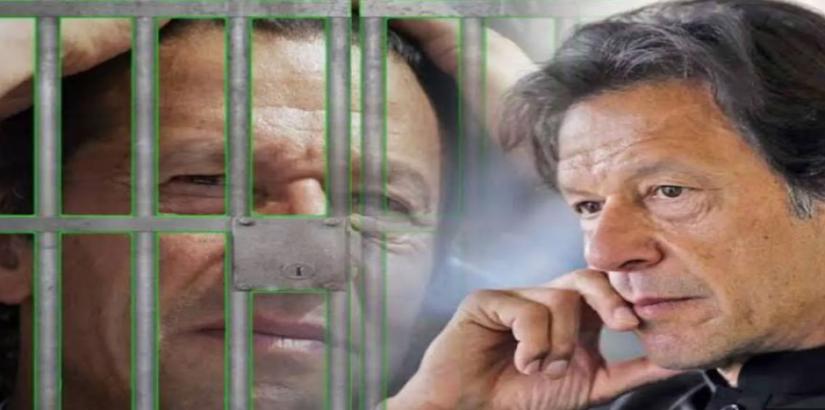
Once celebrated as Pakistan’s golden boy—the charismatic cricketer who led his nation to World Cup glory—Imran Khan today stands as a prisoner, reduced to a number: 804. His transformation from national icon to political detainee encapsulates not only his personal fall but also the deeper crisis within Pakistan’s power structure.
Khan’s political rise was built on populist momentum and a promise to dismantle corruption. Yet, upon assuming office, his government quickly settled into what many described as a “hybrid regime”—a familiar arrangement in Pakistan where civilian authority operates under the shadow of military dominance. While Khan projected reformist zeal, the military establishment retained control over strategic decision-making, leaving his administration to manage optics and day-to-day governance.
His tenure delivered a mixed record. Initiatives such as health insurance schemes for the poor and environmental programs gained attention, but economic instability, reliance on IMF bailouts, and allegations of politically motivated accountability campaigns eroded his credibility. His pledge to eliminate corruption within 90 days remained unfulfilled, with Pakistan’s global corruption rankings slipping during his time in office.
Turning Point
Yet Khan’s real political strength never lay in governance—it lay in agitation. Long before he became prime minister, he mastered the art of street politics, mobilizing massive protests and sit-ins that transformed dissent into spectacle. After his removal from power in 2022, he returned to this familiar playbook, launching nationwide marches that reignited his base.
The turning point came in November 2022, when Khan survived an assassination attempt. His subsequent public accusations against senior military figures shattered long-standing taboos, marking an unprecedented confrontation between a former prime minister and the country’s most powerful institution. From that moment, his political struggle evolved into a direct challenge to the military establishment itself.
Events escalated dramatically on May 9, 2023. Khan’s arrest inside a courtroom by paramilitary forces—who stormed the premises in a brazen display of force—triggered nationwide unrest. What followed was one of the most volatile episodes in Pakistan’s recent history, with protests spiraling into violence and exposing deep fractures within the state.
A More Uncertain Reality
In detention, Khan was assigned prisoner number 804—a designation that would soon take on a life of its own. Across Pakistan and within diaspora communities, “804” became a symbol of resistance. It appeared on license plates, graffiti, clothing, and even restaurant names. Chanted in stadiums and immortalized in songs, the number transformed from a mark of confinement into a badge of defiance.
This phenomenon underscores a paradox central to Khan’s political journey: his imprisonment has amplified his influence. In sidelining him, the establishment may have inadvertently elevated his stature, turning him into a rallying point for dissent against entrenched power structures.
However, beneath this symbolism lies a more uncertain reality. Khan’s party, Pakistan Tehreek-e-Insaf (PTI), shows signs of fragmentation in his absence. Internal divisions, leadership struggles, and alleged external interference have weakened its cohesion. The question of succession looms large, with no clear figure capable of commanding Khan’s mass appeal.
Nation in Systemic Crisis
Meanwhile, Pakistan itself faces mounting challenges. Economic crisis deepens as debt rises, governance falters, and public trust erodes. Allegations of corruption and exploitation of national resources continue to plague the ruling elite. Internationally, Pakistan remains under scrutiny over its links to militant networks and the role of its intelligence apparatus in regional instability.
Khan’s current predicament is therefore not just a personal downfall—it is a reflection of a state caught in a cycle of power struggles, institutional dominance, and political volatility. His journey from cricket legend to political prisoner mirrors the broader crisis of a system where democratic processes are repeatedly overshadowed by unelected forces.
As Imran Khan enters his seventies behind bars, the stakes extend far beyond his individual fate. Should his detention continue—or worse, should harm befall him in custody—the consequences could be explosive. Public anger, already simmering, may erupt into widespread unrest, challenging the state’s ability to maintain control. In such a scenario, neither domestic authority nor foreign alliances may suffice to contain the fallout.
Pakistan today stands at a dangerous crossroads. The story of prisoner number 804 is no longer just about Imran Khan—it is about the future of a nation struggling to reconcile power, legitimacy, and accountability. Whether this chapter ends in reform or further turmoil will define not only Khan’s legacy, but the destiny of Pakistan itself.
(The author is a journalist, writer, and editor-publisher of the Weekly Blitz. He specializes in counterterrorism and regional geopolitics. He can be contacted at salahuddinshoaibchoudhury@yahoo.com, follow him on X: @Salah_Shoaib )




Post a Comment