The problem each year repeats like the weather itself, simply because of the awful behaviour of the airline ground staff. Our airline ground staff are perhaps the worst amongst developing/developed nations.


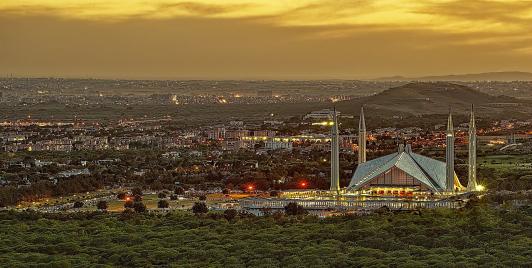
This raises the issue not whether Islamabad has surpassed its outmoded and fragmented administrative structure but whether governance would keep pace with its growth. Islamabad has to evolve from being administered as a capital city into being governed as a metropolis.

The inhabitants of Manipur have had long-standing experiences of living insecurely in their own homeland, even as migrants from the Northeast have encountered prejudice in metropolitan India....India has produced a paradox where communities that belong formally to India can also face exclusion from the social mainstream.
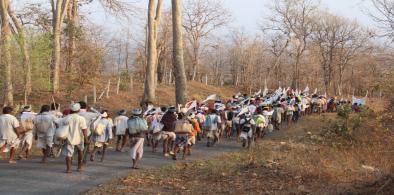
Before asking how quickly a project can be implemented, policymakers should ask whether it can be redesigned to reduce displacement. Before acquiring new land, can existing degraded land be used? Can infrastructure be built around communities rather than communities being moved around infrastructure?

Identity and financial crimes that occur across India's borders never begin with anything overtly fraudulent. They generally begin with a small breach in routine authentication processes. Biometrics, forensic document examination, and audit trails can each

The problem each year repeats like the weather itself, simply because of the awful behaviour of the airline ground staff. Our airline ground staff are perhaps the worst amongst developing/developed nations.
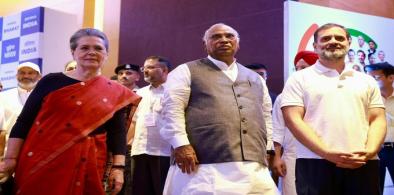
It would seem as if the Congress Party were going for broke by rejecting the invitation quite aware that it is unlikely to win even the moderately right-leaning Hindu electorate, let alone the hard Hindu right, in the foreseeable future.

The anti-Christian violence is a low-radar activity where the priests working in remote areas are apprehended when they are conducting prayer meetings in particular.
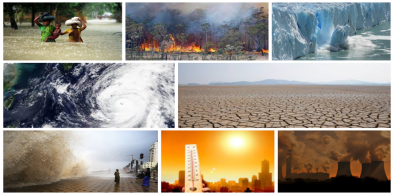
For nations like Bangladesh, it is an issue of concern since it will be difficult to successfully carry out national climate action plans for adaptation and mitigation in the absence of explicit financial commitments from wealthier nations.

What is perceptible is the government’s intention to destroy the fabric of human rights protection in India and to increase the power of the government to control and oppress the people of India.
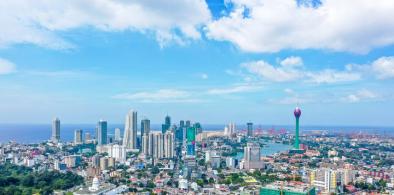
From Sri Lanka’s example of periodically falling into a BOP crisis, one might wonder if IMF-prescribed solutions (or terms and conditions attached to IMF funding) ever help small nations like Sri Lanka to achieve long-term BOP stability.

The cavalier attitude and patronizing politics of a patriarchal society need to change to eliminate the social stigma of the victim in rape trials in India.
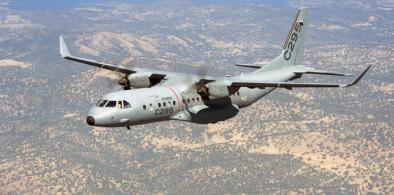
Reportedly, a part of China’s dole to Pakistan in March 2022 was the multirole J-10C fighter jets which can be interconnected with their Chinese counterparts through the PLA air force's KJ-500 early warning aircraft.
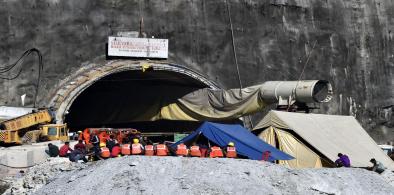
A number of such disasters could have been avoided if local geology was understood or warnings from experts had been heeded
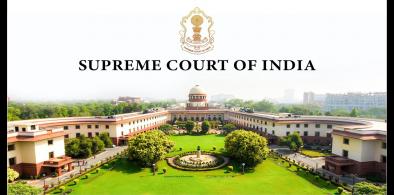
The time for half-hearted attempts, and/or conventional methods, has gone by when it comes to delivering justice in India.

Local sources claim that multiple tribal terrorist groups are holding hundreds of thousands of people in the Chittagong Hill Tracts as hostages. These groups are active in controlling and influencing their areas through various sabotage and terrorist activities, extortion, kidnapping for ransom, attacks, and counter-attacks.

Indian Navy celebrates Navy Day on 4 December to commemorate "Operation Trident", the Navy’s lethal attack on Karachi harbour during the 1971 war.
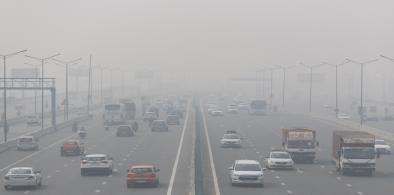
The pollution severely affecting the health of the population is of no consequence to India's politicians. It is high time our policymakers look at themselves in the mirror.
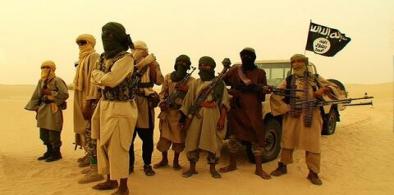
In recent years, a central phenomenon that spurred the rise of terrorist groups has been the United States cultivating fundamentalist Islamist groups through the CIA in client states such as Pakistan.
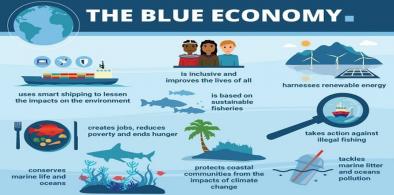
The Ministry of External Affairs (MEA) is working towards making the UDA framework an agenda for the multilateral forums in the IOR.