

Representational Photo

A Distracted Generation And The Erosion Of State Capacity In India

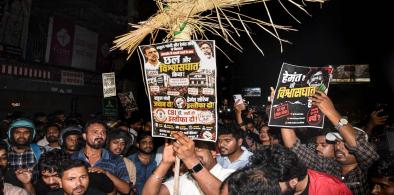
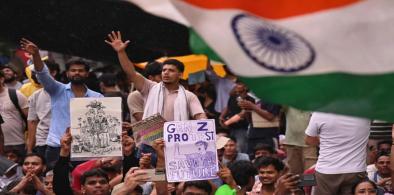
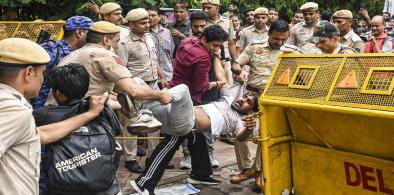
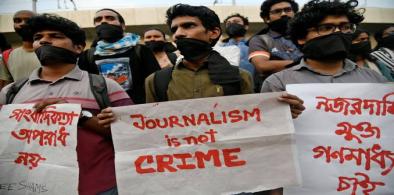
India’s youth are growing up in an ecosystem defined by continuous stimulation and accelerated consumption of information. Attention is fragmented, patience for complexity is declining, and long-form engagement—essential for policy, administration, and strategic thinking—is increasingly marginal. This is not a cultural lament. It is a structural shift with direct consequences for how future administrators, policymakers, and institutional leaders are formed.

India’s outreach to West Asia and Africa: Strengthening Global South Leadership

By engaging Jordan, Ethiopia and Oman, India demonstrated its capacity to operate across geopolitical divides while remaining anchored in Global South solidarity. These visits were not isolated diplomatic events but part of a sustained effort to reshape international engagement through inclusivity, responsibility, and shared growth. As global uncertainties persist, India’s outreach to West Asia and Africa strengthens its claim to leadership rooted in partnership and a collective vision for a more equitable world order.

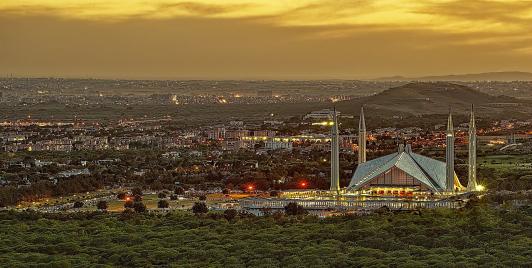
Growing Mistrust, Fragile Sunni-Shia Political Balance Deepen Gilgit-Baltistan Unrest

The security situation deteriorated further in 2025. A terrorist attack on a Gilgit-Baltistan Scouts checkpost resulted in two fatalities and one injury, heightening tensions. Protests later resumed in Sost, disrupting trade between Pakistan and China via the Khunjerab Pass. The year culminated in two high-profile attacks on October 5, when unidentified gunmen ambushed Maulana Qazi Nisar Ahmed, Ameer of the Ahl-e-Sunnat wal Jamaat in Gilgit-Baltistan and Kohistan, near the police headquarters in Gilgit, injuring him and several others. On the same day, Malik Inayat-ur-Rehman, the Chief Court Judge of Gilgit-Baltistan, narrowly escaped an assassination attempt near the City Hospital.

More on Perspective

'Bande Mataram's' Impactful Role In The Indian Freedom Movement: A Historical Perspective

‘Bande Mataram’, ‘Allah-o-Akbar’ and ‘Hindu-Mussalman ki Jai’ were the three national slogans proposed by Mahatma Gandhi in consultation with Shaukat Ali in 1920 during the Non-Cooperation Movement, and, much later on August 29, 1947, two weeks after the country’s independence and partition, ‘Bande Mataram’ was sung at his prayer meeting in Kolkata in the presence of both Hindus and Muslims.

From Factories to Minds: Shaping Viksit Bharat Through Knowledge, Innovation - and NADP’s Vision

NADP carries the 200-year heritage in defence manufacturing of ordnance factories and its evolution into a premier Central Training Institute, recognized by DoPT and accredited as “Ati Uttam” by the Capacity Building Commission. NADP has trained over 20,000 officers from IOFS, IOFHS, IDAS, CLS, Armed Forces, and private defence industries. But we are not just rooted in India—we think global.

The Aravallis Survived Times, But Can The Hills Survive Paperwork?

What is being done to the Aravallis displays much more than deforestation that extends far beyond Rajasthan and northwestern India. If hills can be eroded through redefinition, forests can be fragmented through classification, water bodies can be diminished through measurement, then survival can be denied through legality. The states are acting like it is trusting paperwork more than the ecosystem and reality.

Hit By US Tariff Escalation, Indian Agriculture In Need Of Complete Overhaul

The impact of the US tariff escalation, particularly on agricultural goods, is expected to be significant as the US is one of the largest importers of Indian agricultural products in FY25 (US$ 5.62 billion), accounting for 10.98 per cent of total Indian exports. While seafood (primarily frozen shrimp) has been the top item, there are others as well, including spices and essential oils, basmati rice, processed fruits and vegetables, and baked foods. These are directly linked to the livelihood of Indian farmers.

Indian Air Force: Faced With Critical Shortages Amid Mounting Threat Levels

The WDMMA report notwithstanding, critical shortages of the IAF in terms of fighter jets and the Indian Army’s helicopter shortages can hardly be ignored. In terms of fighter jet squadrons, the IAF now just about equals that of the Pakistan Air Force (PAF). What this means in a multi-front war requires no elaboration...... (and) reports suggesting China supplying 40 J-35 stealth fighters to Pakistan starting 2026 should not be ignored. 

Divisive Geopolitics Stalling Global Climate Action, Clean Energy Transition

International trade wars, ushered in by Trump, have unfortunately started affecting the green energy transition. Since China has developed a virtual monopoly on a range of green technologies from solar panels to lithium batteries, western governments fear Chinese dominance over important economic sectors and are imposing trade restrictions, putting their own climate targets in doubt. In retaliation, China has used its stranglehold over rare earth minerals by imposing export controls, that are expected to hurt many critical sectors in the West, including green energy technologies.

Replacing The Right To Work Legislation In India: A Moral And Constitutional Step Backward

A nation aspiring to be “Viksit Bharat” by 2047 should be expanding the scope of social citizenship and social security, not shrinking it. Reforming MNREGA was both necessary and desirable. Replacing a justiciable right with a discretionary scheme is neither reform nor progress. It is a constitutional, economic and moral step backward. 

India Needs New Military Doctrine To Align With Broader National Security Objectives

The conventional military doctrine based on guarding territories by large land formation requires to diversify and adopt the postulates of non-contact warfare. In the context of the multi-domain nature of conflicts in the backdrop of modern technologies, the military needs to fight in a dispersed and decentralised manner. The requirement of technically-enabled junior leadership is paramount, making directive style of command pertinent.

Reimagining India’s Trade Strategies: Policymakers Need To Shed Tunnel Vision

In view of global supply chain fragilities and realignments, MNCs are aggressively pursuing “China Plus One strategy” to minimize the potential adverse effects on their supply chains. This provides an opportunity for India to emerge as a viable alternative destination for manufacturing due to its large domestic market, cheap labour costs and strategic location. To lure global corporations  to invest in India requires focus on enabling business policies, infrastructure development, and a greater synchronization between trade, investment, competition policies

AI: Year Of Crystallisation And An 'Arms Race'

One thing is clear: AI is no fad. It’s not even a standalone phenomenon, like the pandemic. It’s fast becoming an intrinsic part of the socio-economic fabric. And while 2025 saw some clear trends emerging, the path forward remains less than certain. The biggest source of uncertainty is whether the current trajectories will yield exponential improvements in capabilities, or will plateau, requiring fresh thinking

Indian Rupee Under Pressure: Shifting Geopolitics And Market Expectations

The rupee’s fall reflects a convergence of factors—a strong global dollar cycle, foreign capital outflows, and a high import bill—playing out simultaneously. Given India’s underlying fundamentals, analysts expect the exchange rate to remain range-bound rather than experience an unchecked slide.

Internationalisation Of Higher Education Is A Strategic Imperative For India

As India aspires to become a knowledge superpower, internationalisation must be embedded at the heart of our higher education strategy. This journey transcends state boundaries. It is a national mission with global consequences. If pursued thoughtfully and inclusively, it can transform not only our universities but also our economy, society, and global standing.

Bangladesh Must Not Delay Elections: This Is What Hadi's Killers Would Have Wanted

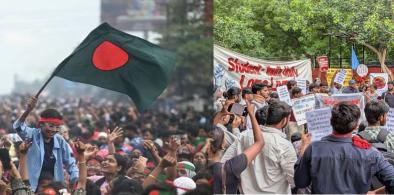
The only way out for Bangladesh, the only way forward, the only way to deliver us from the current instability is to hold the elections as scheduled. This is what the Bangladeshi people want and this is what the country needs. We must all come together to make sure that it happens. The only people who benefit from elections being delayed are the enemies of the Bangladeshi people.

The Vande Mataram Controversy: A Polarising Agenda

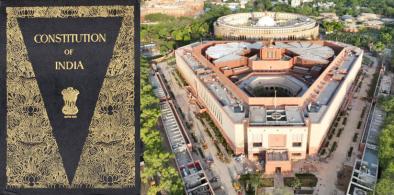
The Indian freedom struggle was inherently multi-religious, multilingual, and multi-ethnic, with women and men participating across communities to forge a united nation. While the Muslim League demanded Pakistan in Muslim-majority areas, the Hindu Mahasabha and RSS pursued the idea of a Hindu nation. The Constituent Assembly, however, embodied the collective will of an inclusive India and resolved symbolic questions such as Vande Mataram and Jana Gana Mana through dialogue and compromise.

Hindu Rate Of Growth, Or Jobless, Ruthless, Rootless Growth?

The airline brought national disaster. The nightclub hotel was a more localised story. But both mock the nation and its growth story in their own ways, highlighting the hidden costs of a faster growth that has beaten the “Hindu rate of growth” but has brought us a disaster that unfolds at periodic intervals to shock the nation and ridicule its governance structures.