Nevertheless, ethanol is a homegrown, renewable fuel which can being great advantage to the country, increase the remuneration to the farmers and help in expanding industrial crop production base in India.


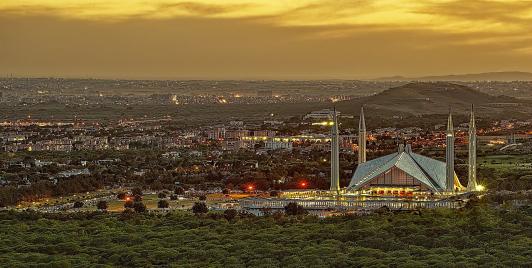
This raises the issue not whether Islamabad has surpassed its outmoded and fragmented administrative structure but whether governance would keep pace with its growth. Islamabad has to evolve from being administered as a capital city into being governed as a metropolis.

The inhabitants of Manipur have had long-standing experiences of living insecurely in their own homeland, even as migrants from the Northeast have encountered prejudice in metropolitan India....India has produced a paradox where communities that belong formally to India can also face exclusion from the social mainstream.

Before asking how quickly a project can be implemented, policymakers should ask whether it can be redesigned to reduce displacement. Before acquiring new land, can existing degraded land be used? Can infrastructure be built around communities rather than communities being moved around infrastructure?

Identity and financial crimes that occur across India's borders never begin with anything overtly fraudulent. They generally begin with a small breach in routine authentication processes. Biometrics, forensic document examination, and audit trails can each

Nevertheless, ethanol is a homegrown, renewable fuel which can being great advantage to the country, increase the remuneration to the farmers and help in expanding industrial crop production base in India.
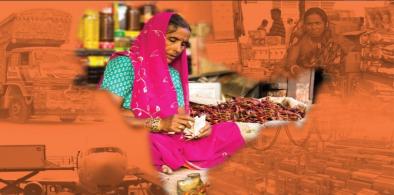
India, for one, can offer to create - if required - segregated facilities for education, IT services and upskilling training centres in those communities as there are both kinds of establishments in the country and the economic capacity to be generous to neighbours in need without expectation of a quid pro quo.

If “security” is to have real meaning, it must be grounded in the lived experiences of those it is intended to protect. This requires a shift from state‑centred metrics to civilian‑centred measures of stability; where continuity of daily life, equitable protection, and psychological well‑being are integral to how we define security.
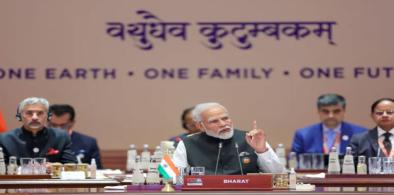
Assuming leadership requires both inherent strength and ideological positioning. While the world covets India as a market, India should also become a market leader in strategic areas where it needs to be self-reliant and has export potential. These include space, defence, aeronautics, AI, semiconductors, and skilled manpower. India must leverage economic diplomacy and soft power
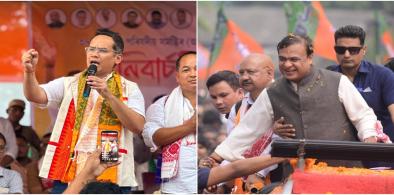
There is also a subtle but perceptible fatigue with the continued reliance on polarisation as a political tool. Identity-based mobilisation, while effective in the short term, risks diminishing returns when overused. If these undercurrents - internal dissent, governance gaps, and narrative fatigue - begin to converge, they may not immediately overturn electoral outcomes, but they could signal the early stages of a more substantive political challenge to the BJP
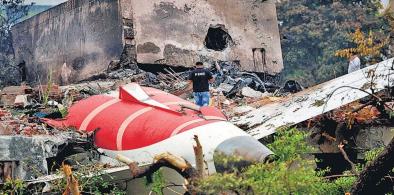
Prime Minister Narendra Modi will be cognizant of the fact that the crash occurred in Ahmedabad, in his home state. People will come to their own conclusions as to whether they saw Modi standing up to American pressure or give in. India has not forgotten the Bhopal Gas Tragedy, that Warren Anderson and Union Carbide Chemicals went scot-free, that India settled for a meagre $470 million compensation – 25 years later – for the families of the thousands who died and the millions who were adversely affected.

The social media takes advantage of the reward systems in the brain, especially the dopamine circuits within the basal ganglia and the prefrontal cortex. Using signals of micro-engagement, including the duration of time a user hovers over a video or the number of times a user rewatches a clip, algorithms develop a feedback loop that over time redirects the feed of a user to more intense or provocative content.

To step into the role of mediator in a conflict of this nature would inevitably test that balance. It would invite scrutiny, of intent, of tilt, of perceived bias. Even the most well-intentioned effort could be interpreted through the prism of existing relationships. In such a situation, neutrality is not merely a matter of policy; it becomes a matter of perception, and perceptions are notoriously difficult to manage.
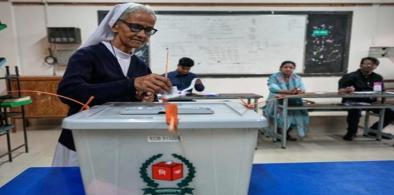
One notable point is that Awami League (AL) supporters and minority community voters reportedly did not vote for any of the contesting parties. This narrative may have been constructed to justify inflated vote counts. It may also suggest that none of the contesting parties—including the BNP, Jamaat alliances, and others—command the level of public support often claimed. Additionally, it can be inferred that communal politics has not achieved the level of social penetration in Bangladesh as was talked about.

The loss of 403 young lives is a stark wake-up call for Bangladesh. Schools and colleges are meant to nurture dreams, not silently witness the suffering of students. A collaborative effort involving the government, educational institutions, and families is urgently needed. With empathy, awareness, and institutional support, many of these young lives can still be saved.
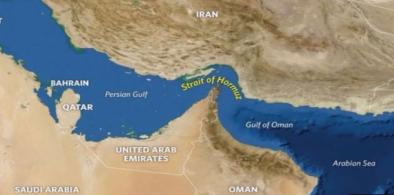
India’s diversification strategy, often cited as a mitigating factor, provides only partial relief. The country now sources crude from over 40 countries, and in recent years has increased imports from Russia, the United States, and West Africa. In fact, about 70% of crude imports are now routed outside Hormuz, reflecting a conscious shift in sourcing strategy.

Wangchuk was arrested - he has since been released - obviously to allow allotment of land to corporates without engaging with the locals. Under the circumstances, how much trust of the Ladakhis the government can regain, remains questionable.
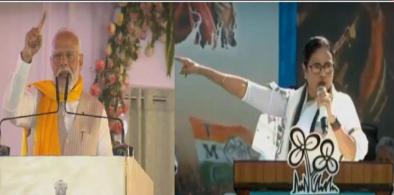
As owners of the republic—not merely beneficiaries of electoral inducements timed for political gain—electorates must act as empowered, assertive and demanding citizens, carefully examining party positions on substantive issues. They must insist on time-bound job creation strategies and measurable improvements in key sectors such as education and healthcare, rather than settling for vague manifesto assurances.
What has gradually been lost is not faith, but the culture of debate that once accompanied it. Public debate – śāstrārtha - was once central to intellectual life. Ideas were examined, challenged, and defended through reasoned argument. Today much of that space has been replaced by shouting matches, where volume often substitutes for thought - unfortunately even within our legislatures. Questioning, once considered an essential part of the search for truth, is now too easily mistaken for disrespect.
Dias promoted civil–military cooperation on an unprecedented scale, facilitating the large-scale settlement of Sinhalese populations in the dry zone as a bulwark against Tamil separatism. In some respects, this approach resembled the Jewish settlement policies in the British Mandate of Palestine, which may have influenced Dias’s thinking.