

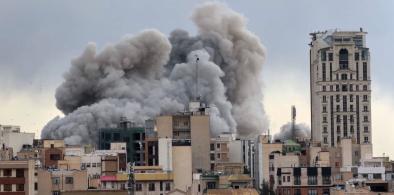
Representational Photo

Why Sinhalese Buddhist Nationalists Adore Israel? An Alternative Reading

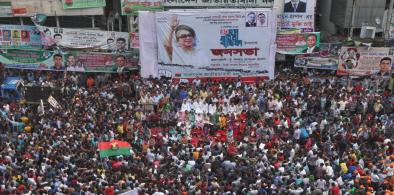
These myth-based narratives reveal a deeper psychological impulse: the desire to anchor Sinhalese Buddhist identity within a framework of global uniqueness and divine purpose. While Sri Lanka’s diplomatic relations with Israel have fluctuated since independence, Sinhalese Buddhist nationalist sentiment continues to exhibit a strong emotional affinity toward Israel.

A Distracted Generation And The Erosion Of State Capacity In India

India’s youth are growing up in an ecosystem defined by continuous stimulation and accelerated consumption of information. Attention is fragmented, patience for complexity is declining, and long-form engagement—essential for policy, administration, and strategic thinking—is increasingly marginal. This is not a cultural lament. It is a structural shift with direct consequences for how future administrators, policymakers, and institutional leaders are formed.

India’s outreach to West Asia and Africa: Strengthening Global South Leadership

By engaging Jordan, Ethiopia and Oman, India demonstrated its capacity to operate across geopolitical divides while remaining anchored in Global South solidarity. These visits were not isolated diplomatic events but part of a sustained effort to reshape international engagement through inclusivity, responsibility, and shared growth. As global uncertainties persist, India’s outreach to West Asia and Africa strengthens its claim to leadership rooted in partnership and a collective vision for a more equitable world order.

Growing Mistrust, Fragile Sunni-Shia Political Balance Deepen Gilgit-Baltistan Unrest

The security situation deteriorated further in 2025. A terrorist attack on a Gilgit-Baltistan Scouts checkpost resulted in two fatalities and one injury, heightening tensions. Protests later resumed in Sost, disrupting trade between Pakistan and China via the Khunjerab Pass. The year culminated in two high-profile attacks on October 5, when unidentified gunmen ambushed Maulana Qazi Nisar Ahmed, Ameer of the Ahl-e-Sunnat wal Jamaat in Gilgit-Baltistan and Kohistan, near the police headquarters in Gilgit, injuring him and several others. On the same day, Malik Inayat-ur-Rehman, the Chief Court Judge of Gilgit-Baltistan, narrowly escaped an assassination attempt near the City Hospital.

More on Perspective

With Rising Global Condemnation, India Should Rethink Close Economic Ties With Israel

Clinging to the narrative of “strategic autonomy” while doubling down on a partner facing escalating global condemnation will not safeguard India’s sovereignty. Instead, it risks compromising India’s diplomatic standing and economic resilience.

Alternate Dispute Resolution Growing in India - the Amika Way

The Amika assures non-adversarial ways to dispute resolution, informs clients that they save time, money, and, most importantly, the relationships, and ensures complete confidentiality of the material exchanged during mediation sessions.

Saving The Last Green Lung: Fight To Save India's City Forests

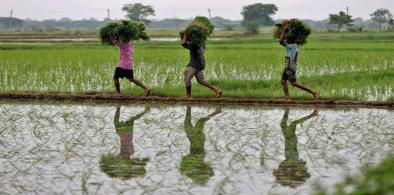
The grassroots movements taking shape, like the one in Jaipur, tell us that the issues of the environment are increasingly resonating with ordinary people. Ordinary citizens, particularly the youth, are tending to stand up for the rights of nature, for their right to breathe clean air and live with nature around them, even in crowded urban landscapes.

Creeping Rise of Anti-Semitism is Dangerous for Sri Lanka

The government in Colombo finds itself in a difficult position, refraining from disclosing its official stance on the Israeli-Palestinian conflict—a well-established policy of the Sri Lankan government for years. Former President Mahinda Rajapaksa vociferously campaigned for Palestinian statehood while discreetly seeking military support from Israel to crush LTTE terrorism in Sri Lanka. The current Sri Lankan government maintains the same ambiguity.

India Needs Urgent Reforms To Meet Trump Tariff Challenge

India chose to draw the line on three things. Firstly, no liberal access to agriculture and dairy market in the country. This is especially for maize, corn, soyabean and dairy produced from cattle fed with animal protein. Secondly, no access for genetically modified crops or agriculture products. Thirdly no import of ethanol for fuel purposes.

Will importing F-35 fighter jets from the US be good for India?

If the government is indeed going in for F-35 squadrons to meet IAF’s interim requirements, it is without doubt a political decision to appease President Donald Trump who wants India to increase defence imports from the US and reduce/stop defence imports from Russia on the threat of additional penalties and sanctions under (Countering America’s Adversaries Through Sanctions Act (CAATSA). 

With Operation Sindoor, Kargil Flaws Were Ironed Out

India showed the world that: (a) it does not require anyone’s permission to defend its people, (b) terrorists and their masterminds cannot hide anywhere, and (c) if Pakistan retaliates, India is prepared for a decisive counterstrike.

Who bombed Mumbai’s trains? A judgement that’s an eye opener for India

The larger picture that emerges is of a failing administration that is rapidly sliding down a very slippery slope in the absence of robust internal and external scrutiny, blind support in the name of fighting terrorism while the real terrorists go scot-free and a refusal to accept and correct mistakes.

India’s Zero-Emission and Eco-Friendly Energy Strategies: A Long Road Ahead Despite Notable Progress

Despite various programs—green hydrogen, EVs, biofuels—India’s fossil fuel consumption and import dependency are still growing. The current strategies appear insufficient to reverse this trend. There is a critical need for out-of-the-box thinking

Preliminary Air India 171 crash report is tantalizingly open-ended and leaves unanswered questions

One has to bear in mind that the two pilots, Captain Sumeet Sabharwal, 56, and First Officer Clive Kunder, 32, were very familiar with the aircraft. Captain Sabharwal had logged approximately 15,600 flight hours, including nearly 8,600 hours on the Boeing 787 and Kunder had around 3,400 flight hours, with over 1,100 hours on the 787. It is impossible to imagine that either of them was not fully knowledgeable that turning off and turning on fuel switches is a function that requires deliberate physical action.

Playing with the Constitution: India's Ruling BJP's Misdirected Priorities

While it is true that “socialist” and “secular” were inserted in the preamble by the 42nd Constitutional Amendment Act during the Emergency, which remains a dark chapter in the history of free India, it is not true that the values go against the grain or the spirit of the constitution. These are effectively the only parts of the amendment that sit today 50 years down the line.

Tharoor - caught between two stools

However, a point will come soon when he has to make a choice and that choice is not necessarily the BJP even in the unlikely event of him being offered the position of India’s foreign minister in place of Subramanyam Jaishankar. The choice is also not necessarily leaving the Congress Party even if it means being treated cavalierly. The problem with him is that his entire appeal comes from his seemingly defiant equidistance from both the main parties. 

The Dalai Lama: A Global Beacon of Peace and Compassion

What stands out amidst this global indifference is the Dalai Lama’s unwavering grace. He harbours no ill will—not even towards China. In a world increasingly defined by conflict, coercion, and fractured diplomacy, the Dalai Lama remains an embodiment of moral strength and compassion, committed to the principles of non-violence and interfaith harmony.
 

Post Op Sindoor India Needs A Strategic Course Correction

There is increasing evidence that Trump has offered Pakistan advanced military equipment and financial aid in exchange for strategic cooperation—particularly access to airbases and logistics. How this plays out remains to be seen. India, meanwhile, finds itself once again let down by the U.S. Trump appeared unable to tolerate that India succeeded in neutralising Pakistan’s military and terror assets without American help and refused to validate his false claims of mediation.

Trump’s lunch with Pakistan’s army chief is imbued with deeper meaning

The optics of the lunch are certainly not to India’s liking, but its consequences may not turn out to be as unsettling as might be apprehended in certain quarters. It surely gives Pakistan a profile in Washington that it was craving to have.