

Trump-Xi Reset Could Leave India Strategically Exposed
New Delhi now occupies an awkward middle space: not fully trusted by the West, yet no longer fully aligned with the broader Global South consensus either. That ambiguity becomes riskier if Washington and Beijing move into even a temporary phase of strategic stabilisation.
 May 12, 2026
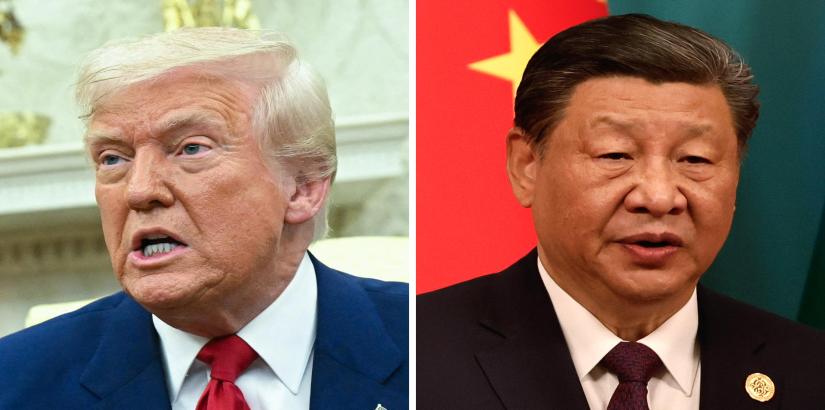
When United States President Donald Trump meets Chinese President Xi Jinping in Beijing on May 14 and 15, the world will parse every signal on tariffs, Taiwan and trade. In New Delhi, however, the focus will be narrower and more unsettling: whether the world’s two most powerful countries are moving toward a stabilisation of ties that leaves India strategically adrift.
India-United States relations have visibly cooled over the past year. Trump has repeatedly derided India’s trade policies and economic model, while the personal warmth that once defined the Narendra Modi-Trump equation has faded into evident distance.
At the same time, Pakistan has quietly regained diplomatic relevance. Islamabad’s reported facilitation of backchannel contacts during the ongoing U.S.-Iran crisis has restored some of its utility in Washington’s strategic calculations.
India's Strategic Concerns
Against this backdrop, uncertainty over whether Trump will attend the Quadrilateral Security Dialogue (QUAD) summit expected to be hosted by India has acquired significance beyond protocol. If the American president skips the meeting, it will reinforce a perception already gaining ground in strategic circles: that India is no longer central to Washington’s immediate geopolitical priorities. The Trump-Xi summit is likely to sharpen that anxiety.
Both Washington and Beijing appear interested in preventing uncontrolled escalation while extracting selective economic gains. Existing trade truces could be extended. China may agree to larger purchases of American agricultural goods, energy and Boeing aircraft, while Washington could soften some export restrictions and delay further punitive measures.
Such an arrangement would not end U.S.-China rivalry. But it could reduce the urgency that drove Washington over the past decade to cultivate India as a strategic counterweight to Beijing. That is the core Indian concern.
Trump's Shifting Strategic Calculus
As the United States sought to “de-risk” from China, India emerged as an alternative manufacturing destination, a strategic partner and an Indo-Pacific balancer. Increasingly, sections of the American strategic establishment came to see India not merely as a regional power but as a long-term civilisational counterweight to China.
Trump, however, has never fully shared that strategic worldview. Unlike much of the bipartisan foreign policy establishment in Washington, he is less invested in alliance structures, less ideological about democratic partnerships, and more inclined toward transactional arrangements that yield immediate political or economic returns.
If Trump concludes that a more stable relationship with Beijing better serves his domestic and electoral interests than prolonged confrontation, India’s strategic premium could diminish rapidly. That possibility matters because New Delhi’s foreign policy in recent years has rested on a critical assumption: that the United States would remain structurally adversarial toward China irrespective of who occupied the White House. That assumption now appears far less certain.
Changes in Taiwan Policy?
Several aspects of the summit warrant close attention in New Delhi.
The first is Taiwan. Reports suggest Beijing may seek subtle shifts in American language on Taiwan’s status and reunification. Even rhetorical adjustments could carry major implications for Asia’s strategic balance. If Washington appears willing to dilute commitments under Chinese pressure, confidence among U.S. allies and strategic partners across the Indo-Pacific could weaken.
India has traditionally avoided direct involvement in the Taiwan issue. Yet any perception of American strategic retrenchment in Asia inevitably shapes Indian assessments of China’s future behaviour along the Himalayan frontier and in the Indian Ocean.
India Risks Getting Squeezed Economically
Second, the summit could institutionalise a framework for economic coexistence between Washington and Beijing. India has spent years positioning itself as an alternative manufacturing hub for Western companies seeking to diversify away from China. A stabilisation in U.S.-China economic relations could slow that diversification and complicate India’s economic ambitions.
Despite tariffs and strategic tensions, China remains deeply embedded in global manufacturing networks. Chinese exports have increasingly diversified toward non-U.S. markets, cushioning the impact of American restrictions. India risks finding itself squeezed between an economically resilient China and an unpredictable America.
Difficult Balancing Act for Outlier
Third, discussions on Iran and the wider Middle East carry important implications for New Delhi. India has long attempted to balance ties with Iran, the Gulf monarchies, Israel and the United States. That balancing act becomes more difficult as regional alignments evolve.
China’s expanding role in Middle Eastern diplomacy, including reports of its encouragement of Iran-U.S. contacts through Pakistan, signals Beijing’s growing influence in India’s extended neighbourhood. Simultaneously, Washington’s renewed engagement with Pakistan during the crisis revives uncomfortable memories in New Delhi, where many believed Islamabad’s strategic relevance to the United States had sharply declined after the Afghanistan withdrawal.
There is also a deeper and more uncomfortable reality confronting India. Increasingly, it has become something of a geopolitical outlier. Its position on Gaza has alienated sections of the Global South that once viewed India as a moral voice on decolonisation and Palestinian rights. Its growing closeness to Israel has complicated traditional Arab goodwill, even if ties with Gulf governments remain robust. Within BRICS, too, India has appeared more cautious and more divergent as China, Russia and other members push for sharper anti-Western positions.
New Delhi now occupies an awkward middle space: not fully trusted by the West, yet no longer fully aligned with the broader Global South consensus either. That ambiguity becomes riskier if Washington and Beijing move into even a temporary phase of strategic stabilisation.
Signal New Delhi Fears Most
None of this suggests that the U.S.-India partnership is collapsing. Structural convergences remain substantial, including concerns over China’s rise, defence cooperation, technology partnerships and shared Indo-Pacific interests. American businesses also continue to view India as both a major market and a strategic destination.
The Beijing summit may not produce dramatic breakthroughs. Yet diplomacy often turns less on formal agreements than on atmospherics, signals and evolving perceptions. The signal India fears most is that Washington and Beijing may increasingly prefer managing their rivalry together rather than organising the world into competing blocs.
If that happens, India could discover that its greatest geopolitical advantage during the past decade — the escalating U.S.-China confrontation — was also its most fragile one.
(The writer is a former UN spokesperson and a contemporary affairs commentator. Views expressed are personal. He can be reached at edmathew@gmail.com/ tweets @edmathew)




Post a Comment