For India and Pakistan, therefore, which were once a single country, the anniversaries of their independence days are burdened with thoughts of what might have been, writes Amulya Ganguli for South Asia Monitor



The face-offs in Arunachal Pradesh—specifically around areas like Asaphila, Taksing, and Maza—have reignited intense debate regarding Beijing's commitment to bilateral border agreements. That China signs agreements it has no intention of following on the ground is a perception shared by many Indian diplomatic and security experts.

Progress on the Ganga could also build the trust needed for wider cooperation among Bangladesh, Bhutan, India and Nepal in electricity trade, connectivity and climate adaptation. Both governments should act now.
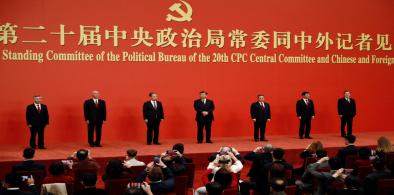
Border settlements, transportation networks, surveillance grids, and civilian administration now work alongside conventional defense planning to strengthen Beijing’s claims. Understanding China’s rise requires attention not just to military power projection but also to these quiet instruments of authority.
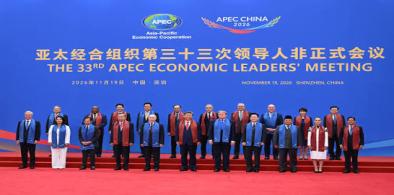
That is the paradox of Shenzhen. An odd summit, convened by three leaders with different compulsions, produced an anodyne declaration that nevertheless impinges onto India's core concerns: UN reform without India, ICC impunity versus UNCLOS, and energy through Hormuz.

For India and Pakistan, therefore, which were once a single country, the anniversaries of their independence days are burdened with thoughts of what might have been, writes Amulya Ganguli for South Asia Monitor

The document seeks to achieve Sri Lanka’s foreign policy objective vis-à-vis India while coming closest to admitting that China has cast a long shadow over Colombo-New Delhi ties, writes M.R. Narayan Swamy for South Asia Monitor
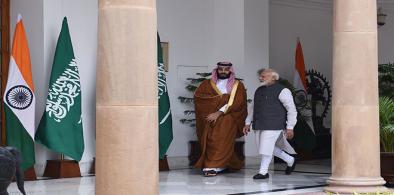
Indo-Saudi economic ties have seen tremendous growth over time, writes Asif Rameez for South Asia Monitor

India can offer to lend a helping hand in a new shared spirit of sporting togetherness that can bind South Asia, writes Sirshendu Panth for South Asia Monitor

The forty years of protracted war has impacted Afghan society, especially women, in a way that has few parallels in human history, writes Shraddha Nand Bhatnagar for South Asia Monitor

Although the Indian government believes that FDI is coming into the country in record amounts, most of it is through mergers and acquisitions and not greenfield investments which entail building factories, writes N Chandra Mohan for South Asia Monitor

The US may continue to bomb the Taliban and keep asking them to reconcile but such a scenario is not going to unfold, especially when nothing has been done in 20 years to block the financial support and arms supplies to the Taliban, writes Lt Gen P. C. Katoch (retd) for South Asia Monitor

If sportswomen are treated equally and provided with equitable opportunities, women athletes from South Asia are bound to participate in greater numbers in top international events like the Olympics, writes Sarita Bartaula for South Asia Monitor

India ought to tread cautiously in aligning with the US as a counterweight to China, writes Mayank Mishra for South Asia Monitor

Warship building and design is an arduous undertaking and India now joins a select group of nations that have demonstrated proven capability to conceive, design, and build an aircraft carrier, writes C Uday Bhaskar for South Asia Monitor

One can be optimistic that Biden’s selection will lead to a debate on freedom of religion and more interfaith dialogues in South Asia and other parts of the world, writes Frank F. Islam for South Asia Monitor
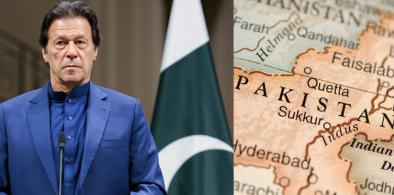
Instability in Afghanistan along with the discord with Pakistan does not augur well for South and Central Asian connectivity, writes Niranjan Marjani for South Asia Monitor
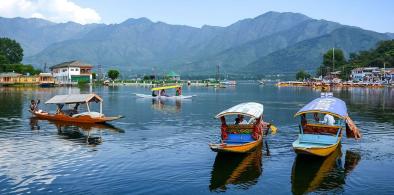
With the historic revocation, the Indian government has finally applied salve on the festering anger in Kashmir: anger born out of chronic underdevelopment and misgovernance, writes Suchismita Panda for South Asia Monitor
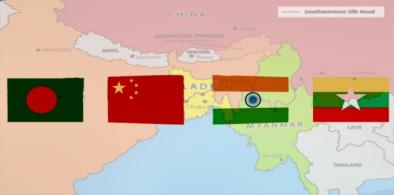
Cooperation among BCIM members is essential for the sustainable development of the Ganga-Brahmaputra-Meghna basin, writes Dipankar Dey for South Asia Monitor
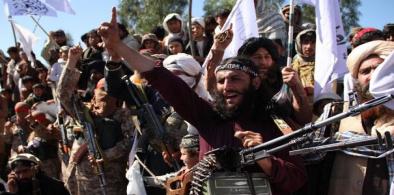
US Secretary of Defense General Lloyd James Austin has said that the Afghan forces must slow the Taliban’s momentum. The question is how, writes Lt Gen P. C. Katoch (retd) for South Asia Monitor