
Representational Photo

PLA’s Border Intrusions Make a Mockery of All Meets and Agreements With India

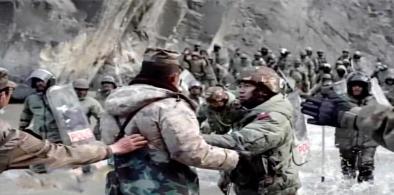
The face-offs in Arunachal Pradesh—specifically around areas like Asaphila, Taksing, and Maza—have reignited intense debate regarding Beijing's commitment to bilateral border agreements. That China signs agreements it has no intention of following on the ground is a perception shared by many Indian diplomatic and security experts.

Before the Ganga Treaty Lapses: Bangladesh and India Need Prudent Water Diplomacy

Progress on the Ganga could also build the trust needed for wider cooperation among Bangladesh, Bhutan, India and Nepal in electricity trade, connectivity and climate adaptation. Both governments should act now.

China’s 'Quiet State' from Tibet to Hong Kong: How Chinese Statecraft Weaponizes Surveillance and Development

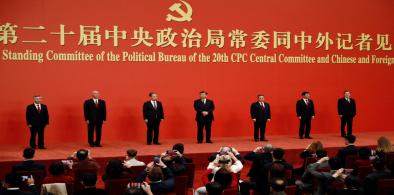
Border settlements, transportation networks, surveillance grids, and civilian administration now work alongside conventional defense planning to strengthen Beijing’s claims. Understanding China’s rise requires attention not just to military power projection but also to these quiet instruments of authority.

Odd Summit : Why Shenzhen Should Matter for India

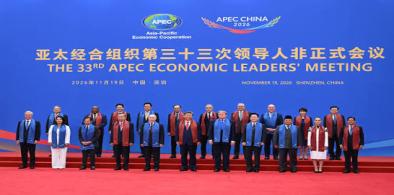
That is the paradox of Shenzhen. An odd summit, convened by three leaders with different compulsions, produced an anodyne declaration that nevertheless impinges  onto India's core concerns:  UN reform without India, ICC impunity versus UNCLOS, and energy through Hormuz.

More on Geopolitics, Security and Strategic Affairs

West Bengal can play a critical role in the success of India’s Act East policy

With the ever-growing presence of China in Southeast Asia, it would be injudicious to keep the economic and strategic prospects that West Bengal has to offer underutilized, and hostage to petty internal politics, writes Anondeeta Chakraborty for South Asia Monitor


India needs to become drone-conscious to counter aerial cross-border threats

Not only was the use of a weaponized drone on the Jammu IAF base an act of war but a violation of the ceasefire agreement concluded by DGs, military operations, of India and Pakistan, effective from midnight, 24-25 February 2021, writes Col. Anil Bhat (Retd) for South Asia Monitor

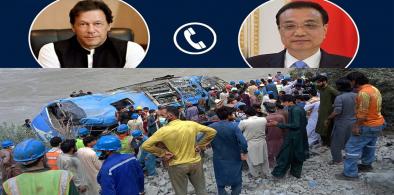
Will China learn a lesson from the 'terror attack' in Pakistan on its workers?

The Pakistan incident against Chinese workers is all the more worrying as Chinese personnel and technicians are working on various projects not only in Pakistan, but in other South Asian countries like Sri Lanka, Bangladesh, Nepal, as well as many African nations, writes N S Venkataram for South Asia Monitor

Improved transport connectivity in South Asia must for boosting intra-regional and inter-regional trade

Better connectivity in this region would facilitate the establishment of trade linkages with other regions through platforms such as the BIMSTEC, SAARC, and ASEAN, writes Partha Pratim Mitra for South Asia Monitor

Nepal’s new government needs to do a balancing act amidst India-China rivalry

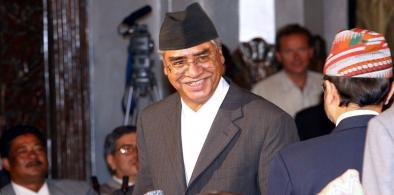
For Sher Bahadur Deuba’s government, the acid test of preserving Nepal’s core interests and increasing its bargaining capacity vis-à-vis India and China will depend on how the Nepalese leadership responds to the emerging geopolitical and geoeconomic imperatives in the region, writes Zahoor Ahmad Dar for South Asia Monitor

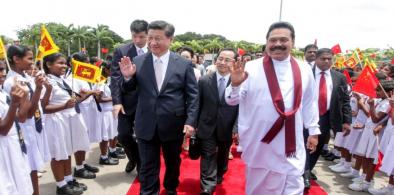
Economic and public health crises pushing Sri Lanka more and more towards China

Given Sri Lanka’s strategic location in the Indian Ocean, China has developed huge stakes in the island nation, writes N. Chandra Mohan for South Asia Monitor

Like its remarkable economic turnaround, Bangladesh has fought back against Islamist extremism

Fifty years after its liberation from Pakistan, Bangladesh is the reverse image of the country it broke away from -- a moderate Muslim majority nation anchored in its liberal syncretic Bengali culture that guided its 1971 secession from Pakistan, writes Subir Bhaumik for South Asia Monitor

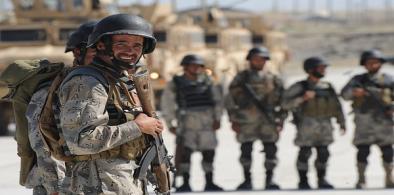
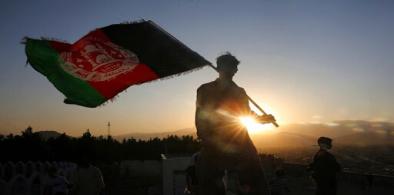
Afghan war, and its spillover effect, will singe entire region, including Pakistan and India

In stark contrast with Pakistan, which relied on hard power tools to pursue its foreign policy goals in Afghanistan, India opted for the soft power strategy --winning hearts and minds of Afghans by investing in common people through culture, building state capacities, and training and educating a new young professional Afghan class, writes Shraddha Nand Bhatnagar for South Asia Monitor

Pandemic-hit South Asia must evolve a coordinated strategy to improve public health systems

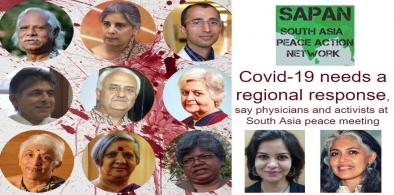
Collectively the peacebuilders, physicians and public-health activists from across South Asia noted that inequity is the key challenge and asked their governments to address it properly so that the lessons of the past year are not forgotten, writes Rida Anwar for South Asia Monitor

India should leverage its enormous goodwill to begin peace diplomacy in conflict-ridden Myanmar

In Zoramthamga, a former rebel leader and now chief minister of India's northeastern state of Mizoram, India has a potential mediator who has close links with all stakeholders in Myanmar, including the Tatmadaw and Aung Saan Suu Kyi's NLD, writes Subir Bhaumik for South Asia Monitor

Nepal's regime change: Prime Minister Deuba needs to watch out for Beijing's meddling

The upheaval in Nepalese politics over the past few months has occurred following a power tussle within the ruling Communist-led dispensation despite the best efforts of Hou Yanqi, China’s ambassador to Nepal since 2018 to resolve it, writes Lt Gen P. C. Katoch (Retd) for South Asia Monitor

Covid-19 vaccination in India: Lessons it can draw from the US experience

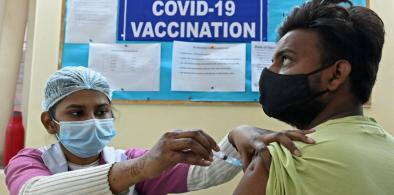
Unlike the US, vaccine hesitancy among large sections of the population is not an issue in India, but production is, writes Frank F. Islam for South Asia Monitor

India needs comprehensive labor market revival measures to improve pandemic-hit economy

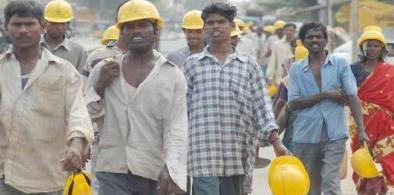
Labor economists and various surveys have said the pandemic and consequent job and income losses have pushed tens of millions of Indians into poverty in the last few months, writes Vaibhavi Pingale for South Asia Monitor

Taliban must end the senseless violence: A plea for peace and reconciliation in Afghanistan

I believe that as an Afghan and as a youth, after the full withdrawal of US troops from Afghanistan, no pretext and justification will exist for the Taliban to continue the war -  the jihad against a foreign power, writes Bator Arsalan for South Asia Monitor

India should stop being coy about China’s hegemonistic ambitions

The least India can do is to let the Tibetan community in India select a new Dalai Lama; if there are two Dalai Lamas (one selected in India and one in China), New Delhi should have nothing to do with the Beijing-backed Dalai Lama, writes  M.R. Narayan Swamy for South Asia Monitor

Newsletter Subscription

The subscriber's email address.
Stay informed - subscribe to our newsletter.