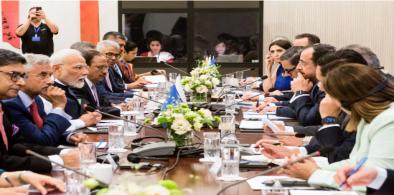

Japanese Prime Minister Sanae Takaichi arrived in New Delhi

India–Japan Summit: Strategic Convergence in a Changing Indo-Pacific Order

Japan has also proposed developing a Bay of Bengal–Northeast India Industrial Value Chain aimed at transforming the region into an integrated industrial zone. As part of the Free and Open Indo-Pacific vision, this includes strengthening cross-border connectivity with Bangladesh, Myanmar, Nepal and Bhutan. 

China and the Emerging Scenario in the Bay of Bengal

China's expressed interest in modernising and upgrading both Chattogram and Mongla ports suggests the emergence of an interconnected infrastructure network linking the Bay of Bengal with southwestern China through Myanmar. If realised, such connectivity would enhance trade flows, improve regional logistics and deepen China's economic footprint across the Bay of Bengal littoral, while simultaneously increasing Bangladesh's importance as a regional transit and connectivity hub.

Colombo to Kathmandu, China Seeks to Counteract US Moves Across South Asia

While Washington and New Delhi seek to strengthen bilateral ties with Colombo, Beijing has strategically engaged with the political forces that control the government. By engaging directly with actors at the core of Sri Lanka’s governance, Beijing appears to be signalling its strategic intent—projecting influence and reinforcing ideological ties. 

A Divided EU Faces Growing Scrutiny Over Taliban Contacts

Some analysts accuse the EU of double-standards arguing  that the EU has been condemning Taliban policies since they assumed power, but were now holding direct discussions with them. Such meetings undermine the EU's credibility as a defender of human rights and democratic values.

More on Geopolitics and Strategic Affairs

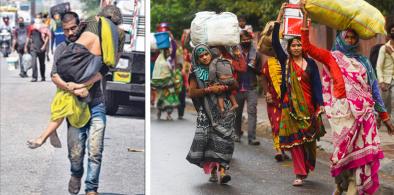
India needs to be fair to its own migrants, the city builders and sustainers

The census data of 2011 reflects that the four states - Uttar Pradesh (UP), Bihar, Rajasthan, and Madhya Pradesh -account for 50 percent of India's total inter-state migrants, write Suresh Kumar Patel, Abhishek Kumar & Noorul Quamer for South Asia Monitor

The Wuhan virus and China's biological warfare: Warnings the world ignored

Launch of China Virus/COVID-19  - which only India had guts to name biological weapon - had decades of preparation to deny/mitigate global response, writes  Lt Gen P. C. Katoch (retd) for South Asia Monitor

COVID 19: South Asian nations must take care of refugees, or we all are vulnerable

The Rohingya refugees staying inside and outside camps in Bangladesh and India are worth mentioning in the South Asian context. Their already slum-like dwellings, lack of fresh water and sanitation, densely-crowded living conditions and hunger puts them in a more perilous situation, writes Sariful Islam for South Asia Monitor

The final frontier: Women in combat roles must become the new normal

In the Indian context, the Indian Air Force and the Indian Navy have granted a permanent commission to women officers even as both have opened up some combat roles for women, write Subhranil Ghosh & Sayantan Bandyopadhyay for South Asia Monitor

Why Modi broke ranks from his nationalist 'friends' abroad

While Trump and Bolsonaro are worried about the virus' impact on their nation's markets, economies and, by extension, their political future, Modi was open enough to admit that the pandemic would have economic costs, but saving lives was more important for him and his government, writes Tarun Basu for South Asia Monitor

Rajapaksa’s Redux: Jingoism 1, Justice 0

The return of a Rajapaksa to the island’s highest office coincides with a potent form of majoritarianism in Sri Lanka, driven simultaneously by jingoism and fear among the electorate, writes Arman Sidhu for South Asia Monitor

The lockdown is India’s only hope

After independence, this is perhaps the first time India is being put to such a test, with every part of the country affected. Not confined to India alone, but the entire neighbourhood of South Asia is being engulfed by this pandemic, writes Brig Anil Gupta (retd) for South Asia Monitor 

Afghanistan a dangerous place for religious minorities, particularly Sikhs

Afghanistan has become an extremely dangerous country for its residents, especially religious minorities. After surviving there for hundreds of years, the Sikhs virtually don’t even have a right to exist anymore, writes Sanchita Bhattacharya for South Asia Monitor

Coronavirus pandemic should promote globalization, not reverse it

The disruption of supply chains coupled with an unprecedented economic disaster waiting for the world due to the pandemic, the pertinent question is - has the time come for the world to have a rethink for globalization, asks Pranay Kumar Shome for South Asia Monitor

Bangladesh: The corona pandemic has eclipsed Khaleda’s release from jail

Despite Khaleda Zia’s suspended sentence and release from jail, no news except about the coronavirus is attracting the people’s attention in Bangladesh, writes Swadesh Roy for South Asia Monitor

Modi’s outreach: SAARC can regain lost pedestal if its leaders fight Covid-19 together

If the habits of cooperation and mutual understanding developed while fighting together against COVID-19 allow the member countries to regain the lost pedestal of SAARC, it will augur well for peace and prosperity of the region, writes Monish Tourangbam for South Asia Monitor

COVID-19 fear grips densely populated South Asia

In the South Asian region, only Maldives and Sri Lanka fare relatively better in global rankings of quality of healthcare system. Pakistan, which spends the least on health, has only 0.6 beds per 1000 people compared to 8.5 beds per 1000 people in Germany, writes Kavita Bajeli Datt for South Asia Monitor

Coronavirus hits prospects for a revival in Kashmir this summer

For Kashmiris, who were hoping to come out of a long period of isolation after August 5, 2019 and subsequent government clampdown to ensure peace, the deadly virus has been a huge setback at a time when the thaw was beginning and restrictions easing, writes Brig Anil Gupta (retd) for South Asia Monitor

COVID-19 will redefine global governance

The government's role has to transition from that of an arrogant extortionist to a responsible shareholder: The reality is that governments across the world generally collect between 25-40% of income as taxes, writes Prof Rajendra Pratap Gupta for South Asia Monitor 

Myanmar’s Rakhine conflict threatens regional peace

It would be in the interest of all stakeholders, including India, to drive the agenda for peace to ensure the insurgency does not spiral into an uncontrollable cycle of violence which engulfs the region, writes Jaideep Chanda for South Asia Monitor