What racism is in the world’s oldest democracy, communalism unfortunately is in its largest version in India. It is no secret that sizeable sections of India’s largest community, the Hindus, are communal, writes Amulya Ganguli for South Asia Monitor


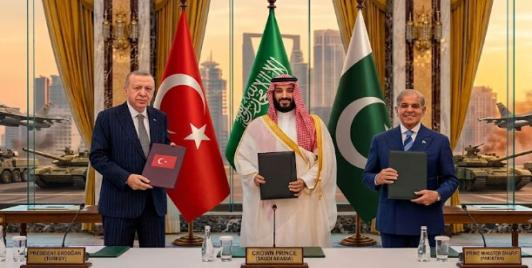
It would also explain why Pakistan is trying to preserve a distinction between supporting Saudi Arabia and fighting the Houthis. Pakistan has every reason to avoid another open-ended conflict in the Middle East. Its military is heavily committed to its own security challenges. Its economy cannot easily absorb the political and financial consequences
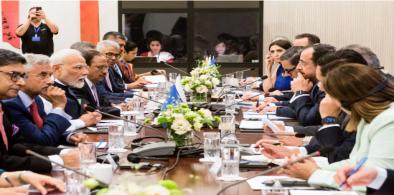
EU and India could establish a regular EU–India-Middle East Consultative Mechanism involving foreign-policy officials and experts. Its purpose would be to coordinate positions before major international gatherings and meetings.

For Sri Lankan politics, this is more than diplomatic sightseeing. It raises a fundamental question whether the JVP is developing a sophisticated strategy of balancing relations with India and China or is it gradually adapting itself to the organisational models of powerful one-party or dominant-party systems in China and India respectively?

The ongoing civil war in Myanmar has caused an influx of armed cadres (Meitei, Naga and Kuki) into Manipur's border tracts like Kamjong district, further squeezing finite land resources and aggravating historical territorial disputes. What began as a localized dispute under the state's newly elected government in February 2026 has escalated into intense, multi-district armed warfare.
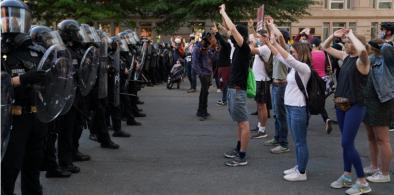
What racism is in the world’s oldest democracy, communalism unfortunately is in its largest version in India. It is no secret that sizeable sections of India’s largest community, the Hindus, are communal, writes Amulya Ganguli for South Asia Monitor
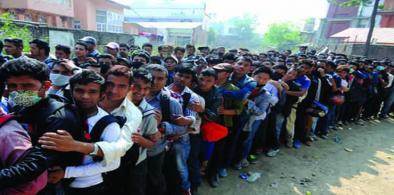
After the pandemic, migrant workers, including the semi-skilled and skilled labour and small-scale business people, and private job holders, who are returning from abroad, will form the neo-lower class - a new working class - that will constitute a significant population in Nepal, writes Roshan Chirag for South Asia Monitor
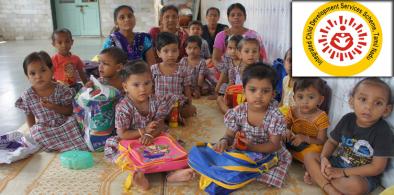
South Asian countries can use ICDS as a blueprint and further formulate their respective policies following a tailored and local approach depending on the domestic factors pertaining to their region, writes Vishwajeet Singh Raghav for South Asia Monitor
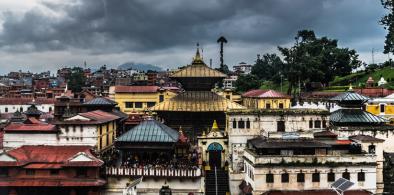
It is advisable for the governments - of both Nepal and possibly India - to take a leaf from the UK Coronavirus Act, 2020 which was enacted for defeating COVID-19, writes Jivesh Jha for South Asia Monitor

On this Environment Day, let us commit ourselves to protect the biodiversity, for our own existence, writes Pradeep S. Mehta, George Cheriyan & Simi T. B.for South Asia Monitor

State of the environment today is certainly in a state of emergency. Many would call June 5, 2020, as World Emergency Day. In reality, today environment and emergency have indeed become synonyms, writes Rajendra Shende for South Asia Monitor
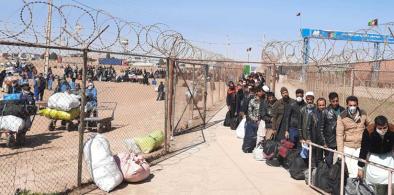
This outbreak and the requirements of precautionary measures have emerged as an extra health threat to migrants who work abroad to keep their families well and also to asylum seekers. These people play a crucial role both in the economy of the countries they live in and in their countries of origin too, writes Abdul Alim for South Asia Monitor
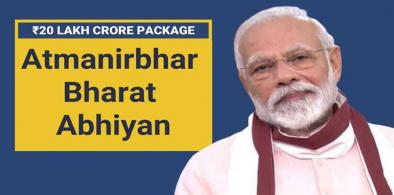
There seems to be a strong argument that the singular focus of the stimulus package should have been a fiscal stimulus, which would have increased public spending in physical or human capital, raised money in the hands of residents by direct cash transfers and subsidies and provided safety nets like job guarantee and unemployment benefits, writes Partha Pratim Mitra for South Asia Monitor
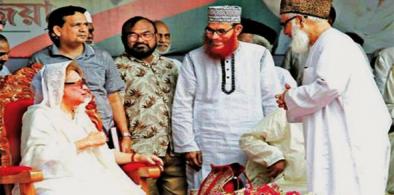
Leaders of the BNP and Jamat-E-Islami are thinking that the corona pandemic will totally change the political situation in the country and will help them seize power once again, writes Swadesh Roy for South Asia Monitor
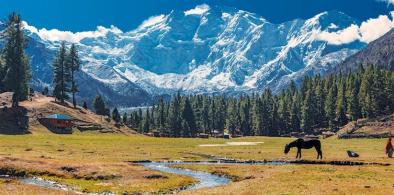
With India–China military tensions already high in parts of eastern Ladakh, the construction of the Diamer-Bhasha dam will add to new security challenges for India, writes Nilova Roy Chaudhury for South Asia Monitor
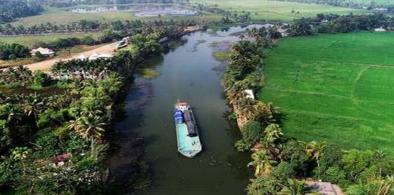
This inland waterway route looks all set to ensure efficient and effective cargo movement between the two neighbours and herald a new chapter in bilateral cooperation in South Asia, writes Sreeradha Datta for south Asia Monitor
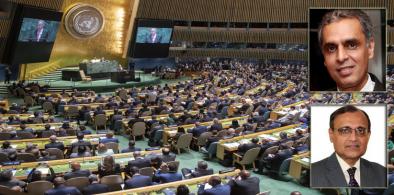
India has a pool of talented diplomats but their skills will be expended on putting lipstick on a pig if the government at home promotes narrow, sectarian ideologies that are at variance with accepted international norms, writes E. D. Mathew for South Asia Monitor
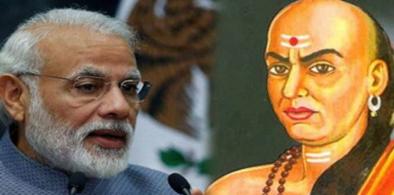
Modi may not be getting the kind of feedback and reality check that is vital for effective and empathetic governance and this is where, apart from Chanakya, the Canute principle acquires relevance, writes C Uday Bhaskar for South Asia Monitor
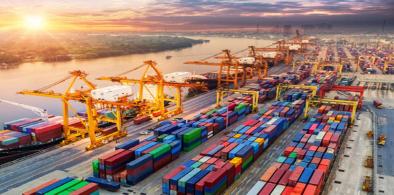
From the South Asian Association for Regional Cooperation (SAARC) countries, India is emerging as one of the top alternative manufacturing destinations, writes Dr. Mohammad Rezaul Karim for South Asia Monitor
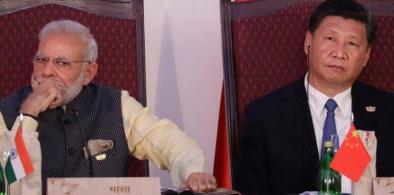
China is sure that India would initiate back-room talks and negotiate some face-saving device to disengage. But, there lies the danger, writes Brigadier Deepak Sethi (retd) for South Asia Monitor