
International Border between Bangladesh and West Bengal

Bangladesh–West Bengal Relations: Beyond ‘Islamisation’ and ‘Hinduisation’

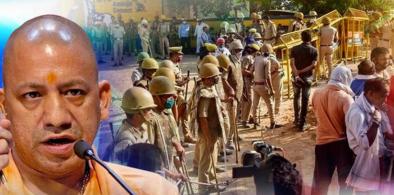
Neither Bangladesh nor India — including West Bengal — is likely to fully concede its position. The future instead lies in pragmatic compromise, where domestic political constraints are balanced against the imperatives of regional cooperation. Ultimately, the trajectory of India–Bangladesh relations will depend less on identity politics and more on whether both sides can align economic necessity with political will.

Strait of Hormuz: More than a Regional Flashpoint; Prolonged Instability Could Ripple Across Continents

The broader reality is that even if a political understanding emerges, restoring confidence in the Strait may take far longer than restoring a ceasefire. Shipping markets operate as much on perception of risk as on military realities. Tanker operators, insurers, charterers, and energy traders require predictability — and that predictability is currently absent.

Trump-Xi Reset Could Leave India Strategically Exposed

New Delhi now occupies an awkward middle space: not fully trusted by the West, yet no longer fully aligned with the broader Global South consensus either. That ambiguity becomes riskier if Washington and Beijing move into even a temporary phase of strategic stabilisation.

Renewing Ties with Bangladesh: An Agenda for the new Indian High Commissioner

The major bilateral issue is border security and management. While India claims that millions of Bangladeshis enter India illegally, reside and work here, Bangladesh dismisses that contention outright, saying that as their per capita income was higher than India’s, there was no reason for economic migration from Bangladesh to India. 

More on Geopolitics and Strategic Affairs

A corona-clouded election in Sri Lanka sets a new welcome trend

President Gotabaya Rajapaksa set a fine example of neutrality of the public service in the forthcoming general elections by instructing that no public official serving in the security forces, government service, corporations, boards, and statutory bodies should engage in political activities, writes Sugeeswara Senadhira for South Asia Monitor

Structural shifts in Nepal’s India policy: New Delhi should continue to engage more

The use of anti-India sentiment is an old stratagem used by Nepalese politicians to assert their own relevance and divert attention away from the real problems facing Nepal, writes Shakti Sinha for South Asia Monitor

Easing of India-China standoff: Can China be trusted?

China’s fresh illegal claims on Bhutanese territory could lead to PLA intrusions to pressure India and orchestrate another standoff, writes Lt Gen P. C. Katoch (retd) for South Asia Monitor 

US-India strategic consultations: Delhi treads cautiously on Chinese 'threats'

India has been careful to maintain that its closer ties with the US and its Indo-Pacific partners were not directed against anyone – diplomaticspeak that they weren't meant to be anti-China, writes Arul Louis for South Asia Monitor

An India-China truce with a difference: Why the disengagement may work this time

The declaration of truce on July 6, the 85th birthday of exiled Tibetan spiritual leader, Dalai Lama and two days after the Dharma Chakra Day on July 4, reminds of Buddha’s message that was carried by Indians to China, writes Rajendra Shende for South Asia Monitor

South Asia: Fiscal policy as an option for economic revival

The data on the growth rates in Gross Domestic Product between 2015 to 2020 show that South Asia would show the maximum decline in 2020 after growing the fastest between 2015-2019 at an annual average rate of 6.1 percent as compared to 4.8 percent for Southeast Asia and 6.0 percent for East Asia, writes Partha Pratim Mitra for South Asia Monitor

Nepal can choose to go the Bangladesh way or Pakistan way in dispute settlement with India

So, there are two examples in front of Nepal now; one is Pakistan, and another Bangladesh, which one will they choose? writes Swadesh Roy for South Asia Monitor

The irony of President Trump’s H-1B action

Trump needs to be seen as doing something to save the economy and American jobs. H-1B, which has been a bogeyman for the protectionists and economic nationalists, is an easy target during this downturn, writes Frank Islam for South Asia Monitor

Global partnerships will help Bangladesh revive COVID-hit economy

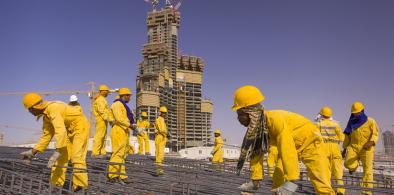
The Bangladesh government is trying its best to restore jobs abroad for the millions of migrant workers so that the large remittance flow continues, writes Dr. Mohammad Rezaul Karim for South Asia Monitor

The flickering beacons of democracy: India and the USA

India needs Modi to rediscover his inner ecumenical soul. To do that, Modi must become the leading proponent of and advocate for a “unifying nationalism,”   writes Tom de Boor and Ed Crego for South Asia Monitor

Re-thinking NAM in a post-COVID-19 century

We are approaching the 65th anniversary of the Bandung Principles this year and 60th anniversary of the NAM in 2021. There is a renewed call in the NAM communique for the revitalization and strengthening of NAM, writes Sayantan Bandyopadhyay for South Asia Monitor

India must prepare for a multi-domain war

This is a defining moment in the history of India and its actions could well dictate its standing in the world,  writes Lt Gen PR Kumar (retd) for South Asia Monitor

Is a total boycott of Chinese goods by India feasible?

Can orchestrated symbolism of smashing Chinese TVs create a mass movement when no domestic alternatives are available to our extremely price-sensitive consumers? writes Brig Deepak Sethi (retd) for South Asia Monitor 

Afghanistan: No place for women

The February 29, 2020 deal between the US and the Taliban could pave the way for a peace that Afghans urgently pursue. But, then again there are huge risks for women’s rights in this process, as the Taliban remain deeply misogynistic, writes Dr. Sanchita Bhattacharya for South Asia Monitor

Will intra-Afghan dialogue bring peace to the Afghan people?

There are reports that the US will withdraw its forces from Afghanistan before the timeline. This will have bad consequences for the security of Afghanistan, the region, and the world, writes Mohamad Mosa Ahmadzai for South Asia Monitor