
NATO Headquarters in Brussels (NATO photo)

Why the NATO summit in Ankara matters for South Asia

The NATO summit can indirectly transform India from a regional power into a West Asia stakeholder by integrating India into maritime security frameworks, supporting connectivity projects, strengthening intelligence ties, reinforcing India’s role as an alternative to China. The long-term outcome is that India could emerge as a pillar of stability linking Europe, the Gulf, and the Indo-Pacific

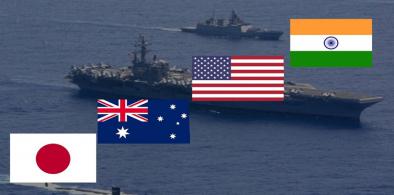
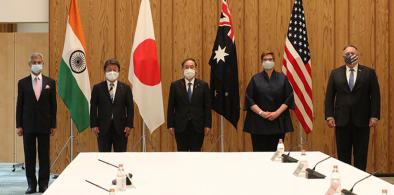
India–Japan Summit: Strategic Convergence in a Changing Indo-Pacific Order

Japan has also proposed developing a Bay of Bengal–Northeast India Industrial Value Chain aimed at transforming the region into an integrated industrial zone. As part of the Free and Open Indo-Pacific vision, this includes strengthening cross-border connectivity with Bangladesh, Myanmar, Nepal and Bhutan. 

China and the Emerging Scenario in the Bay of Bengal

China's expressed interest in modernising and upgrading both Chattogram and Mongla ports suggests the emergence of an interconnected infrastructure network linking the Bay of Bengal with southwestern China through Myanmar. If realised, such connectivity would enhance trade flows, improve regional logistics and deepen China's economic footprint across the Bay of Bengal littoral, while simultaneously increasing Bangladesh's importance as a regional transit and connectivity hub.

Colombo to Kathmandu, China Seeks to Counteract US Moves Across South Asia

While Washington and New Delhi seek to strengthen bilateral ties with Colombo, Beijing has strategically engaged with the political forces that control the government. By engaging directly with actors at the core of Sri Lanka’s governance, Beijing appears to be signalling its strategic intent—projecting influence and reinforcing ideological ties. 

More on Geopolitics and Strategic Affairs

Rafale induction and the make-believe brigade: India should focus on hard techno-military realities

The Ambala media extravaganza ought to encourage an internal review by the Modi government about strategic communication and related signalling in matters military. Carry a big stick but talk softly is an adage that has not lost its relevance, writes C Uday Bhaskar for South Asia Monitor

US-India-Sri Lanka triad will be beneficial for IOR and Indo-Pacific

Trade instruments like the South Asian Free Trade Area (SAFTA) and the Indo-Sri Lanka Free Trade (ISFTA) agreements are some of the gainful tools with which the US can use to access South Asia’s consumer markets, write Srimal Fernando and Vedangshi Roy Choudhuri for South Asia Monitor 

Child marriages go up in Bangladesh during COVID-19: Need to strike at root causes

It is high time that the child marriage rate - gone up during the pandemic - should be brought down drastically and for this, the Bangladesh government, NGOs, and society at large should work together to put an end to this menace, writes  Sarmin Akter for South Asia Monitor

Nepal-India cultural and social ties hit hard by border sealing

Cross border marriage, i.e., matrimony between Nepali son/daughter and India’s son/daughter, is very common in bordering districts of Uttar Pradesh and Bihar. This is the reason why Nepal's Madheshis treat Indian soil as their relatives’ home, not a foreign land, write Jivesh Jha & Roshan Kumar Jha for South Asia Monitor

It's going to be a long eyeball-to-eyeball standoff with China: But India is well prepared

The Chinese had realised that not only were they outnumbered but totally outflanked, making their position untenable. Any armed clash hereafter would have been suicidal, writes Anil Bhat for South Asia Monitor 

China’s nationalism and global aspirations: India can turn a challenge into an opportunity

India has tremendous goodwill and support from the international community which will influence Chinese future manoeuvres against India, writes Lt Gen PR Kumar (retd) for South Asia Monitor
The Congress rebellion that never was: India's political parties lack internal democracy

Though the party crisis seems to have blown over, for the time being, the future of the Congress does not appear to be bright. And it has nothing to do with the ruling Bharatiya Janata Party (BJP), writes Vinod Aggarwal for South Asia Monitor

Ironing out the bumps in India-Bangladesh ties

India-Bangladesh relations have grown deeper and wider in scope in the past decade. But irritants and hitches can develop between neighbours with even the best of ties, writes Shubha Singh for South Asia Monitor

Indian Americans set to wield greater influence in US politics

It can safely be concluded that 2020 is the year the Indian American community has become relevant in American politics, writes Frank Islam for South Asia Monitor 

Cancer and chronic disease patients bear a heavy burden during COVID

Oncologists across the world have expressed concern over the probability of rising cancer mortality and morbidity, not because of the coronavirus pandemic per se, but because of the inability of the healthcare system to treat cancers as it normally should, writes Dr (Col) R Ranga Rao for South Asia Monitor

Will Shringla's visit reshape the complex relations between Bangladesh, India and China?

Bangladesh takes a neutral position to whatever happens between the two Asian giants, but Chinese President Xi Jinping's growing influence and strong defence ties with Bangladesh are making India concerned, writes Sarmin Akhter for South Asia Monitor

Bangladesh's controversial digital security act: A weapon to silence independent media?

Using the controversial Act as a tool the Bangladesh government has tried to keep surveillance on journalists, and also to repress and muffle the independent voices in social media and traditional mass media, writes Aashish Kiphayet for South Asia Monitor

Pranab Mukherjee: President who could have been India's PM was a 'true friend' of Bangladesh

That Mukherjee influenced former prime minister Manmohan Singh’s decision to grant Bangladesh a billion dollars, the highest India had then extended to any single country, and that the amount was almost tripled when Hasina-led Bangladesh absorbed it all, is not very well known, writes Mahendra Ved for South Asia Monitor

China specter over South Asia impacting India-Bangladesh ties

India and China will do their best to edge each other out in their competition for dominance in the Bay of Bengal and will try to squeeze an economically weak Bangladesh, writes Lt Gen PR Kumar (retd) for South Asia Monitor 

China using proxies to accelerate CMEC and tame Myanmar like Pakistan

Despite all this, Myanmar should expect China to keep tightening its vice-like grip using terrorists, writes Lt Gen Prakash Katoch (retd) for South Asia Monitor