

Whoever is the winner, the planet would be the loser. The margins of the defeat of the planet would depend on who wins the American presidential race, writes Rajendra Shende for South Asia Monitor
China’s growing influence in Sri Lanka is an immediate concern for India as the resident power in the region, but it is also a global concern for the United States.
The Indian government is caught in a bind. Despite the BNP government’s outrage, for Delhi to hasten Hasina’s extradition is not an option.
The borderland TTP now exploits is the same terrain that Pakistan's own security establishment worked for decades to create as "strategic depth." The world of proxy-war infrastructure seldom remains directed towards where its architects have aimed.
A significant factor that emerged after India launched Operation Sindoor against Pakistan in May 2025 was the strain in the India-US relationship under the Trump administration, driven by aggressive tariff disputes and policy friction. This indirectly accelerated India’s push to diversify partnerships, prompting New Delhi to lean more pragmatically into closer economic and strategic ties with middle powers such as Australia.
Whoever is the winner, the planet would be the loser. The margins of the defeat of the planet would depend on who wins the American presidential race, writes Rajendra Shende for South Asia Monitor
Indeed the time has come when the question should not be whether Pakistan deserves GSP+ privileges, but whether it is time to impose tough economic sanctions on the country, a failed state that has only served to provide a safe haven to tens of thousands of global terrorists and whose only raison d’etre is to kill and harm innocent civilians all around the world and destabilise the peaceful democracies like the European Union and India, writes Sunil Prasad for South Asia Monitor
Pakistan is good at making policies but very bad at implementing them. The negligence of the Pakistan government in making development and business entities follow the EMP procedure has neither been debated nor discussed nor followed by strong laws, writes Furqan Hyder Shaikh for South Asia Monitor
The likelihood of more rebellions against the Imran Khan government and army threatens to tear asunder the fragile religious and societal fabric of Pakistan, writes Pranay Kumar Shome for South Asia Monitor
Many lessons could be learned from Indira's murder. The first is that there will be repercussions for repression and authoritarian tendencies; and second, political power should not be used for partisan goals, write Dr Vineeth Mathoor & Sunil Kumar for South Asia Monitor
For the first time, Biegun made it clear through his visit that Bangladesh has strategic importance. This is for the first time an attempt has been made by the US to engage Dhaka directly since China took several proactive measures to help Bangladesh deal with COVID-19, writes Swadesh Roy for South Asia Monitor
Even during the rule by earlier ‘proxies’ of which Nawaz was certainly one, the military was not exposed to attacks like the ones at the three back-to-back opposition rallies through October at Gujranwala, Karachi, and Quetta. This is an unprecedented situation. The Army has lost some of its image as the nation’s ‘saviour,’ writes Mahendra Ved for South Asia Monitor
Given the enormity of the challenge - there are nearly a dozen classical and more than 150 folk dance forms in India - efforts to support artists need to be scaled and replicated throughout the country, writes Frank F. Islam for South Asia Monitor
Most major Asian nations have deep concerns about Chinese assertiveness and hegemonic orientation under President Xi Jinping, writes Cmde C Uday Bhaskar (retd) for South Asia Monitor
The attention of the current regime in Pakistan will be diverted to firefight for survival and inevitably delays the implementation of crucial reforms to strengthen the economy, writes N Chandra Mohan for South Asia Monitor
According to the Bangladesh National Woman Lawyer Association, every year an average of 11 women in the country commit suicide due to cybercrime, writes Monira Nazmi Jahan for South Asia Monitor
The inhibitions of the Indian government to upgrade relations with Taiwan are baffling. It stems from keeping the military out of strategic security formulations, status quo bureaucratic advice and needless fear of China, writes Lt Gen Prakash Katoch (retd) for South Asia Monitor

The recent deadly clashes between the two Rohingya groups at the camp in Cox's Bazar has posed a major security threat to Bangladesh, writes Aashish Kiphayet for South Asia Monitor
If rape in India is to be meaningfully addressed, the onus lies on society to review and correct deeply ingrained socio-cultural norms and practices that are inherently biased against women and the girl child, writes Cmde C Uday Bhaskar (retd) for South Asia Monitor
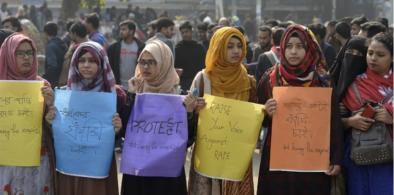
As Pakistan enters its winter of discontent, yet again, Maryam Nawaz has emerged as a front-ranking leader in a male bastion, writes Mahendra Ved for South Asia Monitor