According to the EIU, for a decade Bangladesh has been in the middle of an autocratic and flawed democratic system, known as the hybrid regime, writes Mahmudul Hasan for South Asia Monitor


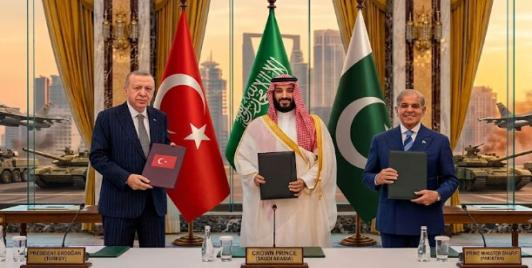
It would also explain why Pakistan is trying to preserve a distinction between supporting Saudi Arabia and fighting the Houthis. Pakistan has every reason to avoid another open-ended conflict in the Middle East. Its military is heavily committed to its own security challenges. Its economy cannot easily absorb the political and financial consequences
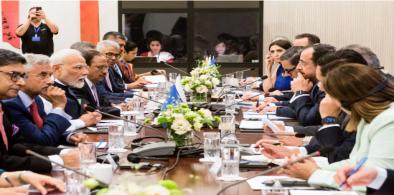
EU and India could establish a regular EU–India-Middle East Consultative Mechanism involving foreign-policy officials and experts. Its purpose would be to coordinate positions before major international gatherings and meetings.

For Sri Lankan politics, this is more than diplomatic sightseeing. It raises a fundamental question whether the JVP is developing a sophisticated strategy of balancing relations with India and China or is it gradually adapting itself to the organisational models of powerful one-party or dominant-party systems in China and India respectively?

The ongoing civil war in Myanmar has caused an influx of armed cadres (Meitei, Naga and Kuki) into Manipur's border tracts like Kamjong district, further squeezing finite land resources and aggravating historical territorial disputes. What began as a localized dispute under the state's newly elected government in February 2026 has escalated into intense, multi-district armed warfare.
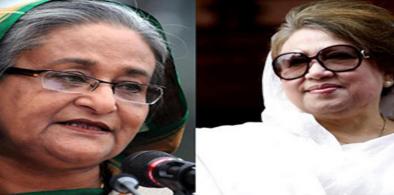
According to the EIU, for a decade Bangladesh has been in the middle of an autocratic and flawed democratic system, known as the hybrid regime, writes Mahmudul Hasan for South Asia Monitor
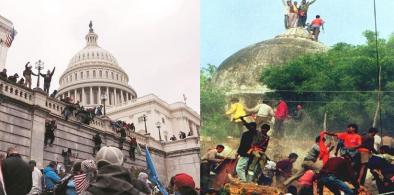
It is clear, therefore, that the politics of polarization which divides the citizens of a country - whether in the US, India or countries in Europe - between nationalists and anti-nationals is here to stay, writes Amulya Ganguli for South Asia Monitor
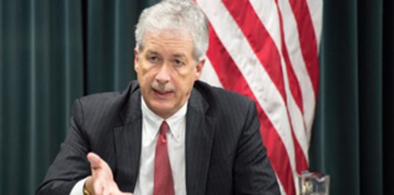
Drawing on his experience of working with New Delhi, Burns wrote in what could be his roadmap for relations between New Delhi and Washington, emphasising continuity saying that it was bigger than the ties between President Donald Trump and Prime Minister Modi, writes Arul Louis for South Asia Monitor
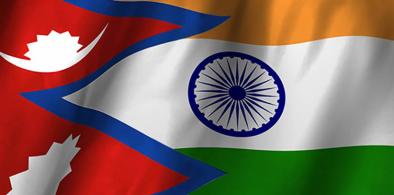
Nepal’s story is not much different than that of India’s. Nepal’s prime ministers - Girija Prasad Koirala (1994), Manmohan Adhikari (1995), and K P Sharma Oli (2020-) have taken steps to dissolve the house despite their parties’ being in majority, write Jivesh Jha & Alok Kumar Yadav for South Asia Monitor
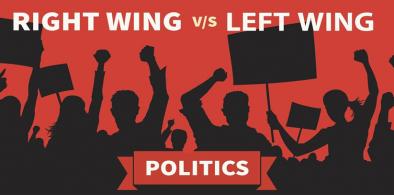
If white supremacism is the basis of right-wing politics in America and Europe, Hindu supremacism is in India. Both have their roots in the concept of the "Master Race" and the "Chosen Land", writes Amulya Ganguli for South Asia Monitor
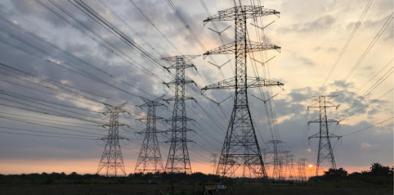
South Asia’s diverse topography lends itself to greater cross-border power trade, but political inhibitions have ensured that actual progress has been less than the potential, writes N Chandra Mohan for South Asia Monitor

Polarization over the prevailing socio-political orientation since Prime Minister Narendra Modi assumed office has been marked and a bitter sectarian fissure has emerged in India, writes Cmde C Uday Bhaskar (retd) for South Asia Monitor
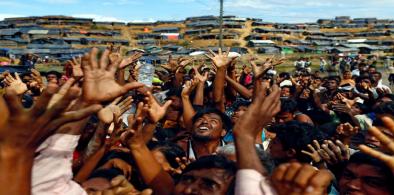
India is now a non-permanent member of the Security Council from January 2021. Following this, India has expressed interest in holding talks with Bangladesh and Myanmar on safe, dignified, and sustainable repatriation of Rohingya, writes Mohammad Rubel for South Asia Monitor
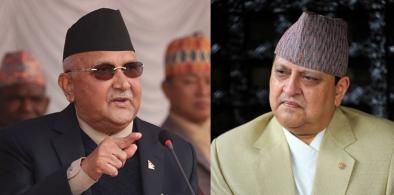
Nepal scarcely has political ground prepared for the king to return to the throne. The monarch also blatantly failed to deliver and fulfill their promises even when it had absolute power in the country's economic development, writes Bishesh Joshi and Laavesh Thapa for South Asia Monitor
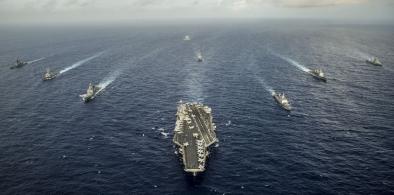
Presently, there are almost two million seafarers worldwide with a significant number from the South Asian sub-continent. Indians in fact constitute the third-largest number of seafaring officers in the world, writes Cmdre Anil Jai Singh (retd) for South Asia Monitor
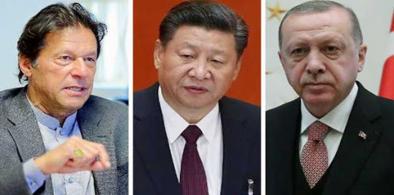
While the US and Israel is focused on Iran going nuclear, Pakistan is quietly transferring nuclear technology to Turkey. Beijing will be too happy to conduct Turkey’s first nuclear test on Chinese soil as it did for Pakistan, writes Lt Gen Prakash Katoch (retd) for South Asia Monitor
A look at the South Asia Subregional Economic Cooperation (SASEC) countries - Bangladesh, Bhutan, India, Maldives, Myanmar, Nepal, and Sri Lanka - shows the importance of effective and modern trade facilitation measures, writes Partha Pratim Mitra for South Asia Monitor
India and EU today need innovative new ideas to enhance their trade and economic cooperation, this being the key component for stronger partnership promoting economic growth in these troubled times, writes Sunil Prasad for South Asia Monitor
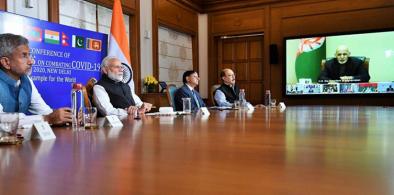
Coronavirus emergency brought together these South Asian nations as they reposed trust in SAARC. Thus, the pandemic delivered a promising indication of revitalization, writes Harsh Mahaseth & Saumya Pandey for South Asia Monitor
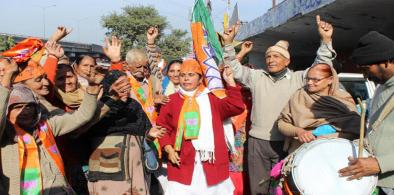
This is the BJP’s first success in the valley where it has always been regarded as untouchable. However, since local elections generally reflect the popularity of candidates belonging to the area, an outcome that ignores the wider political divisions is not unusual, writes Amulya Ganguli for South Asia Monitor