
The Indian American community has propelled its way to relevance in American politics over the past two decades. The representation of the community has increased at every level with each election cycle, writes Frank F. Islam for South Asia Monitor

Neither Bangladesh nor India — including West Bengal — is likely to fully concede its position. The future instead lies in pragmatic compromise, where domestic political constraints are balanced against the imperatives of regional cooperation. Ultimately, the trajectory of India–Bangladesh relations will depend less on identity politics and more on whether both sides can align economic necessity with political will.
The broader reality is that even if a political understanding emerges, restoring confidence in the Strait may take far longer than restoring a ceasefire. Shipping markets operate as much on perception of risk as on military realities. Tanker operators, insurers, charterers, and energy traders require predictability — and that predictability is currently absent.
New Delhi now occupies an awkward middle space: not fully trusted by the West, yet no longer fully aligned with the broader Global South consensus either. That ambiguity becomes riskier if Washington and Beijing move into even a temporary phase of strategic stabilisation.
The major bilateral issue is border security and management. While India claims that millions of Bangladeshis enter India illegally, reside and work here, Bangladesh dismisses that contention outright, saying that as their per capita income was higher than India’s, there was no reason for economic migration from Bangladesh to India.
The Indian American community has propelled its way to relevance in American politics over the past two decades. The representation of the community has increased at every level with each election cycle, writes Frank F. Islam for South Asia Monitor

South Asians account for 15 million workers in these countries. The prospect now is for return migration back to India, Pakistan, Bangladesh, Nepal, and Sri Lanka which can only deepen the existing economic gloom in the region, writes N Chandra Mohan for South Asia Monitor

One of Jaswant Singh's finest meetings was with the New York Times editorial board, where members extensively asked about the Indian nuclear programme and why India wasn’t signing the Non-Proliferation Treaty. He patiently and firmly placed India’s position, writes Sanjoy Hazarika for South Asia Monitor

The energy situation in South Asia has been that it is primarily energy fuel deficient as all countries in the region are dependent on substantial imports of fuel, including coal, oil, and natural gas, to meet their growing energy needs, writes Partha Pratim Mitra for South Asia Monitor

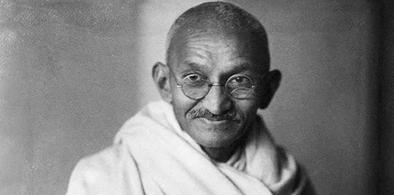
Even as India has marked 70 years of the Republic in January, the closure of the 150th birth anniversary of Bapu reveals the degree to which the nation has moved away from the Gandhian spirit and ethos, writes C Uday Bhaskar for South Asia Monitor

In the past few years, radical extremists have countered Mahatma Gandhi and his teaching and his preaching with acts of ‘war,’ ‘hate,’ and ‘violence,’ writes Frank F. Islam for South Asia Monitor
Gandhi said, means are foreseeable, ends are not. Thus, means can be controlled, managed and guaranteed, writes Ram Krishna Sinha for South Asia Monitor
Churails reflects the voice of Pakistani women against the repressive traditional patriarchal societal norms, writes Azeemah Saleem for South Asia Monitor
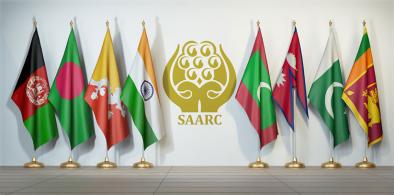
If India is to defend its turf against China in the SAARC region, it must contribute to greater flows of intra-regional trade and investments by accepting “asymmetrical responsibilities” in opening its market to neighbours without insisting on reciprocity, writes N Chandra Mohan for South Asia Monitor
While there is a common belief that the tit-for-tat game that India is playing with China is petty and self-destructive, this strategy has been proven to be pretty useful in the current faceoff, writes Akshat MIttal for South Asia Monitor
The Cabinet Division of Bangladesh, the executive office of the Prime Minister, has included kaizen in the annual performance agreement (APA) with the allocation of some weightage, writes Dr. Mohammad Rezaul Karim for South Asia Monitor
What is needed between the two countries is close cooperation and not a competition – this is obligatory in the Nepal-India relationship – and of course, no confrontation both at political and people-to-people relations, as this will lead to a catastrophic, writes Maj. Gen. Binoj Basnyat (retd) for South Asia Monitor
The dilemma of growing COVID-19 cases and reviving economic activity is crucial at this juncture which the leadership in the South Asia region will have to resolve and, herein, lies the challenge for it, writes Partha Pratim Mitra for South Asia Monitor
Pakistani cinema industry, even as it fears being swamped by Bollywood, realises the need for films from India that, given the common culture, resonate well with the cinegoers, writes Mahendra Ved for South Asia Monitor
In view of the unprecedented tension between the Indian Army and the Chinese Peoples’ Liberation Army on the Line of Actual Control since early May 2020, it is vitally important for ordnance factories to be able to meet large requirements of arms, ammunition, vehicles, and various equipment, writes Col Anil Bhat (retd) for South Asia Monitor