India for the time being has chosen to call for an adjournment on the multidimensional chessboard of multilateral trade/strategic agreements which can be seen as a wise move, writes Kumardeep Banerjee for South Asia Monitor



When a Chinese company won the contract to establish hybrid wind and solar energy projects on three islands off the northern Jaffna peninsula—just 45 km from Rameswaram in Tamil Nadu—the security implications extended far beyond economics. Against this backdrop, India’s concerns are entirely justifiable. Sri Lanka faces a pressing question: how will the nation confront the infiltration of Chinese global criminal networks? Since Mahinda Rajapaksa’s tenure, Chinese presence in Colombo has steadily increased, with Sri Lanka positioned as a partner state in Beijing’s Belt and Road Initiative.
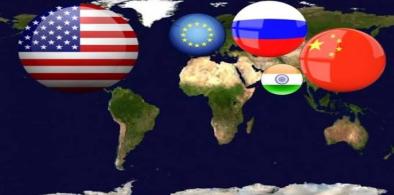
The growing role of middle powers adds another layer of complexity. Yet the term itself remains imprecise. Not every country outside the United States and China qualifies as a middle power, and many reject the label altogether. India, for example, increasingly sees itself as a leading power pursuing strategic autonomy rather than as a middle power seeking alignment with one bloc or another.
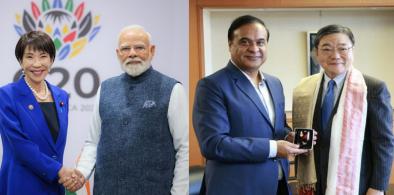
If India and Japan genuinely envision Northeast India as the gateway connecting South Asia with the Bay of Bengal and the Indo-Pacific, then the next chapter of the partnership cannot remain confined to New Delhi and Tokyo. It must also be written in Guwahati, Shillong, Aizawl, Imphal, Agartala, Kohima, Gangtok and Itanagar
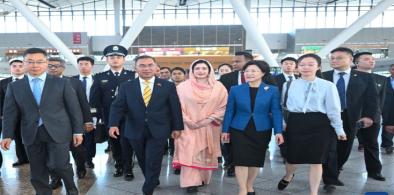
In several neighbouring countries, including Bangladesh, Sri Lanka and Nepal, China has demonstrated an ability to move from agreements to implementation far more rapidly than many competitors. India, despite enjoying unmatched geographic and cultural advantages, has often struggled with delays
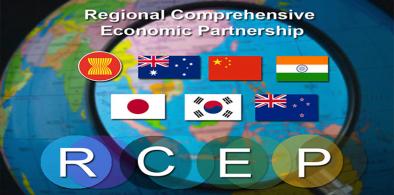
India for the time being has chosen to call for an adjournment on the multidimensional chessboard of multilateral trade/strategic agreements which can be seen as a wise move, writes Kumardeep Banerjee for South Asia Monitor
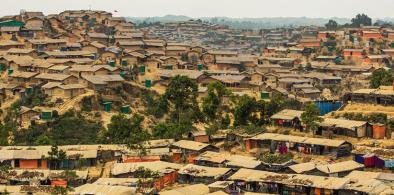
Little help has been extended to Bangladesh to resolve the Rohingya problem. Even in international forums like the UN, no one voted for Bangladesh when it brought a resolution condemning human rights violations in Myanmar, particularly against Rohingya Muslims, writes Swadesh Roy for South Asia Monitor
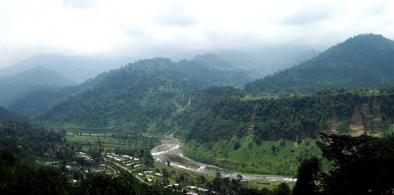
China’s aim of building these new villages along the LAC with India is multiple. These helped populate Han Chinese closer to the border areas, overwhelming the Tibetan population demographically since the invasion and occupation of Tibet in 1959-51, writes Lt Gen Prakash Katoch (retd) for South Asia Monitor

India is forecast to be the biggest contributor to the ‘new normal’ doubling its renewable additions in 2021. Wind and solar additions are expected to jump by 30 percent in both the US and China, writes Rajendra Shende for South Asia Monitor

In the course of his advisory duties, Yeager had made good friends in the higher echelons of the Pakistan Air Force (PAF), and within a short period, he fell prey to an affliction, known, amongst diplomats, as ‘localitis,’ i.e, a deep sympathy, verging on identification, with the host country and its people, writes Admiral Arun Prakash (retd) for South Asia Monitor

Would it be appropriate to suggest that the Modi government defer the construction of a new parliament building in Delhi, and use the funds (approximately Rs. 971 crores) to create a corpus for post-COVID South Asian rebuilding? writes Cmde C Uday Bhaskar (retd) for South Asia Monitor
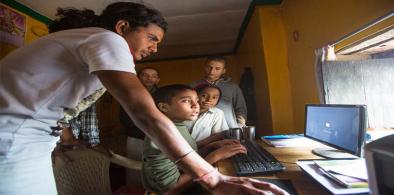
The COVID-19 pandemic has brought in additional challenges to tackle amidst the technological disparities within Asia. There is a digital divide witnessed in the economies of South Asia, writes Partha Pratim Mitra for South Asia Monitor

Pitching for her exiled father, Maryam has become a veteran. But she appeared to yield space to Aseefa, the surprise debutante, in terms of public response and social media fervour that followed this Multan rally, writes Mahendra Ved for South Asia Monitor
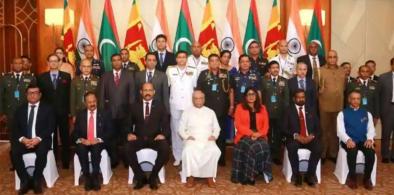
The resumption of this interaction last held in New Delhi in 2014 is an important step forward in recognising the magnitude of the external and internal threat to maritime security and to develop a shared approach to the security of this region, writes Cmde Anil Jai Singh (retd) for South Asia Monitor
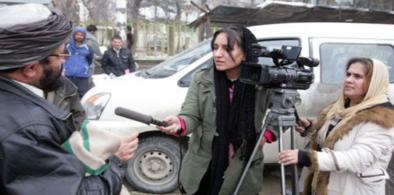
The protection for journalists remains the biggest challenge in Afghanistan, and while women journalists make up just 17 percent of the news force, 30 percent of them have reported violence, writes Farida Nekzad for South Asia Monitor
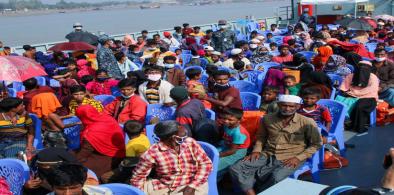
It is the height of hypocrisy if the global community led by the West lets Myanmar off the hook and instead pressurises poor Bangladesh to not only shelter more than a million people in the overcrowded country but even dictate locations for settling them, writes Subir Bhaumik for South Asia Monitor
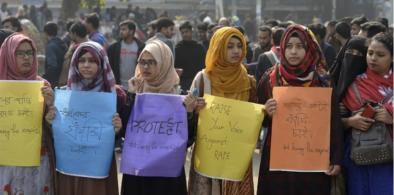
Experts feel that impunity enjoyed by rapists in the country are not due to the fact that Bangladesh does not have a high punishment for rape - currently the highest punishment afforded is life imprisonment - but that rapists are convicted in only three percent of the cases, writes Tasmiah Nuhiya Ahmed for South Asia Monitor

The anger of these agitating farmers is yet another manifestation of the narrative of farmer distress that stalks the India growth story, writes N Chandra Mohan for South Asia Monitor
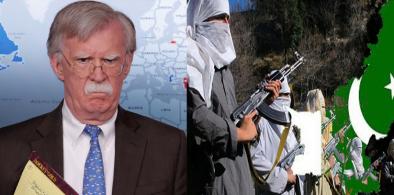
With the outgoing President Donald Trump having ordered a nearly full US troop withdrawal from Afghanistan after almost two decades in the war-torn country, in Bolton’s assessment there are clear dangers of a serious instability that could threaten not only the South Asian region but the rest of the world, writes Mayank Chhaya for South Asia Monitor
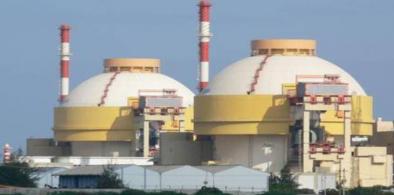
Yet no nuclear scientist has been targeted in Pakistan, not even Abdul Qadeer Khan, father of Pakistan’s nuclear bomb who indulged in blatant nuclear proliferation with obvious government support, writes Lt Gen Prakash Katoch (retd) for South Asia Monitor