Colombo Port City

China’s Criminal Footprint in Sri Lanka has Regional Security Implications

When a Chinese company won the contract to establish hybrid wind and solar energy projects on three islands off the northern Jaffna peninsula—just 45 km from Rameswaram in Tamil Nadu—the security implications extended far beyond economics. Against this backdrop, India’s concerns are entirely justifiable. Sri Lanka faces a pressing question: how will the nation confront the infiltration of Chinese global criminal networks? Since Mahinda Rajapaksa’s tenure, Chinese presence in Colombo has steadily increased, with Sri Lanka positioned as a partner state in Beijing’s Belt and Road Initiative.

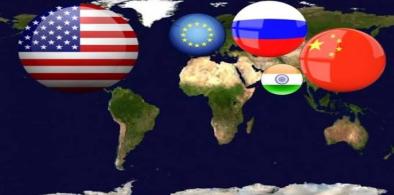
Wolf World or a Multipolar World? How Major Powers Exercise Power Will Determine Emerging International Order

The growing role of middle powers adds another layer of complexity. Yet the term itself remains imprecise. Not every country outside the United States and China qualifies as a middle power, and many reject the label altogether. India, for example, increasingly sees itself as a leading power pursuing strategic autonomy rather than as a middle power seeking alignment with one bloc or another.

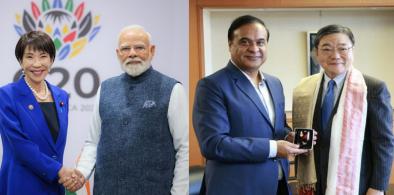
Is Northeast India's Permit System Inhibiting India-Japan Paradiplomacy? Colonial-Era System may be Stumbling Block to Subnational Exchanges

If India and Japan genuinely envision Northeast India as the gateway connecting South Asia with the Bay of Bengal and the Indo-Pacific, then the next chapter of the partnership cannot remain confined to New Delhi and Tokyo. It must also be written in Guwahati, Shillong, Aizawl, Imphal, Agartala, Kohima, Gangtok and Itanagar 

Bangladesh's Strategic Balancing and India's Neighbourhood Challenge: China Will Consolidate Influence if New Delhi Fails to Deliver

In several neighbouring countries, including Bangladesh, Sri Lanka and Nepal, China has demonstrated an ability to move from agreements to implementation far more rapidly than many competitors. India, despite enjoying unmatched geographic and cultural advantages, has often struggled with delays 

More on Geopolitics, Security and Strategic Affairs

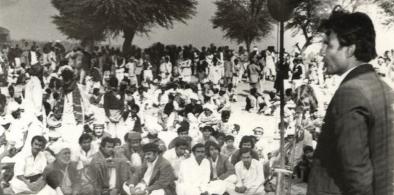
Two years after death, Sindh’s left-leaning leader still holds sway among masses

Rasool Bux Palijo has earned a place in the pantheon of leaders of South Asia who has earned lasting fame and created an ideological legacy in the struggle against martial law, feudalism, colonialism, and imperialism, writes Muhammad Abbas Khaskheli for South Asia Monitor 

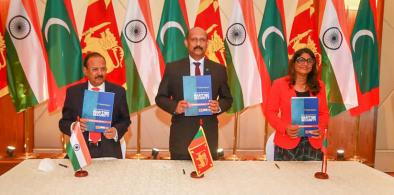
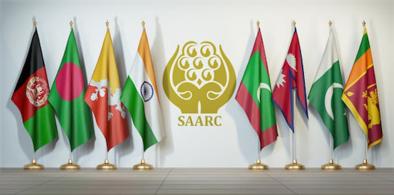
Colombo-Delhi-Male dialogue: Looking beyond maritime security

India, Sri Lanka, and the Maldives agreed to expand the scope of intelligence sharing, including terrorism and cybersecurity, at the meeting to discuss common security threats, writes Sugeeswara Senadhira for South Asia Monitor

Pakistan's misguided cultural nationalism - and a losing battle with Indian content

Pakistani audiences seem unwilling to discard the supposedly "vulgar" stuff they are addicted to, given the common socio-cultural ethos of the subcontinent, writes Mahendra Ved for South Asia Monitor  

COVID-19 and South Asia: Sequencing of policy options

The spread of COVID-19 infections in South Asia has not been uniform across countries; while some countries were successful in controlling the pandemic, others were not, writes Partho Pratim Mitra for South Asia Monitor

‘Love jihad’ bills by BJP-ruled states against India's constitutional principles

The BJP governments in these states, in their quest to criminalize interfaith marriages, are going ahead with coming out with this law, despite not even a single case of ‘love jihad’ having been detected by the central investigative teams to date, writes Reeti Prakash for South Asia Monitor
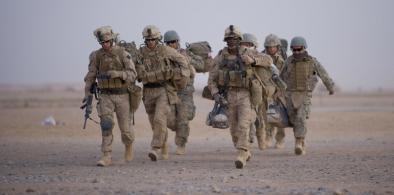
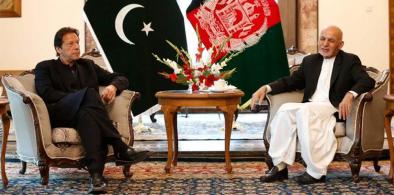
With drastic troop cuts is US handing over Af-Pak to China?

Till the Afghan National Security Forces (ANSF) are confident and sufficiently armed to stabilize the country, it would be prudent for the US to retain troop strength between 5000-8000 in Afghanistan, writes Lt Gen Prakash Katoch (retd)  for South Asia Monitor

Beyond Malabar: Quad needs to supplement military exercises with economic partnerships

The Malabar naval exercises could be seen as an obvious manifestation of the desire among members of the Quad to keep trade routes open, military confrontations in check and keep the Indo-Pacific Region open for legitimate rules-based economic activity, writes Raghbendra Jha for South Asia Monitor 

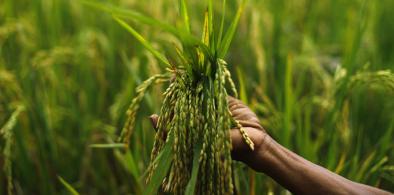
South Asian countries need to strengthen regional cooperation in food security, agriculture systems

COVID-19 has brought into focus supply chain issues and with it a fundamental change in the way food availability and access is viewed, one that goes beyond the conventional focus on weather, area, production, and yield (APY) paradigm of crops, writes Partha Pratim Mitra for South Asia Monitor

Rising xenophobia and Islamophobia in Europe: Lessons for a secular India

These are challenging times with rising majoritarianism and nationalism and, with a large Muslim population, India must watch events in Europe closely, and ensure its secular fabric remains intact, writes Lt Gen P R Kumar (retd) for South Asia Monitor  

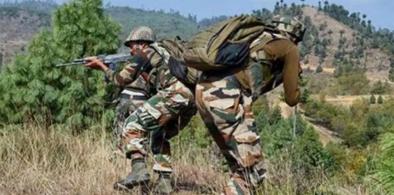
India should consider a surgical strike rerun as Pakistan continues to violate ceasefire

The number of ceasefire violations by Pakistan troops from January till November along the J & K border has broken all records of the past 17 years, writes Col Anil Bhat (retd) for South Asia Monitor

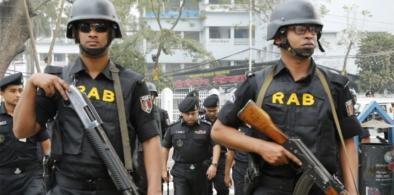
Extrajudicial killings needs to stop in Bangladesh; authorities must ensure accountability

The police in Bangladesh have taken the role of judge, jury, and executioner, writes Aashish Kiphayet for South Asia Monitor

Pakistan’s Umerkot: A neglected city with a historic past and an exemplar in communal harmony

People in Umerkot live in communal harmony. While the Hindus arrange Iftari in the month of Ramazan and Niaz in the month of Muharram, the Muslims come forward to attend Hindu festivals, thus sending a message of love, peace, and harmony, writes Furqan Hyder Shaikh for South Asia Monitor

Trump's decision to cut troops in Afghanistan gives Pakistan the upper hand

As the patron of the Taliban,  Pakistan will wield more direct influence over Afghanistan as Washington winds down its involvement, writes Arul Louis for South Asia Monitor 

India needs to address challenges in education as a national imperative

India faces a grave challenge that has been accentuated by the pandemic. The crisis needs to be seen as a national imperative and addressed through a collective stakeholder approach with a sense of extreme urgency, writes Amit Dasgupta for South Asia Monitor

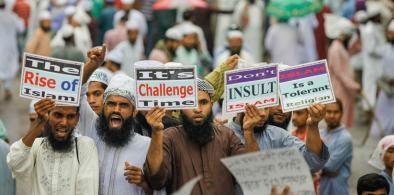
Islamists pose a challenge to Bangladesh's secularism

Conceding to the Islamist demand for stopping the installation of the Mujib statue at Dholaipar will be a huge political defeat for the Awami League, especially during the birth centenary of the founding father and a year before the Golden Jubilee of Bangladesh's independence, writes Subir Bhaumik for South Asia Monitor