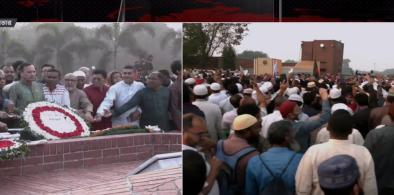
“The presence of the Sri Lankan singers “made this not just a local gathering, but a shared South Asian moment,” Nirupama Menon Rao said after the show. “Music does that so effortlessly. It crosses borders without asking for permission”.
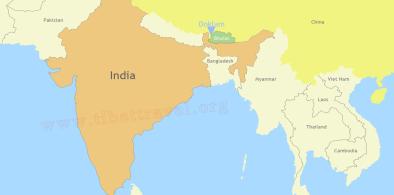
Amid strategic challenges from Beijing in Bangladesh, New Delhi cannot separate border management with foreign policy. New Delhi should hold high-level dialogue with Dhaka and develop a cooperative roadmap to facilitate the identification and repatriation of undocumented migrants from India.
The visit therefore should not be viewed simply as another bilateral defence engagement. It represents an attempt by New Delhi to institutionalise India's security relationship with Sri Lanka, while simultaneously reassuring Colombo that India's expanding security interests need not threaten Sri Lankan sovereignty.
Belgium views India as an opportunity to reduce its economic dependence on China and limit vulnerability to developments in the United States. India offers scale, growth, industrial capacity and ambition, while Belgium offers technology, specialised expertise, logistics and access to the European market.
India has its own legacy of maternal peacebuilding, from Jijabai to the Meira Paibi. What we lack is the language to celebrate and institutionalize these contributions. Recognizing mothers as peacebuilders is not just a cultural insight; it is a practical necessity for societies striving for harmony.
“The presence of the Sri Lankan singers “made this not just a local gathering, but a shared South Asian moment,” Nirupama Menon Rao said after the show. “Music does that so effortlessly. It crosses borders without asking for permission”.
South Asia’s future depends on reliable infrastructure and trustworthy public services. Artificial intelligence—especially advanced technologies such as Graph Attention Networks—offers governments a powerful tool to reduce corruption in procurement, improve healthcare delivery, strengthen energy security and enhance public trust.
Yet ordinary Afghans refuse to stay silent. In Balkh province, people are turning public walls into canvases of defiance, spray-painting graffiti demanding education, rights, and freedom. These acts of artistic resistance, risking arrest and worse, echo the courage of exiled artists like Shamsia Hassani and Fatima Wojohat, whose work continues to amplify the cry for justice. Such quiet rebellion signals a population no longer cowed.
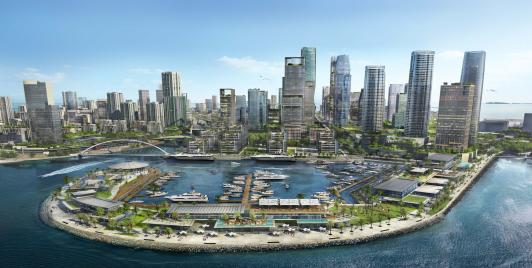
If one location matters most to India in Sri Lanka, it is Trincomalee. With one of the finest natural harbours in the world, Trincomalee has immense commercial, naval, and energy value. For decades, strategists in New Delhi have viewed it as critical to the security architecture of the Bay of Bengal.
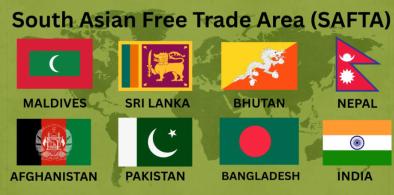
South Asia cannot remain an archipelago of isolated economies connected only by shared history and mutual suspicion. Changing acronyms does not change reality. Summit declarations will not achieve true economic integration. True integration requires the political courage to dismantle physical and bureaucratic walls. Only then will the region stop holding its immense potential captive.
The resultant reduced trust signals a declining democratic discourse that should be the biggest worry for the nation at this stage. The bill that failed thus tells the deeper story of all that is going wrong in the Indian democracy, bit by bit, in areas that are clearly visible and sometimes in many invisible ways.
Manipur today is not merely a regional crisis. It is a test of India’s democratic resilience. It highlights the limits of governance models that prioritize control over consensus. Without a shift toward genuine political engagement that addresses the fears, rights, and representation of all communities, the conflict will persist and resurface with greater intensity.
A significant factor in this "strongman" narrative is the influence of the Indian diaspora. Many unusually wealthy Indians living in the U.S. or U.K. cheer when India stands up to Western leaders. Their focus is emotional—seeking the pride of a "strong India" from the comfort of their adopted homes. However, these elites are dangerously out of touch with the majority of the Indian population.
The decline of pollinators in Pakistan is not an isolated environmental issue. It is a structural signal of imbalance within agricultural ecosystems. It reflects how modern farming practices, if not carefully managed, can inadvertently weaken the very systems upon which they depend. The danger lies not in sudden collapse but in gradual erosion that goes unnoticed until productivity begins to decline in visible and irreversible ways.
India’s role in the Middle East crisis is defined not by presence at negotiation tables but by its ability to sustain stability around them.While Pakistan facilitates talks between the US and Iran in Islamabad, India underwrites the broader security architecture through its maritime presence, economic weight, and multi-aligned diplomacy.
The Indus Waters Treaty has lasted more than 60 years, illustrating diplomacy's ability to handle one of South Asia's most sensitive resources. However, climate change and geopolitical tensions have called into question its significance. To guarantee that the treaty continues to prevent war and promote shared prosperity, Indian and Pakistani governments must update its provisions, invest in joint institutions, and view water as a shared strategic asset rather than a source of friction.
Iran's demonstrated endurance to maintain its intrinsic rights to nuclear enrichment as an NPT state even under sanctions and its willingness to escalate without collapsing, is an important consideration for the Iranian regime. This issue was centre stage at the collapsed Islamabad negotiations. How Iran shapes its stand will be centre piece of future negotiations.
Iran’s role in this transformation is central. Its ability to influence the Strait has reshaped strategic thinking across the region and beyond. External powers must now operate within constraints that did not exist before. For the Gulf states, the implications are immediate and tangible. Their economic lifelines pass through this narrow corridor. Any disruption affects not only revenue but also national security.For the broader international community, the lesson is clear.
Nepal’s Gen Z government is not just an experiment in youth-led politics—it is a high-stakes test of whether disruption can evolve into governance. The same streets that once roared with revolutionary energy can just as easily erupt again in frustration. If this new leadership fails to translate momentum into meaningful change, the cycle of instability will repeat itself
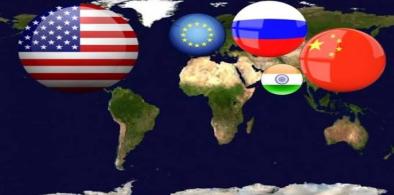
India’s deepening defence ties with both the United States and the European Union are particularly significant. India’s designation as a “Major Defence Partner” by the US and the ongoing development of a long-term defence cooperation framework highlight the strategic convergence between the two countries. Similarly, the recent EU–India Security and Defence Partnership signals Europe’s recognition of India as a key player in maintaining regional and global stability