

Reviving SAARC: Can regional diplomacy address the Long-Festering Rohingya crisis?
Amid this regional uncertainty, a new dynamic is emerging. China and Pakistan are taking steps to form a new regional alliance that plans to include Bangladesh as a potential member. This reality may lead to various disagreements about the need for SAARC’s revival. However, establishing active regional cooperation in South Asia would help create geopolitical pressure and push crises like the Rohingya problem towards a coordinated solution.
 May 19, 2026
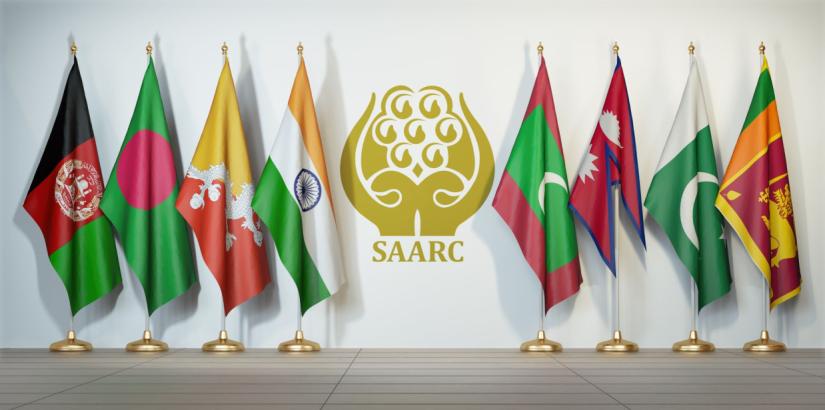
In response to a Pakistani journalist’s question about the revival of SAARC during a post-victory press conference at the Intercontinental Hotel in Dhaka on February 14 after Bangladesh’s 13th parliamentary elections, Prime Minister Tarique Rahman said that SAARC would be activated to promote regional cooperation. If SAARC is reactivated, it will indicate the possibility of a new leap in regional diplomacy in South Asia. He expressed optimism about building relations between member countries through SAARC. This optimism about SAARC is not a political statement; it is a declaration regional public interest and the potential of multilateral diplomacy.
The revival of SAARC can open space for addressing Bangladesh's Rohingya crisis. But its possibility is conditional. Its effectiveness will depend on SAARC’s institutional reforms, coordination with ASEAN, and the political goodwill of regional powers such as China, India, and Pakistan.
In contemporary times, the Rohingya crisis in Bangladesh is not only a humanitarian one but also a regional security and stability issue South Asia and Southeast Asia. Almost a decade over 1.2 million innocent people have taken up residence in Cox's Bazar Bangladesh. The Rohingya are also displaced in other south and southeast Asian nation in search of safety. In Bangladesh they are facing severe humanitarian crisis in the camps due to the identity and statelessness after 2017 mass exodus due to the massive violence on them by the Arakan army. Bangladesh has been single-handedly bearing the brunt of this crisis for a long time, yet it has not been possible to convince the Myanmar government to effectively repatriate through bilateral negotiations. This reality indicates that multilateral pressure and regional coordination are essential to resolve the Rohingya crisis.
The China Factor in South Asia
Over time several multilateral and diplomatic discussions with Myanmar had tried to resolve and peaceful repatriation of Rohingya but it had not succeeded. The failure of this problem to be adequately resolved through bilateral negotiations has increased the need for regional coordination and multilateral initiatives. In this situation, the revival of SAARC is a possible path through which member states can jointly make efforts to sit down with the Myanmar government for talks. In this context, effective dialogue with SAARC as well as the Association of Southeast Asian Nations (ASEAN) is very important. Because Myanmar is a member of ASEAN, there is a real opportunity to apply political and diplomatic pressure on Myanmar from within the ASEAN framework. However, due to ASEAN’s “non-interference” policy, this pressure has often remained limited and has been the case in the past. As a result, a joint SAARC-ASEAN initiative is likely to persuade Myanmar to repatriate the Rohingya.
China is an emerging player in the politics of South Asia and Southeast Asia. China's regional policy is a determining factor in the Rohingya crisis. Historically, China has had profound economic and strategic influence over Myanmar. China's geopolitical influence and interest are an important factor in South Asian cooperation. China is already taking an active role in various regional business and security initiatives and has taken initiatives to unite South Asia and Southeast Asia at some stage. In this context, if SAARC can develop a unified regional position, it may be able to partially influence China's regional policy. Although this is not easy, there is a real possibility of exerting pressure on Myanmar through multilateral diplomacy.
At the same time, the role of these two regional powers, India and Pakistan, in resolving the Rohingya crisis is undeniable. India maintains economic, strategic and security relations with Myanmar. Pakistan is an important member of SAARC geopolitics. If these two states rise above political disputes and prioritize the humanitarian crisis, SAARC can emerge as an effective pressure structure.
However, the biggest challenge here is the hostility between India and Pakistan, which has repeatedly rendered SAARC ineffective. SAARC has been virtually dormant for almost a decade and no summit has been held since 2014, with the one scheduled to be held in Islamabad in 2016 was also postponed for political reasons. Since then, no effective initiatives have been taken, leaving the organization virtually defunct. Analysts believe that SAARC’s ineffectiveness is mainly due to two reasons - one is long-standing political tensions between India and Pakistan and the structural weakness of regional decision-making.
A New Dynamic in the Offing?
Amid this regional uncertainty, a new dynamic is emerging. China and Pakistan are taking steps to form a new regional alliance that plans to include Bangladesh as a potential member. This reality may lead to various disagreements about the need for SAARC’s revival. However, establishing active regional cooperation in South Asia would help create geopolitical pressure and push crises like the Rohingya problem towards a coordinated solution. If SAARC member states pay collective attention to humanitarian issues and take necessary steps, it can act as a very effective solution to the deaths, displacements and humanitarian disasters.
Therefore, the revival of SAARC is not just a hopeful sentiment; rather, it should be reflected in a sense of regional awareness, multi-level diplomacy and concerted efforts. This platform can open the door to the possibility of not only improving political relations between countries but also serve as a framework for multilateral solutions to complex regional problems like the Rohingya crisis. Furthermore, if the revival of SAARC is not limited to political declarations but is realized through initiatives, implementation and multilateral coordination, it will enhance the overall development of South Asia and Southeast Asia. At the same time, SAARC will gain acceptance as a regional forum in the international arena.
(Md Nasim Uddin is Lecturer, Department of Sociology, Green university of Bangladesh. Humayun Kabir is Assistant Professor, Department of Sociology, Green University of Bangladesh. Views expressed are personal. They can be contacted at nasim@soc.green.edu.bd )





Post a Comment