India-Bangladesh border fencing

India’s Push-Ins Could Push Bangladesh Towards China

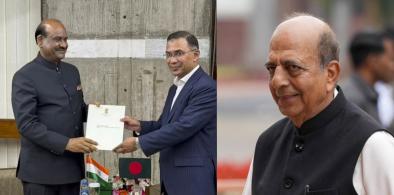
Amid strategic challenges from Beijing in Bangladesh, New Delhi cannot separate border management with foreign policy. New Delhi should hold high-level dialogue with Dhaka and develop a cooperative roadmap to facilitate the identification and repatriation of undocumented migrants from India. 

Growing Sri Lanka-India Defence Cooperation Throws Up Air-Defence Questions

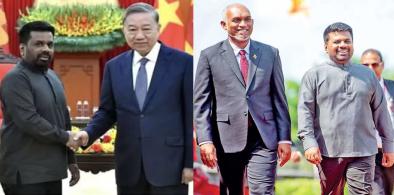
The visit therefore should not be viewed simply as another bilateral defence engagement. It represents an attempt by New Delhi to institutionalise India's security relationship with Sri Lanka, while simultaneously reassuring Colombo that India's expanding security interests need not threaten Sri Lankan sovereignty.

Belgium and India: Building a Strategic Partnership Beyond Economics and Trade

Belgium views India as an opportunity to reduce its economic dependence on China and limit vulnerability to developments in the United States. India offers scale, growth, industrial capacity and ambition, while Belgium offers technology, specialised expertise, logistics and access to the European market.

Guardians of Harmony: Acknowledging Role of Mothers as Peacebuilders

India has its own legacy of maternal peacebuilding, from Jijabai to the Meira Paibi. What we lack is the language to celebrate and institutionalize these contributions. Recognizing mothers as peacebuilders is not just a cultural insight; it is a practical necessity for societies striving for harmony.

More on Geopolitics, Security and Strategic Affairs

Pakistan Takes Indus Water Issue to Brussels: Internationalising Dispute has Implications Beyond South Asia

The CEPS conference shows Pakistan is shifting the Indus issue from technical water management  to geopolitical norm contest. That’s the key transition. Once a river dispute enters Brussels policy networks, international arbitration, climate diplomacy, and security discourse it becomes much harder to keep it bilateral. And that is likely Pakistan’s main strategic objective. 

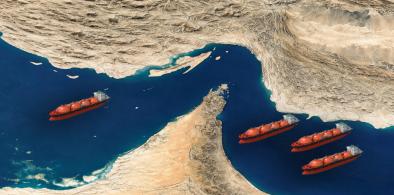
The Islamabad Memorandum Has Stopped the War; It Has Not Settled It

The Islamabad Memorandum has bought time. But time is not neutral. It can be used to construct a more durable settlement, or by spoilers in Washington, Tehran and Tel Aviv to rebuild the case for war. The ceasefire will endure only if the difficult questions postponed in Islamabad are answered before those who opposed the truce succeed in answering them on the battlefield.

Energy Cooperation: A Quiet Success Story in South Asia

A big development happened in 2025. Nepal started exporting electricity to Bangladesh through India's transmission network. This was the first time Nepalese hydropower was commercially transmitted to Bangladesh via Indian territory. The initial export volume was 40 megawatts. The significance of the agreement is much bigger. It showed that regional energy cooperation can overcome political barriers.  

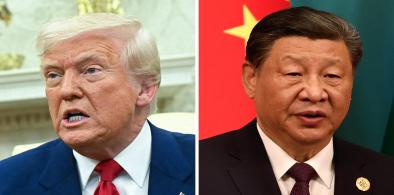
Lessons from Trump-Iran Deal: Strategic Autonomy is not a Luxury for India

India's rise as a major global power will depend not on the promises of allies or the intentions of adversaries but on its capacity to build economic strength, military capability, technological innovation, and strategic resilience. Partnerships will remain important. Cooperation will remain valuable. Engagement with the United States and other powers will continue to serve Indian interests. But the foundation of India's security cannot rest in Washington, Moscow, Beijing, or any other foreign capital.

Whither Disarmament? Nuclear Weapons Remain Deeply Embedded in National Security Doctrines

However, evolving regional dynamics, particularly China’s expansion and Pakistan’s tactical nuclear developments, continue to test the durability and interpretation of this doctrine. While India has officially reiterated its commitment to No First Use, debates persist within strategic circles about its future applicability under extreme scenarios.

With a New-Gen Government in Kathmandu, are India–Nepal Relations Headed for a Reset?

The significance of Shisir Khanal’s visit therefore lies not only in the agreements reached but in the broader message it conveyed. Both Kathmandu and New Delhi are signalling a willingness to move beyond the grievances and suspicions that have periodically defined their interactions. If the emphasis on development diplomacy, economic integration, and pragmatic cooperation is sustained, the current moment could indeed mark the beginning of a new chapter in India–Nepal relations.

Why is Trump Betting Big on Pakistan? New Oil and Gas Finds Stir Regional Geopolitics

This is also the terrain through which the US 62 billion China-Pakistan Economic Corridor (CPEC) traverses, facing security threats from north to south, losing men and material in attacks by militants. That being the case, the US entry brings in another global player, ready to guard its interests against China’s looming presence. Is the South Asian region headed for a proxy war? 

Pakistan: Oppressor at Home, Peace Broker Abroad

This contradiction—peace abroad, repression at home—defines Pakistan’s current posture. While Islamabad seeks international recognition as a mediator, its domestic record is marred by bloodshed and denial of democracy. The JAAC movement, rooted in basic economic grievances, has become a symbol of resistance against this hypocrisy. 

Myanmar, India and the Northeast: Balancing Security, Connectivity and Geopolitics

The strategic significance of the offensive lies in control over Kachin State’s heavy rare-earth deposits, which account for roughly half of the world’s supply and are critical for electric vehicles and wind turbines. The KIA took control of these lucrative mining areas near Pangwa and Chipwi in late 2024 and has since heavily fortified its positions.

Xi Jinping’s Loosening Leverage Over North Korea Amid Shifting Indo Pacific Security Dynamics

China in recent times has elevated some of its key bilateral relations, Vietnam, Pakistan, North Korea, to the level where they are now considered by Beijing as  consequential to regional and global peace and stability. China’s foreign and 'grand strategy' is aimed at realizing a shared destiny for mankind and nurturing a new type of great-power relations within a multipolar world. This requires a strategic alignment between China’s strategy and others.

Bangladesh's 'Red Telephone' Breach: More to it Than Meets the Eye?

More importantly, the alleged sabotage occurred during a period of political transition following the developments of August 2024. Institutional loyalties, political rivalries, and competing networks of influence continue to shape Bangladesh's political landscape. In such a context, any breach involving the Prime Minister's secure communications infrastructure deserves careful examination.

Between the Melody Moment and the Hard Work Ahead: Modi's Europe Tour Outcome Will Depend on Delivery in Coming Years

India's MSME sector, the backbone of its export economy, remains largely unequipped to navigate European standards and certification requirements. As ABC Live noted, the next stage will be tougher than negotiation: India must now prove that its exporters, MSMEs, regulators, ports, testing labs, and state governments can actually use the agreement. A framework signed in Gothenburg means nothing to a textile exporter in Tiruppur who cannot get a product certified to EU standards.

Why India and Pakistan Must Move From Rivalry to Responsibility: In Fragmenting Global Order, South Asia Cannot Afford Internal Paralysis

The central lesson is simple: unresolved India-Pakistan hostility weakens South Asia from within. It prevents trade, blocks institutions, raises nuclear risk, politicizes water, militarizes borders, and diverts attention from human development. Both countries will continue to disagree on major issues. But disagreement does not require permanent hostility. Strategic maturity means building rules to manage conflict before conflict manages the region.

The Race for Strategic Minerals: South Asia's Geopolitical Moment

The Quad's Critical Minerals Initiative provides an important platform for achieving these objectives. Through coordinated investments, technology sharing and supply-chain diversification, the initiative seeks to create resilient and transparent mineral supply networks. Australia contributes abundant mineral reserves, Japan offers advanced processing technologies, the United States brings investment and innovation capabilities, while India provides a rapidly expanding market and growing manufacturing base.

Ganga Water Treaty Renewal: A National Priority for Bangladesh, a Strategic Opportunity for India

Renewing the Ganges Water Sharing Treaty could also serve as an important confidence-building measure between Bangladesh and India. A renewed agreement would help restore mutual trust and strengthen regional cooperation over shared water resources. It would further reinforce the role of the Joint Rivers Commission (JRC), which remains a key institutional mechanism for addressing transboundary river issues.