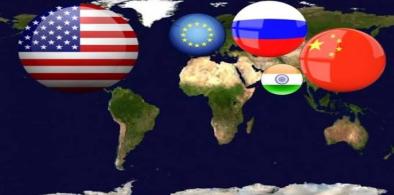
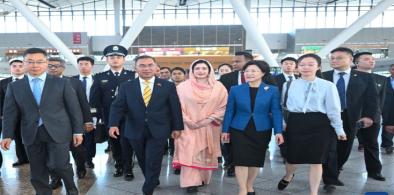

China’s growing influence in Sri Lanka is an immediate concern for India as the resident power in the region, but it is also a global concern for the United States.
Amid strategic challenges from Beijing in Bangladesh, New Delhi cannot separate border management with foreign policy. New Delhi should hold high-level dialogue with Dhaka and develop a cooperative roadmap to facilitate the identification and repatriation of undocumented migrants from India.
The visit therefore should not be viewed simply as another bilateral defence engagement. It represents an attempt by New Delhi to institutionalise India's security relationship with Sri Lanka, while simultaneously reassuring Colombo that India's expanding security interests need not threaten Sri Lankan sovereignty.
Belgium views India as an opportunity to reduce its economic dependence on China and limit vulnerability to developments in the United States. India offers scale, growth, industrial capacity and ambition, while Belgium offers technology, specialised expertise, logistics and access to the European market.
India has its own legacy of maternal peacebuilding, from Jijabai to the Meira Paibi. What we lack is the language to celebrate and institutionalize these contributions. Recognizing mothers as peacebuilders is not just a cultural insight; it is a practical necessity for societies striving for harmony.
China’s growing influence in Sri Lanka is an immediate concern for India as the resident power in the region, but it is also a global concern for the United States.
The Indian government is caught in a bind. Despite the BNP government’s outrage, for Delhi to hasten Hasina’s extradition is not an option.
The borderland TTP now exploits is the same terrain that Pakistan's own security establishment worked for decades to create as "strategic depth." The world of proxy-war infrastructure seldom remains directed towards where its architects have aimed.
A significant factor that emerged after India launched Operation Sindoor against Pakistan in May 2025 was the strain in the India-US relationship under the Trump administration, driven by aggressive tariff disputes and policy friction. This indirectly accelerated India’s push to diversify partnerships, prompting New Delhi to lean more pragmatically into closer economic and strategic ties with middle powers such as Australia.
India and China need not share identical geopolitical visions to agree that a stable border, prosperous border communities and transparent rules are preferable to uncertainty. The most useful measure of Nathu La’s success may therefore be not how many tonnes cross the pass, but how routinely two neighbouring systems learn to work together.
December could therefore become much more than Victory Month. It could become a test of whether Bangladesh's next chapter will be written through democratic accommodation or another round of political vengeance. The danger is that a leader returning to face her past could inadvertently reopen the country's deepest wounds.
Russia wants to use the Far East to diversify away from the West, but it risks becoming excessively dependent on China. That is why Southeast Asia, India, Japan and other Asian partners matter to Moscow as they provide Russia with a wider Asian field and fallback and reduces the risk that Russia’s entire eastern pivot becomes a one-way dependence on Beijing.
For democracies under pressure, the lesson is sobering. Institutions do not only collapse when attacked from outside; they can also be hollowed out from within by leaders who master the language of mass appeal better than the language of internal restraint.
Although the Yunus administration was replaced by an elected government in February 2026, the influence of Islamist groups, jihadist organizations, and religious extremists has reportedly remained largely unchanged. As a result, several prominent leaders of Islamist organizations and militant groups continue to gain strength.
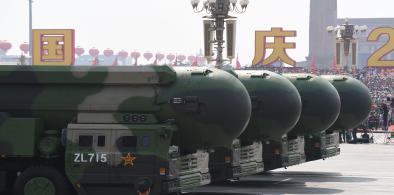
August 6 is not a day for ceremonies alone. It is a day to remember why restraint was carefully created in the first place and to prevent another Hiroshima - Nagasaki. A third devastation, deliberate or accidental will take less than 43 seconds.
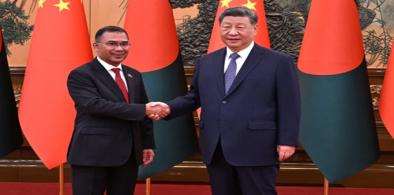
New Delhi's wariness is not really about the river, or even the defence talks in isolation. It is about what Chinese capital and now a nascent security channel, both sitting in a border-adjacent basin, imply for India's own economic and security position.
Any further instability in the region carries security implications for both countries. Escalating unrest along an already sensitive frontier can heighten tensions and reduce the already limited space for dialogue between New Delhi and Islamabad.
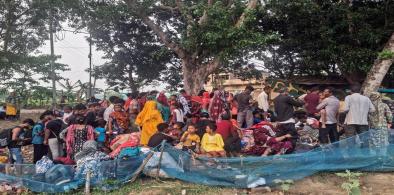
Rightly, India is now treating mass irregular Rohingya migration as an engineered, hybrid national security threat that requires a coordinated border guarding, diplomatic, and legal response.
Ultimately, sustainable peace between India and Pakistan cannot be built merely through meetings or declarations. It requires a fundamental transformation in Pakistan's approach towards terrorism, regional stability and bilateral relations. Until that happens, comprehensive dialogue is unlikely to produce meaningful outcomes.
When a Chinese company won the contract to establish hybrid wind and solar energy projects on three islands off the northern Jaffna peninsula—just 45 km from Rameswaram in Tamil Nadu—the security implications extended far beyond economics. Against this backdrop, India’s concerns are entirely justifiable. Sri Lanka faces a pressing question: how will the nation confront the infiltration of Chinese global criminal networks? Since Mahinda Rajapaksa’s tenure, Chinese presence in Colombo has steadily increased, with Sri Lanka positioned as a partner state in Beijing’s Belt and Road Initiative.