

Is India's Return to Regional Hegemony in South Asia a Strategic Necessity?
For China to achieve its hegemonic ambitions in Asia, weakening democracies is essential. India, therefore, stands as an iron wall against illiberal encroachments, positioning itself as both a regional hegemon and a defender of democratic order.
 Sep 18, 2026
Global politics is once again at a crossroads. The Trump 2.0 era has unsettled the international stage, with Washington appearing to shift toward a hemispheric focus reminiscent of the old Monroe Doctrine. On its anniversary, President Donald Trump declared: “My Administration proudly reaffirms this promise under a new Trump Corollary to the Monroe Doctrine: that the American people—not foreign nations nor globalist institutions—will always control their own destiny in our hemisphere.”
This trend exemplifies a world adrift, marked by what Canadian Prime Minister Mark Carney described as: “We are in the midst of a rupture, not a transition.” It is a moment of fracture that, in the words of Professor Barry Buzan, reflects an “absence of global leadership.”
A Demonstration Effect
Against this backdrop, Operation Sindoor — a decisive military strike — demonstrated India’s readiness to enforce its hegemonic role in South Asia. The operation delivered a stark ultimatum to Pakistan: if Islamabad dares to cross the red lines, sovereignty will not shield it from India’s response. It marked not only a show of force but also the end of Pakistan’s long‑standing “nuclear blackmail.”
The United States has historically been the only power willing to bypass national sovereignty in pursuit of its strategic goals—seen in the 2011 raid in Abbottabad to eliminate Osama bin Laden, and more recently in the January 2026 overnight operation that captured Venezuelan President Nicolás Maduro.
India’s Operation Sindoor echoes this demonstration effect, projecting military dominance in its own neighbourhood and signalling that New Delhi is prepared to act unilaterally when its security is threatened.
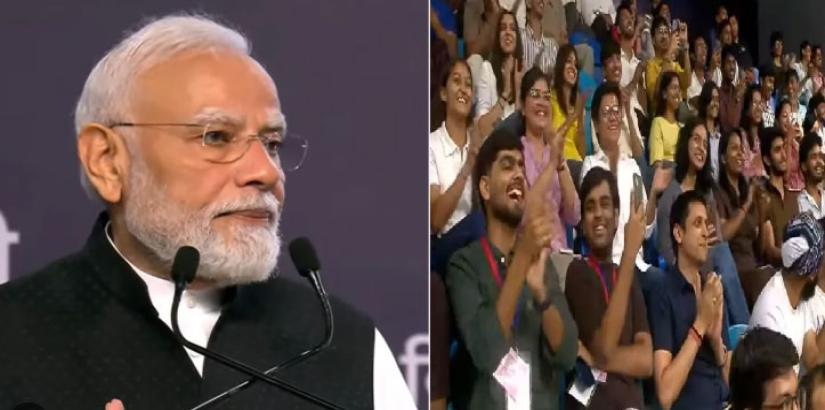
Prime Minister Narendra Modi reinforced this stance two weeks ago, warning that India would respond strongly to any terrorist attacks on its soil. Speaking at the centenary celebrations of Shri Ram College of Commerce (SRCC), he declared: “Today, those spreading terrorism are on the back foot. If Pakistan indulges in any misadventure, India’s armed forces enter their territory and strike. Peace has increased from Jammu and Kashmir to the Northeast. The back of Maoist terrorism and Naxalism has been broken. The world that was once concerned about India’s policy paralysis is today talking about India’s policy dynamism.”
Pak-China Strategic Axis
Pakistan’s manoeuvres against India are well documented, and its strategic alliance with China has sharply intensified New Delhi’s security concerns. Operation Sindoor laid bare Pakistan’s limited military capacity, pushing Islamabad to deepen defence cooperation with Beijing. Signs of this were evident during the 2025 conflict, when Pakistan deployed Chinese-made J-10C fighter jets.
According to Bloomberg, Pakistan is now poised to acquire China’s HQ-17A missile system—a move that, if confirmed, would mark Beijing’s first sale of the system to South Asia.
The HQ-17A, produced by the China Aerospace Science and Industry Corporation, was first showcased at the 2019 National Day military parade. The International Institute for Strategic Studies estimates that the People’s Liberation Army operates around 200 HQ-17 and 50 HQ-17A systems. For Pakistan, the acquisition would bolster air defence capabilities, but it also highlights an increasing reliance on Chinese military support.
Beijing’s backing of Pakistan is part of a broader strategy to erode India’s influence in South Asia and, by extension, to challenge U.S. dominance in Asia. That ambition gained further traction on 7 August 2026, when Saudi Arabia, Turkey, and Pakistan—forming a new “security axis” among three major Sunni Muslim powers—signed a Joint Defense Agreement, a NATO‑style pact pledging collective defence. The deal stipulated that an attack on one would be treated as an attack on all three. Emerging in the aftermath of Operation Sindoor, the agreement underscores Pakistan’s reliance on external alliances to compensate for its military shortcomings.
Intelligence sources have tracked heavy air cargo movements involving Chinese Y-20 transport aircraft and Turkish C-130s landing at Pakistan’s Nur Khan and Masroor airbases. These flights reportedly delivered drones and other defence matériel, underscoring the scale of Pakistan’s military buildup with Chinese and Turkish support. According to a senior security official, the activity was tightly coordinated over a 60-hour window—evidence of a deepening military partnership that signals Islamabad’s growing reliance on external allies to bolster its defence posture.
India Needs to Act Decisively
In this context, India’s return to a hegemonic posture appears inevitable. New Delhi cannot avoid tough decisions if it is to safeguard its regional dominance. India’s role in South Asia is not merely about great-power rivalry—it is also about defending democratic values in the region.
For China to achieve its hegemonic ambitions in Asia, weakening democracies is essential. India, therefore, stands as an iron wall against illiberal encroachments, positioning itself as both a regional hegemon and a defender of democratic order.
The question, then, is not whether India is returning to regional hegemony, but how far it is willing to go in asserting this role. Operation Sindoor may well be remembered as the moment India crossed a threshold—demonstrating that it is prepared to act decisively, not only to protect itself but also to shape the strategic balance of South Asia.
(The author is Founding Director, Centre for Strategic Studies–Trincomalee (CSST), Sri Lanka, and a geopolitical analyst. The views expressed are personal. He can be contacted at jjathi@gmail.com / director@trincocss.org / www.trincocss.org)





Post a Comment