Essentially the world is looking for alternate supply chains which began with the onset of the COVID-19 pandemic and continues even today with growing trade tensions between the two camps.
The writer is a retired special secretary in India's labour ministry.
Essentially the world is looking for alternate supply chains which began with the onset of the COVID-19 pandemic and continues even today with growing trade tensions between the two camps.
One of the impacts of the pandemic in South Asia has been on education. Yet, at least 11 million primary-age and almost 21 million lower secondary-age children in South Asia are not even in school, according to a recent UIS estimate.
The EU therefore will need to depend on other regions to bridge the manpower gap and South Asia could be an important source, but global partnerships in skilling will need to happen in a big way.
The South Asian region has much to learn from the ASEAN experience in integrating investment, trade and movement of labour which includes a skilled workforce
In conclusion, it may be said that while South Asia, Central and West Asia and Pacific Asia showed improvement in sustainability indicators for environment and energy in 2020, they did not do so well in social and governance indicators.
There has been discussion of alternate supply chains being created in India, Indonesia and Vietnam but supply chain issues originating from China are not going to go away in a hurry.
South Asia has no strong trade ties within the region, unlike many parts of Asia, and more particularly the developed parts of Asia, namely Southeast Asia and East Asia. South Asia, therefore, has to formulate its own macroeconomic policies to sustain growth keeping in mind global economic trends.
The data for South Asia shows that Maldives is the most globally integrated country in the region followed by Nepal, India, Sri Lanka, Bhutan, Bangladesh and Pakistan in terms of the average percentage of exports that formed part of the global value chain during the period 2019-2021.
Between 2008 and 2021, the sectoral economic transition witnessed in most countries in South Asia - and in other parts of Asia - has reduced the sectoral share of GDP in agriculture and also the employment burden on agriculture in most countries. This trend, however, changed in the wake of Covid -19 when the share of agriculture in GDP in…
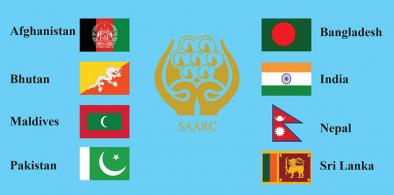
The situation however has been somewhat different in certain countries of South Asia which have raised resources through external borrowings despite having current account deficits - Afghanistan, Maldives, Bhutan, Nepal Pakistan, and Sri Lanka. Caution needs to be exercised by them in resorting to such borrowings.