Col KL Viswanathan (Retd.)

Col KL Viswanathan (Retd.)

About Col KL Viswanathan (Retd.)

More From Col KL Viswanathan (Retd.)

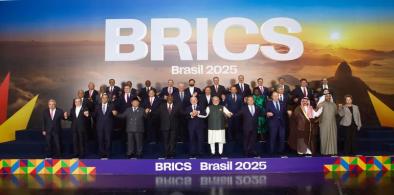
Wolf World or a Multipolar World? How Major Powers Exercise Power Will Determine Emerging International Order

The growing role of middle powers adds another layer of complexity. Yet the term itself remains imprecise. Not every country outside the United States and China qualifies as a middle power, and many reject the label altogether. India, for example, increasingly sees itself as a leading power pursuing strategic autonomy rather than as a middle…

The Changing Face of Warfare and the New Definition of Victory

In earlier conflicts, victory was often measured by territory captured, armies defeated, or governments forced to surrender. In modern warfare, however, the outcome is far more complex. A nation may achieve battlefield success yet suffer demographic, economic, and infrastructural losses that take decades to recover from. 

Iran's Hormuz Card Has a Shelf Life: Energy Diversification Will Reduce its Strategic Leverage Over Time

India's energy profile has changed significantly over the past decade. Crude imports from Russia, increased purchases from the United States, Brazil, Angola and other suppliers, together with expanding strategic petroleum reserves, have reduced dependence on any single source. India's energy vulnerability has not disappeared, but it has become…

From Muziris to Modern Shipbuilding, a Reassertion of India's Maritime Identity

The revival of shipbuilding has become a central pillar of national policy, extending across defence, commerce and industrial development. Indian shipyards today construct aircraft carriers, submarines, destroyers, offshore patrol vessels and a wide range of commercial vessels.

India–Japan Summit: Strategic Convergence in a Changing Indo-Pacific Order

Japan has also proposed developing a Bay of Bengal–Northeast India Industrial Value Chain aimed at transforming the region into an integrated industrial zone. As part of the Free and Open Indo-Pacific vision, this includes strengthening cross-border connectivity with Bangladesh, Myanmar, Nepal and Bhutan. 

Indus Waters Treaty and the Limits of Control: India Cannot Restrict Flow to Pakistan, Only Optimise Use

Even full development of India’s permitted hydropower and storage rights under the Indus Waters Treaty expands utilisation, but does not translate into control over downstream flows into Pakistan. The debate, therefore, is not about the ability to stop water. It is about how effectively each side uses what geography and law already permit.

AI's Hidden Appetite: Power, Cooling and the New Geography of Infrastructure

What we are witnessing today may only be the opening chapter. The next breakthroughs in AI may not emerge from software laboratories alone, but from nuclear reactors, cooling technologies, offshore infrastructure, advanced materials, and energy networks. The race to build intelligence has quietly become a race to master power and heat.

Rubio’s India Visit: Chinese Discourse Echoes Concerns About Quad and India's Growing Agency in Indo-Pacific

Chinese social media reactions to Rubio’s visit also reflected a degree of skepticism and criticism towards India. Several commentators focused on developmental and infrastructural contrasts between India and China. Discussions surrounding traffic congestion, pollution, aging infrastructure, and even the extreme summer temperatures in northern…

Rubio's India Visit: Convergence of Strategic Interests and Shared Concerns over China

However, the visit clarified one important reality: despite periodic friction over trade, tariffs, Russia, immigration, or strategic autonomy, neither India nor the United States presently has the luxury of disengagement. The relationship may no longer carry the earlier…

India’s Balance-of-Payments Challenge: Need for Structural Transformation in Uncertain Times

India possesses immense talent, entrepreneurial capacity, and a large domestic market, yet it still lacks sufficient depth in high-end manufacturing, research and development, semiconductor ecosystems, advanced engineering, and globally dominant product companies.