The fear of Chinese robots being the Trojan horse that can affect American and Western tech dominance and undermine cyber and military advantage will always be a strategic concern, despite attempts to view these fears as overblown.



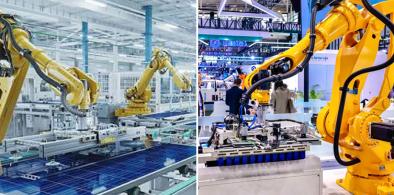
The fear of Chinese robots being the Trojan horse that can affect American and Western tech dominance and undermine cyber and military advantage will always be a strategic concern, despite attempts to view these fears as overblown.
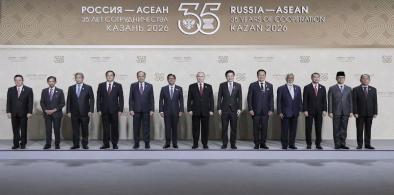
Russia wants to use the Far East to diversify away from the West, but it risks becoming excessively dependent on China. That is why Southeast Asia, India, Japan and other Asian partners matter to Moscow as they provide Russia with a wider Asian field and fallback and reduces the risk that Russia’s entire eastern pivot becomes a one-way…
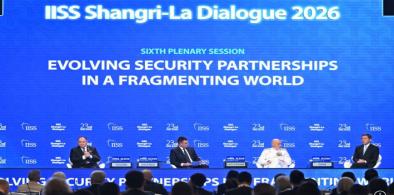
The central message at the Shangri-La Dialogue is that America is staying, but on new terms. It will remain the core military balancer in the Indo-Pacific, but it expects allies and partners to become serious contributors. The era of strategic free-riding is ending. The new Indo-Pacific order will increasingly be defined by those willing and…
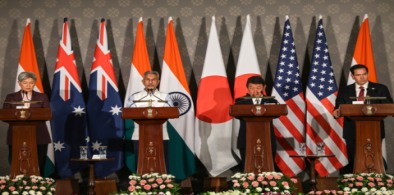
On all these fronts, the Quad is more consequential, based on geography, capability, necessity and the absence of any better alternative. AUKUS’ scope is seen as too narrow, while Camp David is too regional, and the Squad is too limited. Bilateral alliances are too fragmented, while the Quad is seen to have the scale, reach and flexibility to…
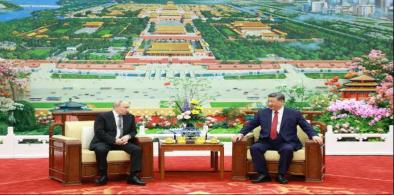
The Putin–Xi meeting, therefore, should not be interpreted as the birth of a fixed anti-American alliance. Rather, it reflects a flexible alignment whose cooperation is strongest where grievances overlap, but weakest where ambitions collide. Putin and Xi are united more by pressure than by trust. They are aligned in opposing American dominance…
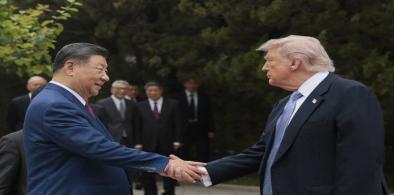
China buys more than 80 percent of Iran’s shipped oil. In 2025, China purchased an average of 1.38 million barrels per day of Iranian oil, accounting for around 13.4 percent of China’s seaborne oil imports.China has therefore become the largest economic absorber of Iranian oil and Tehran’s principal economic lifeline. Without Chinese demand,…
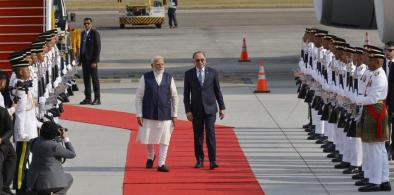
India’s rise coincides with China’s structural slowdown, reshaping Asia’s strategic landscape. For Malaysia, the choice is not between India and others—but between preparing early for India’s ascent or adjusting late. Prime Minister Modi’s visit represents a strategic inflection point. Deepening ties in defence, technology, semiconductors,…
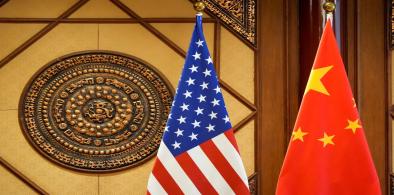
China remains central to the 2025 NSS, particularly in the Indo-Pacific. The strategy strengthens U.S. denial capabilities along the First Island Chain, deepens integration with allies such as Japan, Australia, the Philippines and Taiwan, and increases pressure on partners to reduce economic and technological dependencies on China.
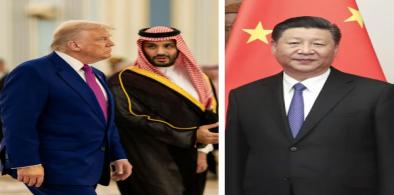
At the same time, MBS has skilfully leveraged China as a strategic counterweight, signalling that any American hesitation could push Riyadh towards deeper military and technological cooperation with Beijing—an outcome the United States would prefer to avoid. China has already become Saudi Arabia’s largest trading partner, while the United…
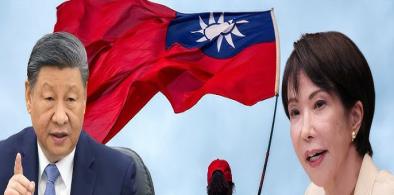
If Taiwan were to fall, Japan’s security architecture would be fundamentally compromised. The First Island Chain would fracture, opening a northern pathway for Beijing toward Okinawa and Kyushu. Takaichi recognised this reality and voiced what many regional strategists have long acknowledged: Japan has little choice but to act, even at the cost…