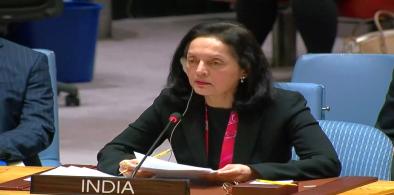
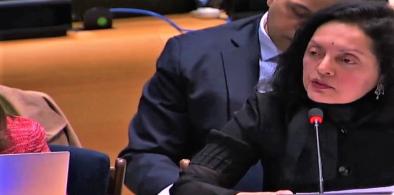
“Is the UNSC in its present form -- which denies permanent representation to entire continents of Africa, Latin America and the world’s largest democracy – can it be deemed to be ‘inclusive’”, Kamboj asked at an open debate at the Council.



A university in India should be able to learn from one in Africa. A Latin American campus should be able to adapt an innovation developed in Asia. Universities should be able to compare pathways, learn from failures, share data and accelerate solutions. This is where SCCN can play a distinctive role
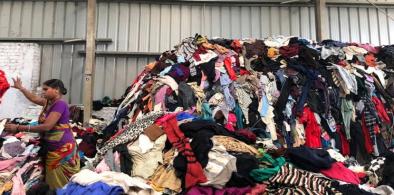
Unlike many regions where imported garments quickly become waste, countries such as India have built thriving ecosystems of repair, resale and recycling. Long before the "circular economy" entered policy vocabulary, informal markets and recycling clusters had already extended the life of clothing through reuse and material recovery.

If Earth Overshoot Day falls on 30 July in 2026 , humanity is currently effectively requiring nearly one and three-quarter Earths to sustain its present patterns of production and consumption.

Climate change is reshaping national security in South Asia. Military preparedness, though important, cannot make up for decaying infrastructure, failing water systems, or recurrent economic disruptions brought on by extreme weather. Governments must expand the definition of security to incorporate climate resilience as a central strategic goal.
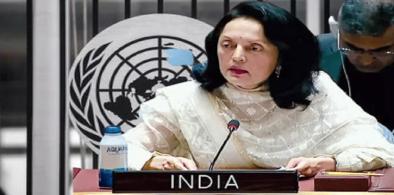
“Is the UNSC in its present form -- which denies permanent representation to entire continents of Africa, Latin America and the world’s largest democracy – can it be deemed to be ‘inclusive’”, Kamboj asked at an open debate at the Council.

Earlier, at the 30th Anniversary of the World Press Freedom Day Global Conference, New York Times Publisher A.G. Sulzberger got the criticism of India rolling, saying that “in India, authorities have raided newsrooms and treated journalists essentially as terrorists”.
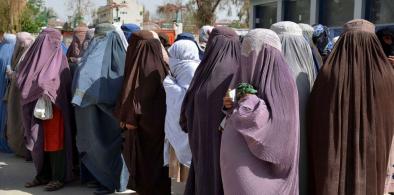
The unanimous adoption of the Council resolution proposed by the United Arab Emirates and Japan and co-sponsored by about 90 countries underlines the Taliban regime’s international isolation and signals international unity before the Doha meeting.
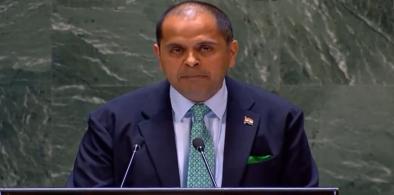
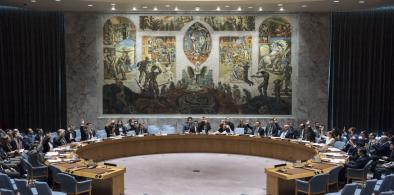
The root cause in the view of India and many countries is the architecture of the Council that reflects the post-World War II scenario and gives veto-wielding permanent seats to the five victorious allies - Britain, China, France, the United States and Russia, which hold the seat originally given to the Soviet Union.
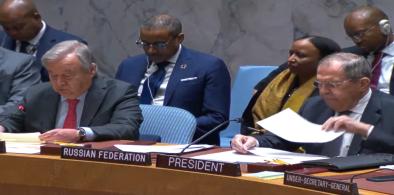
Lavrov said that the United States and the West were against a multipolar world and wanted their dominance to continue.
Pakistan’s Permanent Representative Munir Akram struck a discordant note by opposing the addition of permanent members to the Council. China's Permanent Representative Zhang Jun supported calls for reforming international financial institutions but was silent on the Council -- opposing it would have roiled the African nations that form the largest group at the UN.
There are about 4,000 Indian citizens in Sudan, and according to the Indian embassy in Khartoum of them, about 1,500 are longtime residents. An Indian ex-serviceman. Albert Augustine, who was working in Sudan, was killed by a stray bullet as he was speaking to his son while standing at the window of his apartment.
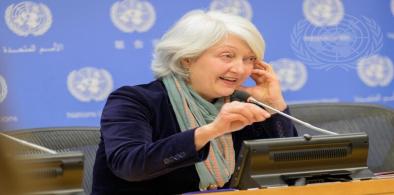
The challenges for India, she said, are “there's so many people that are in the informal labour market. Again, educational standards are highly uneven – if you go north to south, south to north in India, we see tremendous diversity within such a large country”.
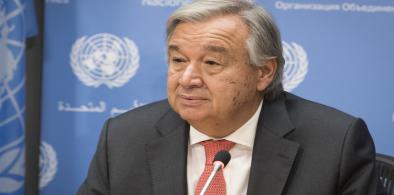
Secret documents floating in social media and chat groups showed that the administration of President Joe Biden has been spying on UN officials as well as other international leaders, including US allies.
Indian officials have reported drones coming in from Pakistan to drop weapons and drugs for terrorists in Punjab and Kashmir. Last year till November, at least 22 such drones were reported captured by Indian agencies and 266 drone infiltrations were reported during the year.
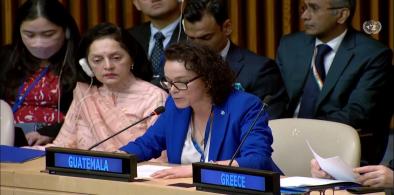
China’s poor performance in the Statistical Commission election, securing only 19 votes and trailing South Korea was a surprise because of the extensive diplomatic and economic campaigns it has undertaken around the world.
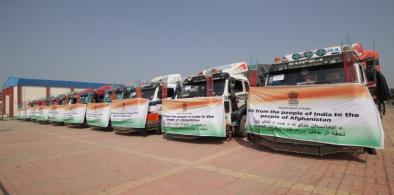
India and the UN’s World Food Programme signed an agreement last month to provide Afghanistan with 20,000 tonnes of wheat that would be sent through the Chabahar port that India is developing in Iran near the Afghanistan border, bypassing Pakistan.
The strategy advocated by India would expose countries like China and the members of the Uniting for Consensus (UfC) group of which Pakistan is a leading member in relation to Africa, the largest regional group in the UN.
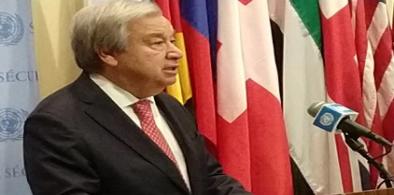
Guterres said that he has proposed to the India-led G20, the group of major emerging and developed economies, “ a Climate Solidarity Pact – in which all big emitters make extra efforts to cut emissions, and wealthier countries mobilize financial and technical resources to support emerging economies in a common effort to keep 1.5 degrees alive”.
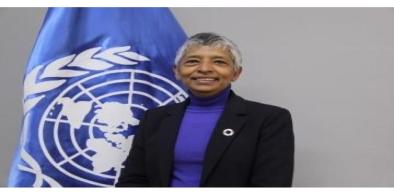
During her career of over 30 years in international humanitarian and development work, Parvathy had worked with the Asia Pacific, West Africa, Regional and Global Headquarters of WFP, according to the UN. Her experience includes strategic planning, risk management, conflict analysis and humanitarian access negotiations, the UN said.