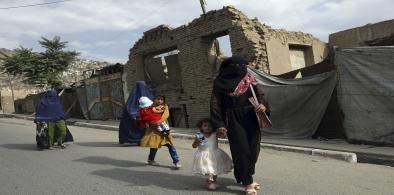


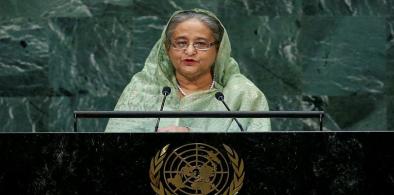
Warning that terrorism continues to threaten Afghanistan, India has demanded that the Taliban keep its commitment to not allow the country to be used by terrorists
The reactor that has now gone critical at Kalpakkam, on the Bay of Bengal coastline in Tamil Nadu, is not the end of that journey. It is, more precisely, the end of the beginning. The real test is whether India can now scale fast breeder capacity rapidly enough to make a material difference to its energy-mix building on the Kalpakkam template, the industrial supply chains it has validated, and the engineering confidence it has earned.
The Indus and the Ganges are dying slowly, and with them disappear species that evolved over thousands of years within these waters. If current patterns continue, future generations may inherit rivers that exist geographically but are biologically empty. South Asia still has an opportunity to reverse this trajectory, but only if environmental protection becomes a shared regional priority rather than an afterthought.
Climate migration isn’t just about the loss of land. It is about the loss of memory, culture and home. When people are driven out of the places where they were born, few things that matter are merely economic. Over the next decades, the world will confront a fundamental dilemma. Can humankind handle the climate crisis in a surer way? Or will the future consist of millions searching for a new place to call home?
The constraint on India’s expansion is fissile inventory, particularly between 2035-2045. At present, the breeder program depends on plutonium from a limited set of eight unsafeguarded reactors. Meanwhile, India has accumulated spent fuel from uranium imported for its safeguarded reactors. This significant plutonium is lying idle because we lack safeguarded reprocessing facilities.
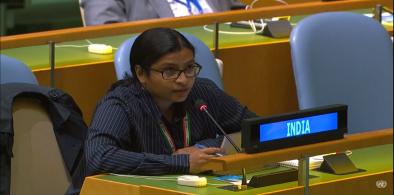
Warning that terrorism continues to threaten Afghanistan, India has demanded that the Taliban keep its commitment to not allow the country to be used by terrorists
India has said that countries emerging into a phase of stability after UN peacekeeping operations should be allowed to set their priorities for nation-building with a “humancentric” approach
India has accused Pakistan of promoting a “culture of violence” and using the high-level UN meeting on the culture of peace for hate speech
Afghanistan's Permanent Representative Ghulam Isaczai created a diplomatic stir when he defied the new Taliban government, asked the international community to reject it and denounced its use of violence to reinstall the “so-called Islamic Emirate
The Taliban's overthrow of a democratically-elected government in Afghanistan has spillover effects in the region and the UN Security Council would like to hear from the people in the region, according to Ireland's Permanent Representative Geraldine Byrne Nason, who heads the Security Council this month
Displaying a soft tilt towards the Taliban, which has captured power in Afghanistan, a country in which it has developed a growing and strategic stake in recent years, China called for respecting the sovereignty, independence and territorial integrity of the South Asian nation, and the rights of the Afghan people to determine their own future
The United Nations Security Council has demanded that the Taliban should not allow terrorists to use its territory for attacks against other countries and this would apply to the Lashkar-e-Toiba and the Jaish-e-Mohammad, according to India's Foreign Secretary Harsh Vardhan Shringla
The United Nations High Commissioner for Refugees (UNHCR) has said that the situation in Afghanistan following the Taliban takeover last week “remains uncertain and may evolve rapidly,” with up to 515,000 new refugees fleeing
United Nations Commissioner for Human Rights Michelle Bachelet has said that she had received credible reports that the Taliban had committed serious violations, including summary executions of civilians, in Afghanistan
The Taliban, who seized power in Afghanistan last week, are reportedly targeting the people and their families who had helped and worked with the US and NATO troops, a confidential document by the UN’s threat assessment consultants pointed
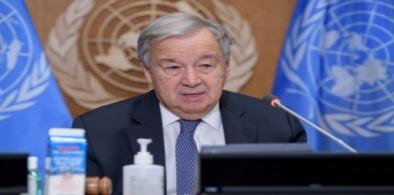
United Nations Secretary-General Antonio Guterres has said that he is ready to talk to the Taliban that has taken over Afghanistan amid fears of widepread human rights abuses
India will assume a pivotal role in the global fight against terror when it takes over the chair of the Security Council's Counter-Terrorism Committee (CTC) next year, External Affairs Minister S. Jaishankar announced on Thursday
As events in Afghanistan elevate concerns about international security, India’s External Affairs Minister S. Jaishankar said on Thursday the global community should call out the hyprocrisy of countries that protect terrorists “with innocents' blood on their hands.”
India on Wednesday proposed a multi-pronged plan to bring the peacekeeping operations to the 21st century by deploying technologies to face the evolving threats
UN Secretary-General Antonio Guterres and India's External Affairs Minister S Jaishankar paid tributes on Wednesday to Indian peacekeepers who laid down their lives in the service of the global organisation