At the Ekta Nagar in Gujarat's Kevadia, Gutteres is to join Modi to launch the Mission LiFE (Lifestyle for Environment), the MEA said. Gujarat is Modi’s home state.

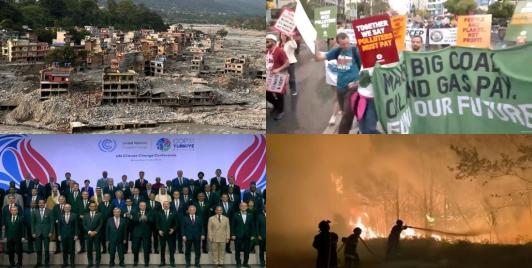
Nepal, along with Bhutan and Kyrgyzstan, has formally called for mountain and climate change to be added as an agenda item in the COP31 process. Bangladesh, India, and Pakistan are set to push for more climate grants, greater support for adaptation, and faster access to loss and damage funding.
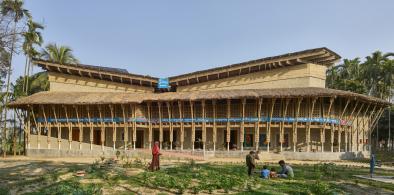
The global community is currently searching for viable ways to address the effects of climate change; the women of the Bengal delta have been engaged in a silent, yet persistent economic revolution that provides a proven, empirically supported model for other vulnerable countries around the world.
The September agreement by the Pakistan PMO gives these decisions a home: one partner leads research and evidence, the other brings delivery through its four pillars - education, employment, engagement and environment - and its Digital Youth Hub and nationwide Youth Development Centres, with private-sector partners expected to create internship and employment pathways.

Antalya's final decisions will matter. So will the credibility of finance, the protection of vulnerable communities and the direction of the energy transition. But the deepest test is whether COP31 leaves countries with more capacity to implement what they have promised.

At the Ekta Nagar in Gujarat's Kevadia, Gutteres is to join Modi to launch the Mission LiFE (Lifestyle for Environment), the MEA said. Gujarat is Modi’s home state.

The Assembly session also witnessed a sideshow by Pakistan, which stuck to its gimmick of bringing up Kashmir regardless of the topic on the agenda. Kamboj dismissed it as an attempt to misuse the UN forum with “frivolous and pointless remarks”.

India joining the West against Russia on procedural matters is not necessarily a precursor to a change in New Delhi’s neutrality in voting on substantive matters involving Russia’s invasion of Ukraine.

Holding the meeting in India is a special effort by New Delhi to draw world attention to the terrorist attacks and the threats it faces and to prepare the international community to deal with the emerging technologies that could be force multipliers for terrorists.

Over 431 peacekeepers have died in the operations in the DRC, of them 31 were Pakistanis.

A lifesize, speaking, gesticulating presence on the stage, the Gandhi avatar provoked, prodded and challenged a panel made up of an activist, a diplomat, a youth and an economist to delve into the meaning of education for humanity.

Kamboj said, “India’s position has been clear and consistent from the very beginning of this conflict: The global order is anchored on the principles of the UN Charter, international law and respect for sovereignty and the territorial integrity of all states”.

India’s “age-old outlook”, he said, “sees the world as one family. We believe that national good and global good can be entirely in harmony”.

A small group of countries led by Italy and which includes Pakistan has blocked the adoption of a negotiating text which would be the bases of discussions and move the reform process.

“The desire for peace, security and progress in the Indian subcontinent is real. It is also widely shared and it can be realized”, he said. “That will surely happen when cross-border terrorism ceases, when governments come clean with the international community and with their own people, when minorities are not persecuted, and not least when we recognize these realities before this Assembly”, the Indian diplomat said.

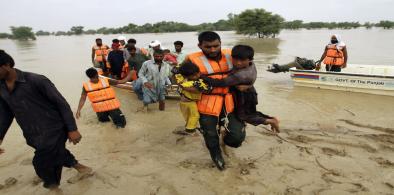
Sharif offered “to sit down then and talk to our Indian counterparts to pave the way forward for future so that our generations do not suffer, so that we spend our resources on mitigating miseries on building structures to face these floods and outburst of clouds” – but only after India gives in to his demands on Kashmir.

Modi's exhortation to Russian President Vladimir Putin to end the Ukraine war, saying the "time is not for war", has been widely welcomed, including by US Secretary of State Antony Blinken and other world leaders at the UN.

While some initial signs of the ice-breaking could be seen when Indian External Affairs Minister S. Jaishankar met his Turkish counterpart Mevlüt Çavuşoğlu at Dushanbe in Tajikistan in April 2021, this was the first time the leaders of the two countries met in person since President Erdoğan’s last visit to India in 2017.

He said, “At one stage, international relations seemed to be moving toward a G-2 world; now we risk ending up with G-nothing. No cooperation. No dialogue. No collective problem-solving”.

From South Asia, the two newly elected leaders of troubled countries, Pakistan's Prime Minister Shehbaz Sharif and Sri Lanka's President Ranil Wickremesinghe, are among the scheduled participants along with Prime Ministers Sheikh Hasina of Bangladesh, Sher Bahadur Deuba of Nepal and Lotay Tshering of Bhutan. Indian Prime Minister Narendra Modi is not attending the meeting this year and Foreign Minister S Jaishankar is scheduled to speak for India on Saturday.