
Representational Photo

Why Sinhalese Buddhist Nationalists Adore Israel? An Alternative Reading

These myth-based narratives reveal a deeper psychological impulse: the desire to anchor Sinhalese Buddhist identity within a framework of global uniqueness and divine purpose. While Sri Lanka’s diplomatic relations with Israel have fluctuated since independence, Sinhalese Buddhist nationalist sentiment continues to exhibit a strong emotional affinity toward Israel.

A Distracted Generation And The Erosion Of State Capacity In India

India’s youth are growing up in an ecosystem defined by continuous stimulation and accelerated consumption of information. Attention is fragmented, patience for complexity is declining, and long-form engagement—essential for policy, administration, and strategic thinking—is increasingly marginal. This is not a cultural lament. It is a structural shift with direct consequences for how future administrators, policymakers, and institutional leaders are formed.

India’s outreach to West Asia and Africa: Strengthening Global South Leadership

By engaging Jordan, Ethiopia and Oman, India demonstrated its capacity to operate across geopolitical divides while remaining anchored in Global South solidarity. These visits were not isolated diplomatic events but part of a sustained effort to reshape international engagement through inclusivity, responsibility, and shared growth. As global uncertainties persist, India’s outreach to West Asia and Africa strengthens its claim to leadership rooted in partnership and a collective vision for a more equitable world order.

Growing Mistrust, Fragile Sunni-Shia Political Balance Deepen Gilgit-Baltistan Unrest

The security situation deteriorated further in 2025. A terrorist attack on a Gilgit-Baltistan Scouts checkpost resulted in two fatalities and one injury, heightening tensions. Protests later resumed in Sost, disrupting trade between Pakistan and China via the Khunjerab Pass. The year culminated in two high-profile attacks on October 5, when unidentified gunmen ambushed Maulana Qazi Nisar Ahmed, Ameer of the Ahl-e-Sunnat wal Jamaat in Gilgit-Baltistan and Kohistan, near the police headquarters in Gilgit, injuring him and several others. On the same day, Malik Inayat-ur-Rehman, the Chief Court Judge of Gilgit-Baltistan, narrowly escaped an assassination attempt near the City Hospital.

More on Perspective

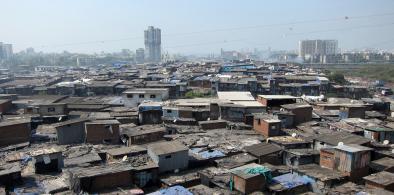
After Eliminating Extreme Poverty, India Should Focus On Livelihoods and Jobs

India will soon need to focus on reducing relative poverty and inequality too since the spoils of high economic growth cannot be cornered by a small few at the top. The elimination of extreme poverty in the next five years is a good shot in the arm, but in the journey toward a developed nation India has much work to do.

India Needs A National Comprehensive Narrative Strategy To Shape Global Opinion

While New Delhi was responding to Islamabad’s military provocation, Pakistan’s narrative machinery moved with sophistication, especially within Western media ecosystems. Coordinated messaging from Pakistani Foreign, Defence and Information Ministers, amplified by diaspora networks and international broadcasters, often outpaced India’s more formal communication approach. Moreover, several Western media outlets, operating on incomplete information, questioned the legitimacy and proportionality of India’s actions

Western double standards over the rise of extremism in Bangladesh

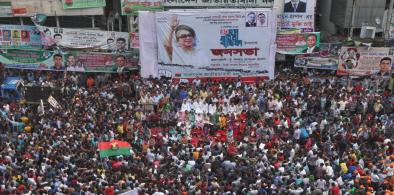
On the streets of Dhaka, terror reigns, as well as across the country. Anti-establishment students are roughed up for speaking out. Extremist mobs roam with impunity. Police stations are besieged and overrun, as in the shocking Shahbag incident. Women are threatened into silence. Hindu families are forced to cancel weddings under threat of religious violence.

India’s Credit Puzzle: Rising Defaults and the Fragile Promise of Financial Inclusion

In a consumption-driven economy like India, expanding credit access—through microfinance NBFCs and fintech lenders—is crucial. However, regulators aInd policymakers must closely monitor this space to avoid large-scale defaults. While underserved consumer segments depend on such loans for upward mobility, repayment capacity must not be overlooked. Sustainable livelihoods and employment generation will be essential to ensuring both credit access and creditworthiness.

Is Bodh Gaya's Mahabodhi Temple Being Brahminized?

We are living in strange times where religion is being blatantly used in pursuit of a political agenda. The Buddha temple is being led on a Brahminical path; Sufi shrines are being Brahmanized. The agitation by Buddhist monks to restore their sacred place to their norms and beliefs is one such example of opposition to impose values that run counter to those of equality and non violence  preached by Lord Gautam Buddha.

India has all the ingredients to become a happy nation

The Happiness Survey reveals mega cities have increased stress levels despite employment opportunities. Overcrowding, social disconnection, and environmental issues disturb the urbanites. Small cities and villages report higher happiness due to stronger social bonds and lower cost of living.

Is It Appropriate For India to Use Rice as Feedstock for Ethanol Production?

India should also explore other avenues to reduce crude oil imports. Ethanol production can be increased through alternate, non-food feedstock like algae. Algae can grow on wastelands or coastal areas, requires no freshwater, and thrives on sunlight and carbon dioxide. Algae species contain around 20% oil, making them ideal for biofuel.

Can India ever catch up with China? Third-largest economy is stuck in middle-income trap

The first “I” of the World Bank stands for investment, which India must increase to 40 percent of GDP. It must also increase labour force participation of women from 35 to 50 percent.  The second “I” refers to infusion of new technologies, by linking with global value chains, by trade agreements, and reducing tariffs and barriers to foreign investment.  The third “I” is innovation, meaning enabling greater investment in research and development

Was Dr. Yunus’s Resignation Drama In Bangladesh Mere Bluff And Bluster?

The real motive behind Sheikh Hasina’s removal, as widely suspected, lies in her steadfast refusal to allow a U.S. military base on St Martin’s Island—an outpost that would give America strategic leverage over Southeast and East Asia. Her resistance to such neocolonial imposition sealed her fate.

Does Shashi Tharoor have a future in the Congress party?

If Tharoor is indeed disciplined, the Congress Party would have confirmed the popular perceptions of its aversion to intra-party democracy. The extreme form of punishment, of course, would be his expulsion, something that the leadership is unlikely to risk given its electorally vulnerable position. With 99 parliamentary seats, the Congress Party cannot afford to lose any of its members no matter how some of them may step out of the line occasionally.

Pahalgam Tragedy: Need To Stem The Rising Spiral of Hatred

The path forward lies in returning to the principles espoused by former Prime Minister Atal Bihari Vajpayee—Insaniyat (humanism), Kashmiriyat (the unique cultural identity of Kashmir), and Jamhooriyat (democracy). As Vajpayee aptly said, “Friends can change, but not neighbours.” The vilification of Pakistan by the Hindu Right, amplified by a hate-spewing media, has real consequences for Indian Muslims. It poisons the domestic atmosphere and jeopardizes social cohesion.

After The Ceasefire: India Has More At Stake To Keep The Peace

So high military spending is inevitable. But it is clear that peace is not possible without economic prosperity at home. It is also clear that projecting power abroad is not possible without high, sustained and inclusive economic growth.  It is clear that a conflict free, relatively peaceful India will attract the maximum foreign capital in the world.  For this to happen, we have to invest in building peace, and reiterate to the world, that this is not an era of war.

Baying for blood cannot be the way to peace: Case for restraint in a time of conflict in South Asia

Gender politics pervades security decisions. The war-mongering media chorus was mostly male; the decision-makers at the televised but closed-door meetings were mostly male; those who will go into battle and therefore, those killed or injured will be mostly male; and those whose words about security get read and quoted are mostly male. Women still play a minor role in all these areas but are largely the majority of those bereaved, displaced, assaulted sexually, left supporting families and without assets.

Vizhinjam Port Project: A Turning Point in India's Communist Movement?

The commissioning of the Vizhinjam Port under a public-private model reflects a progressive shift in the Indian communist movement without compromising its core values. It demonstrates that modern communism in India can adapt pragmatically while upholding its commitment to equity.Can one then say that the Vizhinjam Port is a symbol of ideological transformation and a turning point for the communist movement in India?

Can Indus waters issue be de-linked from historic grievances? (Reproduction of a 2010 piece by late Harvard professor and water resources expert John Briscoe)

If Baglihar was the only dam being built by India on the Chenab and Jhelum, this would be a limited problem. But following Baglihar is a veritable caravan of Indian projects – Kishanganga, Sawalkot, Pakuldul, Bursar, Dal Huste, Gyspa. The cumulative live storage will be large, giving India an unquestioned capacity to have a major impact on the timing of flows into Pakistan