The elephant is not just an animal, it is a symbol of power, royalty, and diplomacy in the pages of history. Myanmar’s gift of six elephants to Russia is not just a simple gift, but an important strategic move in regional and global politics.


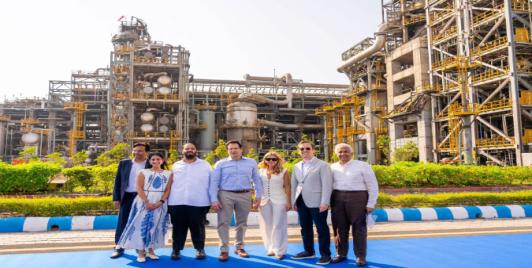
India may not match the United States or China in total refining capacity, but its sophisticated refining infrastructure, crude-processing flexibility, and export capability give it an important place in the global energy system.
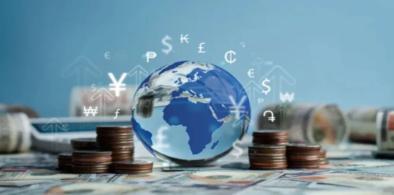
Remittances have become an unusually large source of external finance for South Asia. But a development model in which workers migrate because domestic employment is inadequate, and then send income home to support domestic consumption, cannot indefinitely substitute for creating productive employment at home.
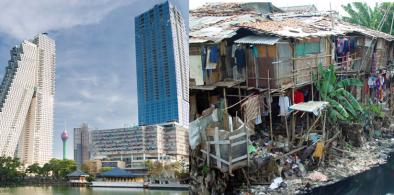
In 2025, Sri Lanka was ranked as the second most expensive housing market in the world based on rentals compared to average income. It is possible that market distortions caused by black economy and corruption have contributed to this.
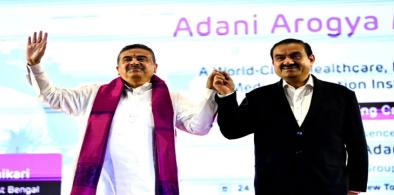
The larger opportunity before West Bengal is therefore not another round of infrastructure creation in isolation. It is the creation of an ecosystem in which infrastructure, private capital, local enterprise and skilled labour reinforce one another.

The elephant is not just an animal, it is a symbol of power, royalty, and diplomacy in the pages of history. Myanmar’s gift of six elephants to Russia is not just a simple gift, but an important strategic move in regional and global politics.

Beijing - and therefore Xi - by virtue of his being in complete control of all affairs in the country have long been known to be determined to pick their own successor to the Dalai Lama, a portent that is profoundly troubling for some six million Tibetans inside Tibet and over 100,000 in exile outside, mainly in India.

Providing the ASHA workers employment would have a multiplier effect, especially through their empowerment. Imagine the extraordinary impact if a collaborative project, supported by both the Australian and Indian governments, were to train one million ASHA workers in India, using the online platform! It would be a true reflection of partnership and an unparalleled public diplomacy initiative.

Mao's Cultural Revolution reverberations were largely contained within then 'Third World' China, causing only stray ideological ripples across its borders. In contrast, Trump's actions challenge the underpinnings of the post-war political, economic and social global architecture in a highly interdependent world.

Some speculate that Bangladesh’s pivot toward China, which has invested $23 billion in the country, may have influenced US policies towards Bangladesh. With China among Bangladesh’s key stakeholders, geopolitical considerations will play a significant role in Bangladesh’s energy security treaty negotiations with the US.

Sri Lankan missions abroad have been instructed not to attend any official functions of Taiwanese missions that operate as cultural, economic or educational offices or meetings attended by the Dalai Lama. However, until last year, several leading Buddhist monks of Sri Lanka had participated in religious functions and conferences together with the Dalai Lama

The 12th edition of Ex Milan, held in February 2024 at Visakhapatnam, in southern India, involved the largest-ever participation, featuring the navies of over 50 countries and nearly 20 ships.

It was against this backdrop that the Embassy of the People’s Republic of China in Sri Lanka engaged with the fisherfolk communities in Northern Sri Lanka. During then Fisheries Minister Douglas Devananda’s visit to China—which coincided with the tenth anniversary of the Belt and Road Initiative (BRI)—China pledged Rs. 1.5 billion (Sri Lankan rupees) to bolster the fisheries sector in the Northern and Eastern Provinces.

The world, including the USA, too can’t suppress or coerce China militarily or with sanctions and tariffs. The raw fact is that China unilaterally dominates the world supply chain. To be counted, India needs to step up and become relevant in this supply chain

Fulfilling vital strategic/security imperatives for rapid military deployment against China and Pakistan and enhancing regional connectivity for the benefit of people of many border states, the distribution of the 75 projects is - 19 in Jammu & Kashmir, 11 in Ladakh, 18 in Arunachal Pradesh, 9 in Uttarakhand, 6 in Sikkim, 5 in Himachal Pradesh, 2 each in West Bengal and Rajasthan and one each in Nagaland, Mizoram, and Andaman & Nicobar Islands.

Observers speculate that a key focus of discussions in Beijing will be the purported ban on Chinese “research vessels” entering Sri Lankan ports that India wants. During his visit to New Delhi, President Dissanayake promised that not an inch of Sri Lankan territory would be given for any activity that could be considered inimical to India.

The difference between the Chinese and Indian approaches is stark. While China is engaged in a frenzied military modernisation, the Indian defence establishment is absorbed in building statues, replacing iconic paintings and seeking mythological solutions to its current and future threats. Indian defence capability development has languished for too long. It needs to be in ‘mission mode’ in 2025.

One very significant development which the media seems to have missed is that on 2 September 2024, Adani Enterprises, the flagship company of the Adani Group, one of India's largest business conglomerates, established a subsidiary in Shanghai called Adani Energy Resources (Shanghai) Co. (AERCL).

As part of the greater strategic pitch, the Indo-Pacific is likely to witness heightened competition among major powers, with alliances and partnerships playing a critical role. Economic initiatives are expected to intertwine with strategic goals, as seen in projects like the Indo-Pacific Economic Framework (IPEF).Regional forums like ASEAN, the East Asia Summit (EAS), and the Indian Ocean Rim Association (IORA) will remain vital for dialogue and stability.

Many rising powers including India, which the US is counting on along with Japan, Australia, South Korea to deal with China in the Indo-Pacific, have robust and strong commercial ties with China which they can not easily jeopardize only because the US feels threatened by the rise of China. Even the European Union is economically entrenched with China and the EU would not upset China beyond a certain threshold.