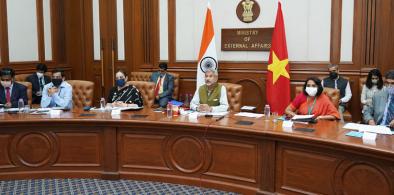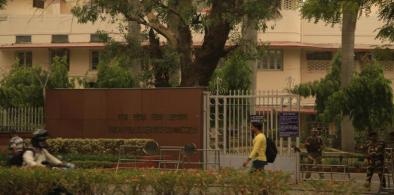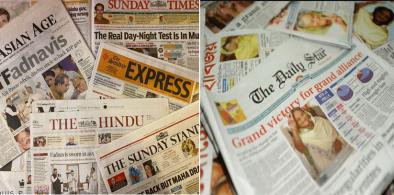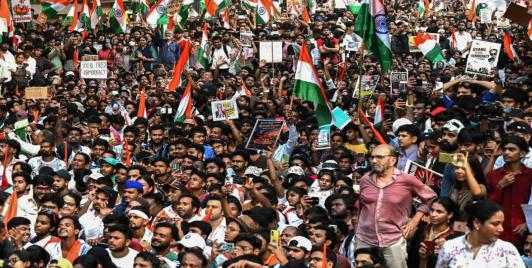
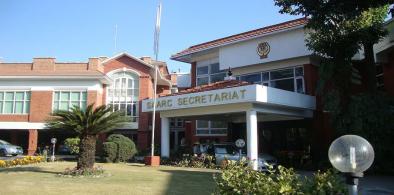

After World War II, the world observed an increase in regional organisations with an objective to strengthen cooperation in shared areas
The government is also engaging doctors, psychologists, lawyers, civil society organisations, NGOs, religious leaders and community representatives to facilitate de-radicalisation and reintegration. Young people are encouraged to participate in constructive social activities that promote communal harmony and reduce the appeal of extremist ideologies.
But it may be the smaller South Asian states that feel the most pressure. Countries such as Bangladesh, Sri Lanka, Nepal and the Maldives are faced with a more polarised geopolitical environment. They want Chinese investment to boost development and keep close diplomatic and security ties with India and western partners.
A big development happened in 2025. Nepal started exporting electricity to Bangladesh through India's transmission network. This was the first time Nepalese hydropower was commercially transmitted to Bangladesh via Indian territory. The initial export volume was 40 megawatts. The significance of the agreement is much bigger. It showed that regional energy cooperation can overcome political barriers.
In the effort to combat this multi-dimensional challenge, democratic states are faced with deep policy constraints, many of which can be paralyzing. The fundamental paradox is how to maintain the open, democratic character of the digital commons while at the same time countering more advanced opponents who are not held back by democratic principles. Disseminating disinformation is a tactic governments use to influence public opinion that has the potential to conflict with the strong constitutional freedoms of expression that exist in liberal democracies.
After World War II, the world observed an increase in regional organisations with an objective to strengthen cooperation in shared areas
“Elephants, because of their size, appetite, and migratory habits, disperse more seeds of more species further than any other animal
In recent years, India has received considerable attention not only in the political and cultural world, but also in the financial world
It is reported that bank employees’ unions and the Indian Banks’ Association (IBA) have agreed for an annual wage hike of 15 percent to the bank staff, a move that will result in an additional yearly outgo of around Rs 7,900 crore for the banks
O, Hiroshima, O Nagasaki
After nearly 34 years, the Government of India has come up with a new education policy, which aims to upgrade the school education system and higher education system as per the present need and to compete with the world-class education system
We never need read the Scriptures
India's new National Education Policy (NEP) unveiled by the government is seen as the most ambitious reforms initiated in recent times
The rising fundamentalism around the world in its fair share can be witnessed in India as well, where intellectuals, activists, and dissenters of the government are seen to be systematically targeted
After COVID-19 pandemic hit India and followed by the strict lockdown, thousands of migrant workers began the arduous journey back to their villages hundreds of kilometers away, most of them on foot, along with their families, including young children
It's all about ego and military might
The Galwan Valley clash between India and China, which started on June 15 June, 2020, was a result of building tensions between the border forces of the two nations since May 5 along the Line of Actual Control (LAC) that crosses through the valley in Ladakh
With the passing away of Professor Kalim Bahadur, (July 20), an age seems to have come to an end
Is this the end of Globalisation
The novel coronavirus is one of the most devastating epidemics in the world right now. It is spreading from one end to the other