Representational Photo

The Race for Strategic Minerals: South Asia's Geopolitical Moment

The Quad's Critical Minerals Initiative provides an important platform for achieving these objectives. Through coordinated investments, technology sharing and supply-chain diversification, the initiative seeks to create resilient and transparent mineral supply networks. Australia contributes abundant mineral reserves, Japan offers advanced processing technologies, the United States brings investment and innovation capabilities, while India provides a rapidly expanding market and growing manufacturing base.

Ganga Water Treaty Renewal: A National Priority for Bangladesh, a Strategic Opportunity for India

Renewing the Ganges Water Sharing Treaty could also serve as an important confidence-building measure between Bangladesh and India. A renewed agreement would help restore mutual trust and strengthen regional cooperation over shared water resources. It would further reinforce the role of the Joint Rivers Commission (JRC), which remains a key institutional mechanism for addressing transboundary river issues.

Top EU Diplomatic Visit Signals Reassessment of Pakistan's Strategic Value

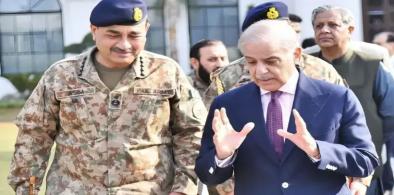
By recognising Pakistan’s role in the Iran crisis, Brussels is signalling that influence in today's international system is increasingly distributed across multiple actors, not concentrated solely in Washington, Beijing, or Moscow. This fits with the EU’s broader effort to develop a more autonomous and flexible foreign policy in a more multipolar world.

Regional Geopolitical Powerplay a Challenge for Improved India-Myanmar Relations

China is a major defence exporter for Myanmar, but it has been arming both the Tatmadaw and the rebel forces. China’s aim is to secure its strategic highway through Myanmar to the Bay of Bengal and counter American and Indian influence in the region, including Myanmar and Bangladesh.

More on Geopolitics and Strategic Affairs

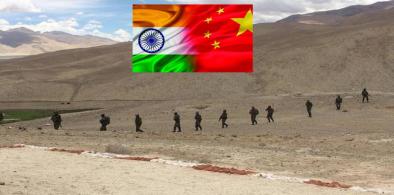
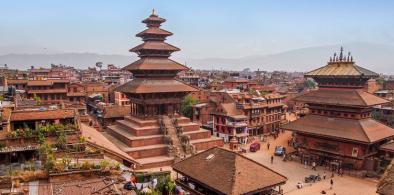
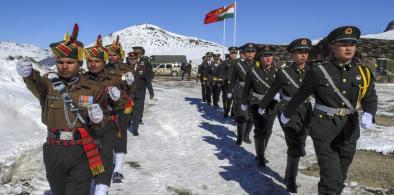
Can India and Nepal resolve border dispute with elephant in the room?

The Kalapani issue first came into prominence in 1997 when the Indian and Chinese governments came to an agreement to open a route for the annual Kailash-Mansarovar yatra through Lipulekh pass. Nepal objected to the use of Lipulekh, writes Shubha Singh for South Asia Monitor

Bihar's migrant crisis compounded by resource crunch and communication breakdown

Bihar is the poorest state of the country in per capita terms. Can it find the enormous resources required to fight the virus and its impact on the economy? writes Gulrez Hoda for South Asia Monitor

A territorial dispute with an actress caught in its midst!

The row between the two nations heated up when Nepal’s Communist Prime Minister K P Sharma Oli  on May 20 vowed before the country’s Parliament to reclaim the three “disputed areas” from New Delhi., writes Kavita Bajeli-Datt for South Asia Monitor

Job loss, hunger stalk South Asia in COVID-19 times

South Asia is home to over 1.8 billion people and houses half of the world’s impoverished communities, writes Aashish Kiphayet for South Asia Monitor

Honour killings continue in Pakistan: Feudal-patriarchal mindset still rules

Honour killing has been part of social traditions in Pakistan’s deeply conservative tribal society, but not confined to it. Killings have been reported in Lahore, Karachi and other places as well, writes Mahendra Ved for South Asia Monitor

In post-COVID-19, Kerala needs innovation in governance

There is a need for a radical attitudinal change in governance and also among Malayalees.  Skilling graduates, who are mostly unemployable, should be top priority, writes K S Nayar for South Asia Monitor

India needs to keep up its assertive stance against terrorism

The shift in the approach towards terrorism is mildly indicative of India's assertive and uncompromising stance in dealing with terrorism, writes Jay Maniyar for South Asia Monitor

Whither self-reliance in defence hardware? Need for complete revamp of India's DTIB

India’s political establishment seems to have utterly failed to appreciate the need for self-sufficiency in military hardware. Consequently, no roadmap or grand strategy has ever been drawn up, for attaining autonomy in defence-production, writes Admiral Arun Prakash (retd) for South Asia Monitor

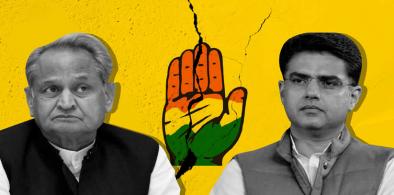
Has BJP lost touch with India's masses?

The pandemic has revealed the Jana Sangh-BJP’s basic faultline which marks the breach between the affluent and the non-trader lower castes and the lower middle and working classes, writes Amulya Ganguli for South Asia Monitor 

Universal Basic Income is answer to the migrant labour crisis

With livelihoods suddenly coming to an end due to the lockdown, the option left for the migrant workers was to make a hasty retreat to their home towns. The presence of some form of Universal Basic Income (UBI) could have mitigated their uncertainties to a certain extent, writes Partha Pratim Mitra for South Asia Monitor

Its Modi’s moment to transform rural India with reverse migration

This is Modi’s moment to transform India. He has the ability to not waste this opportunity to make the migrants stay in their safe homes and not allow them back to the cities., writes Rajendra Shende for South Asia Monitor

Kerala model: Praise abroad, concerns at home

Kerala certainly has reasons to be proud of its record so far and the praise showered on it is well deserved. But the real test is yet to come, writes Amb T. P. Sreenivasan (retd) for South Asia Monitor

No permanent friend or enemies: Need for India’s deeper and bolder engagement in Afghanistan

India is one of the key actors to have contributed to the post-war redevelopment of Afghanistan. So far, India has contributed USD 3 billion to it, which makes Delhi the largest donor to Afghanistan in South Asia and the fifth largest in the world, writes Chayanika Saxena for South Asia Monitor

A success story: Good leadership, timely responses help Bhutan contain COVID-19

Bhutan’s energetic and collective response under the personal leadership of King Jigme Khesar Namgyel Wangchuck helped to deal with the crisis. Bhutan has the advantage of both the Prime Minister Lotay Tshering and Foreign Minister Tandi Dorji being medical doctors with a background of public health,  writes Shubha Singh for South Asia Monitor

Is India planning an operation in POK?

The Modi government is methodically trying to resolve the Kashmir issue, which is lingering since the partition of the Subcontinent in 1947. India and Pakistan have already fought three wars, including the Kargil conflict of 1999, on Kashmir, writes Jai Kumar Verma for South Asia Monitor