The scourge of the COVID pandemic has radically altered the nature of the challenge cum dangers lurking in the maritime sector for South Asia as related to the Indian Ocean and the surrounding seas, writes C Uday Bhaskar for South Asia Monitor


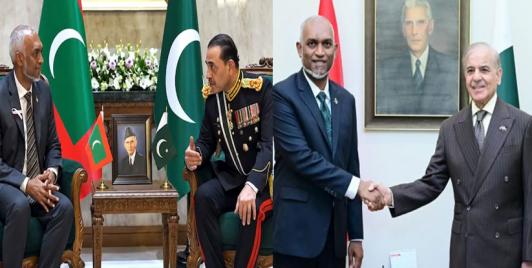
The Maldives, like other small states, has an interest in diversifying its international partnerships, widening its economic choices and retaining room for diplomatic manoeuvre. Engagement with Pakistan does not necessarily come at India's expense
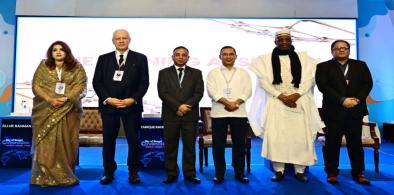
Three days of dialogue, debate, and engagement in Dhaka reinforced a sobering reality: despite ongoing discussions about multipolarity, middle powers, and strategic autonomy, great powers continue to shape the choices available to smaller states.
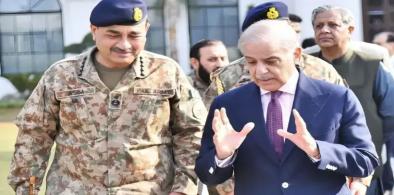
It would be simplistic to assume that every retired general appointed as an ambassador is an instrument of Asim Munir's influence. It would be equally complacent to dismiss the wider institutional implications of placing so many former military officers in diplomatic positions across several regions.
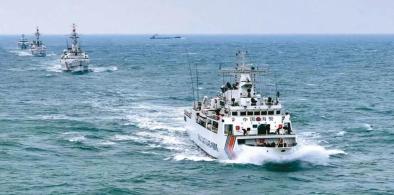
Arunachal Pradesh presents a particularly important dimension of the problem. China claims the northeast Indian state, refers to it as Zangnan, or South Tibet, and periodically challenges India's sovereignty through statements and the assignment of Chinese names to places within the state.

The scourge of the COVID pandemic has radically altered the nature of the challenge cum dangers lurking in the maritime sector for South Asia as related to the Indian Ocean and the surrounding seas, writes C Uday Bhaskar for South Asia Monitor

Although madrasas educate only between 2-4% of Muslim children and youth, they need to modernize their curriculum and move away from Islamic centric or Islamic-only education to a holistic approach that enables these students to integrate fully into Indian society, writes Frank Islam for South Asia Monitor

The global healthcare has benefited hugely from the Indian pharmaceutical industry, and from generic drugs that the Indian pharmaceutical industry produces for the world, writes Sunil Prasad for South Asia Monitor

Now it became possible for young and talented cricketers with abilities to shoot into the top rung via the IPL. With cricket now being played increasingly across South Asia, one sees rising stars from Afghanistan and Nepal also in the IPL mix, writes Col Ravi Rajan (retd) for South Asia Monitor
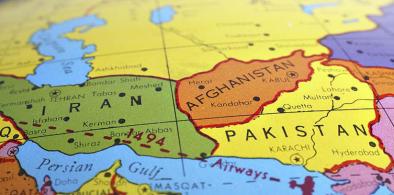
Having a porous border with Pakistan and Afghanistan, Iran should focus more on institutionalized Shia killings in these countries, not Gulf states normalizing relations with Israel, writes Lt Gen P. C. Katoch (retd) for South Asia Monitor

COVID-19 has ushered in a global movement for cycling and India is slowly catching up to that trend with cycling to work, cycling for leisure and fitness becoming more acceptable than ever before, writes Pankaj M Munjal for South Asia Monitor

Integrating complementary approaches into the primary care setting will help widen its reach and efficacy and help India promote a healthcare service delivery model that will be unique in its approach and act as an example for developing countries across the world, writes K R Raghunath for South Asia Monitor
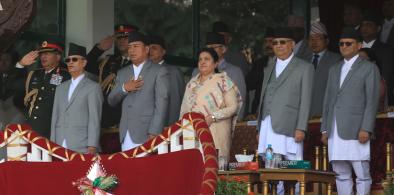
The ambitious provisions of fundamental rights mentioned in Nepal’s Constitution would lose its charm if the state turns a deaf ear in giving effect to its provisions in a true and material sense, writes Jivesh Jha for South Asia Monitor
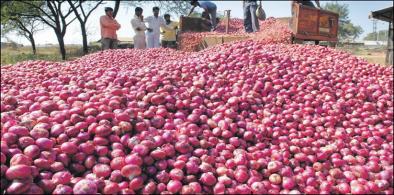
Onions may just be a singular example but if unwritten undertakings are violated, the saga of bans exemplify a larger story of how a trust deficit ensures that trade within South Asia remains perhaps the lowest in the world, writes N Chandra Mohan for South Asia Monitor

The new defence agreement is a clear shift in the Maldives position towards the US after a period when the government in Male forged close economic and political ties with Beijing, writes Shubha Singh for South Asia Monitor

The progress of India’s air bubble agreements with neighbouring South Asian countries bears watching in the period ahead, writes N Chandra Mohan for South Asia Monitor
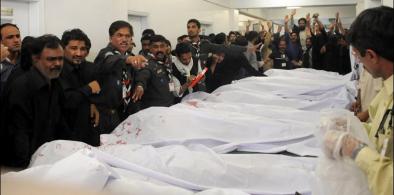
Though, the Pakistan government does not officially support discrimination against Shias, it is failing to efficiently counter the influence of extremists and bring an end to violence against the community, writes Sanchita Bhattacharya for South Asia Monitor
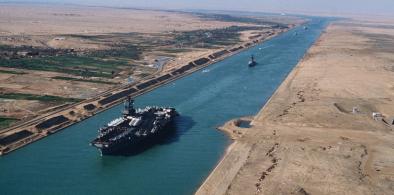
Had the Kra Canal come up, China would have taken control of it in all probability like the Hambantota Port in Sri Lanka giving it a tremendous strategic advantage, writes Lt Gen P. C. Katoch (retd) for South Asia Monitor
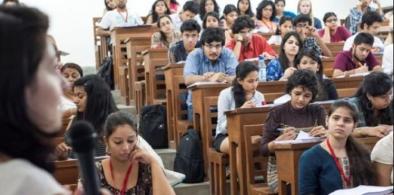
With the setting up of world-class education at low cost India will begin to attract students from neighbouring countries like Bangladesh, Maldives, Afghanistan, Nepal, and Sri Lanka for whom it is the first choice of destination when it comes to studying abroad, writes Dr. Sheenu Jain for South Asia Monitor
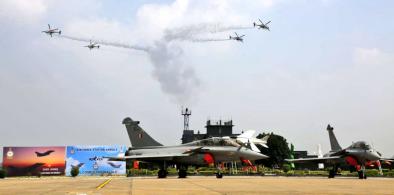
The Ambala media extravaganza ought to encourage an internal review by the Modi government about strategic communication and related signalling in matters military. Carry a big stick but talk softly is an adage that has not lost its relevance, writes C Uday Bhaskar for South Asia Monitor