

Ganga Water Treaty Renewal: A National Priority for Bangladesh, a Strategic Opportunity for India
Renewing the Ganges Water Sharing Treaty could also serve as an important confidence-building measure between Bangladesh and India. A renewed agreement would help restore mutual trust and strengthen regional cooperation over shared water resources. It would further reinforce the role of the Joint Rivers Commission (JRC), which remains a key institutional mechanism for addressing transboundary river issues.
 Jun 04, 2026
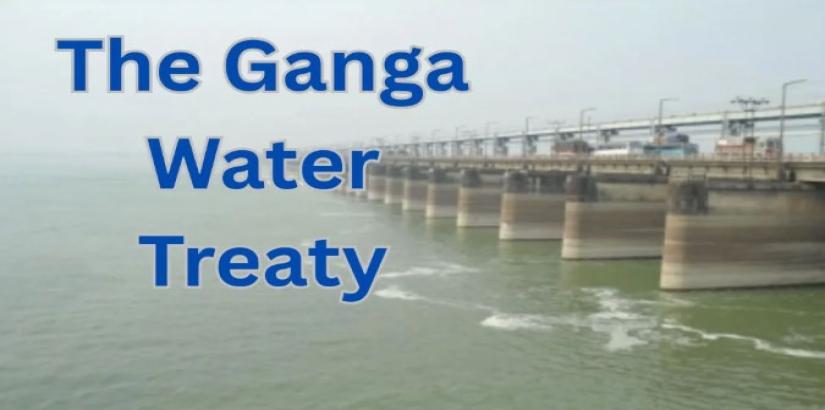
Bangladesh shares 54 transboundary rivers with India. Since its independence, the two countries have negotiated several agreements on the management of shared water resources. Among these, the Ganges Water Sharing Treaty, signed on 12 December 1996, remains one of the most significant bilateral water-sharing arrangements. While the long-discussed Teesta water-sharing agreement remains unresolved, the Ganges treaty has provided a framework for cooperation between the two neighbours for the past 30 years.
The treaty is now set to expire at the end of this year, making its renewal a matter of considerable importance for both countries.
Why the Treaty Matters
Despite recurring concerns over Bangladesh not receiving its full share of water, the 1996 Ganga Water Sharing Treaty has ensured a guaranteed allocation during the critical dry season from January to May. Under the agreement, Bangladesh receives a fixed share of water, and when flows at Farakka are low, it is guaranteed approximately 35,000 cusecs during critical periods. In certain situations, Bangladesh may receive up to 50 per cent of the total flow.
However, implementation has not always met expectations. Between 1997 and 2026, Bangladesh reportedly received less than its treaty entitlement in 94 out of 300 observation periods. During critical dry spells, the stipulated supply was not provided on 39 occasions out of 60. Meanwhile, nearly 79 rivers in Bangladesh are considered dead or dying.
Nevertheless, the treaty remains the principal mechanism through which Bangladesh secures dry-season water flows from the river Ganga. This makes its renewal crucial, particularly in light of changing hydrological conditions and growing environmental challenges.
A Growing Water Crisis
The most compelling argument for renewing the treaty lies in its importance for protecting Bangladesh's river systems and sustaining the livelihoods of millions of people, especially in the country's south-western region.
Researchers warn that north-western Bangladesh is also facing a worsening water crisis. Groundwater levels in the Rajshahi region have reportedly fallen to nearly 125 feet below the surface, leaving even deep tube wells unable to extract sufficient water. Across the Barind region, including Rajshahi, Chapainawabganj and Naogaon, canals, wetlands and ponds are drying up before winter ends, creating severe shortages of drinking water and threatening irrigation systems, including the country's largest Ganges-Kobadak Irrigation Project.
Freshwater availability has declined sharply, rainfall in the Padma Basin has decreased, and temperatures continue to rise. The crisis affecting the Padma River is also disrupting livelihoods and ecosystems. Thousands of fishermen have abandoned their traditional profession over recent decades because of declining fish stocks, while hilsa populations in the river have become increasingly scarce.
At the same time, upstream water retention at the Farakka Barrage and sudden monsoon releases continue to contribute to flooding, riverbank erosion and displacement in Bangladesh. As the Padma weakens, many connected rivers—including the Kapotaksha and other distributaries flowing toward the Sundarbans—are steadily losing flow and ecological vitality. This represents not only environmental degradation but also the gradual decline of a centuries-old river-based civilisation.
Padma Barrage Project and Water Security
Adequate water flow in the Padma River is also essential for the successful implementation of Bangladesh's proposed Padma Barrage Project. The project aims to store and regulate river water for irrigation, agriculture, fisheries and ecological restoration across the country's south-western region.
A stronger and more reliable flow in the Padma would help revive dying rivers, reduce salinity intrusion, improve groundwater recharge, and strengthen food security and livelihoods for millions of people dependent on the river system.
However, the project's success will depend significantly on the availability of sufficient water. If Bangladesh fails to secure the required flows, the viability of the ambitious project—estimated to cost around Tk 35,000 crore and scheduled for completion by June 2033—could be seriously undermined.
Strengthening Bilateral Cooperation
Renewing the Ganga Water Sharing Treaty could also serve as an important confidence-building measure between Bangladesh and India. A renewed agreement would help restore mutual trust and strengthen regional cooperation over shared water resources.
It would further reinforce the role of the Joint Rivers Commission (JRC), which remains a key institutional mechanism for addressing transboundary river issues. An updated treaty could provide a more stable framework for dialogue, conflict management and long-term cooperation on water-sharing challenges.
A Strategic Approach for Bangladesh
As a lower-riparian country, Bangladesh should pursue a balanced and proactive diplomatic strategy in negotiations over the treaty's renewal.
Dhaka may seek a long-term extension that provides greater stability, predictability and sustainability in water management. It could also advocate for a more scientific and flow-based distribution mechanism that reflects contemporary hydrological realities, particularly during the dry season.
At the same time, Bangladesh should work to strengthen its international legal position. Two important international instruments govern the management of shared watercourses: the 1992 UN Water Convention and the 1997 UN Watercourses Convention. Ratifying both conventions could enhance Bangladesh's legal and diplomatic standing in future negotiations concerning transboundary rivers and equitable water allocation.
Bangladesh should also continue promoting cooperative dialogue, data-sharing mechanisms, basin-wide management approaches and the effective functioning of the Joint Rivers Commission to maintain long-term regional water security and bilateral trust.
The renewal of the Ganga Water Sharing Treaty appears likely, although its success will depend on sustained diplomatic engagement and political commitment from both sides.
Bangladesh and India share a strategic interest in maintaining cooperation over transboundary water resources. Given these mutual interests, a negotiated extension of the treaty, potentially incorporating technical adjustments based on updated river-flow data, remains a realistic and achievable outcome.
Economic and Environmental Security
The renewal of the Ganga Water Sharing Treaty is not merely a diplomatic necessity; it is a matter of environmental sustainability, economic security and human well-being for millions of Bangladeshis.
Ensuring a fair and effective agreement with India should therefore remain a national priority. Without adequate access to freshwater resources, large parts of Bangladesh could face severe ecological degradation, threatening agriculture, livelihoods and long-term regional stability.
(The author is a foreign policy and security analyst and educator who holds a postgraduate degree from the Department of International Relations, Rajshahi University, Bangladesh. Views expressed are personal. He can be contacted at: alaminislamshuvo16@gmail.com.)





Post a Comment