

India has been dubbed by the World Health Organisation (WHO) as the most depressed country in the world. The numbers themselves are pretty frightening, writes Dr. Lovleen Malhotra for South Asia Monitor
India’s aspiration to be a leading maritime power rests not only on naval capability but on the trust of smaller regional states—from Sri Lanka to Maldives and Indonesia. These states increasingly look to New Delhi as a stabilizing presence in the Indian Ocean. If India appears unwilling to defend diplomatic norms in its own maritime neighborhood, it risks weakening the normative foundation of that leadership.
The strikes on Iran are not just another flashpoint in the Middle East. They are a reminder that the rules of the system are applied through hierarchy. Law speaks the language of equality; power writes the terms of enforcement. For smaller states, this is not a philosophical dilemma — it is a strategic one. Their sovereignty is rarely absolute. It must be guarded, bargained, and constantly recalibrated in response to forces beyond their control.
In shaping foreign policy toward India, the people of Bangladesh expect a relationship based on mutual respect, sovereignty, and fairness. Public opinion often emphasises resolving border-related tensions, preventing cross-border push-in incidents, and ensuring humane management of migration and security issues. There is also a domestic expectation for constructive dialogue regarding political matters, including discussions surrounding the status or repatriation of former Prime Minister Sheikh Hasina, if relevant under legal and diplomatic frameworks.
History offers a consistent lesson: the difficulty is rarely in beginning a conflict; it lies in defining its limits. Sovereignty can be defended. Regimes can be challenged. Alliances can be activated. Yet none of these guarantee clarity about the end state. Without a defined objective and a disciplined exit, events gather their own momentum.
India has been dubbed by the World Health Organisation (WHO) as the most depressed country in the world. The numbers themselves are pretty frightening, writes Dr. Lovleen Malhotra for South Asia Monitor
President Gotabaya Rajapaksa set a fine example of neutrality of the public service in the forthcoming general elections by instructing that no public official serving in the security forces, government service, corporations, boards, and statutory bodies should engage in political activities, writes Sugeeswara Senadhira for South Asia Monitor
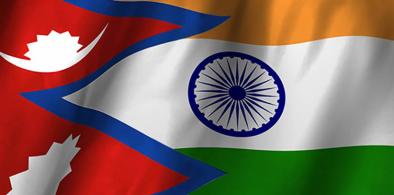
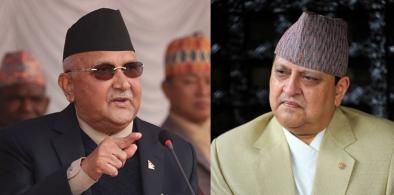
The use of anti-India sentiment is an old stratagem used by Nepalese politicians to assert their own relevance and divert attention away from the real problems facing Nepal, writes Shakti Sinha for South Asia Monitor
China’s fresh illegal claims on Bhutanese territory could lead to PLA intrusions to pressure India and orchestrate another standoff, writes Lt Gen P. C. Katoch (retd) for South Asia Monitor
India has been careful to maintain that its closer ties with the US and its Indo-Pacific partners were not directed against anyone – diplomaticspeak that they weren't meant to be anti-China, writes Arul Louis for South Asia Monitor

The declaration of truce on July 6, the 85th birthday of exiled Tibetan spiritual leader, Dalai Lama and two days after the Dharma Chakra Day on July 4, reminds of Buddha’s message that was carried by Indians to China, writes Rajendra Shende for South Asia Monitor
The data on the growth rates in Gross Domestic Product between 2015 to 2020 show that South Asia would show the maximum decline in 2020 after growing the fastest between 2015-2019 at an annual average rate of 6.1 percent as compared to 4.8 percent for Southeast Asia and 6.0 percent for East Asia, writes Partha Pratim Mitra for South Asia Monitor

So, there are two examples in front of Nepal now; one is Pakistan, and another Bangladesh, which one will they choose? writes Swadesh Roy for South Asia Monitor

Trump needs to be seen as doing something to save the economy and American jobs. H-1B, which has been a bogeyman for the protectionists and economic nationalists, is an easy target during this downturn, writes Frank Islam for South Asia Monitor

The Bangladesh government is trying its best to restore jobs abroad for the millions of migrant workers so that the large remittance flow continues, writes Dr. Mohammad Rezaul Karim for South Asia Monitor

India needs Modi to rediscover his inner ecumenical soul. To do that, Modi must become the leading proponent of and advocate for a “unifying nationalism,” writes Tom de Boor and Ed Crego for South Asia Monitor

We are approaching the 65th anniversary of the Bandung Principles this year and 60th anniversary of the NAM in 2021. There is a renewed call in the NAM communique for the revitalization and strengthening of NAM, writes Sayantan Bandyopadhyay for South Asia Monitor

This is a defining moment in the history of India and its actions could well dictate its standing in the world, writes Lt Gen PR Kumar (retd) for South Asia Monitor
Can orchestrated symbolism of smashing Chinese TVs create a mass movement when no domestic alternatives are available to our extremely price-sensitive consumers? writes Brig Deepak Sethi (retd) for South Asia Monitor
The February 29, 2020 deal between the US and the Taliban could pave the way for a peace that Afghans urgently pursue. But, then again there are huge risks for women’s rights in this process, as the Taliban remain deeply misogynistic, writes Dr. Sanchita Bhattacharya for South Asia Monitor