
Building collapse in Delhi’s Satya Niketan

India’s Housing Challenge: Bridging the Gap Between Macro Development and Basic Needs

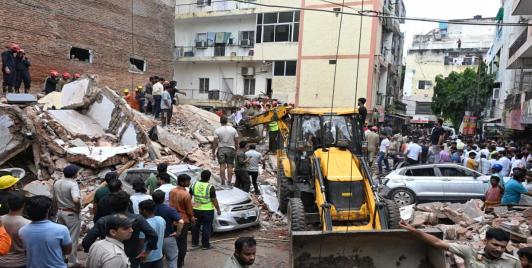
Aggressive migration of youth and workers to metro cities in search of better opportunities is common across the region. And so is the response deficit by local and central governments in providing them with basic, dignified lifestyles. The time has come for the elected representatives to think differently and narrow the gap between government schemes and results on the ground. 

Digital Public Infrastructure in South Asia: A Bridge or a New Divide?

These achievements have positioned India as a digital governance exporter. Singapore, Nepal, Bhutan, France, Mauritius, Sri Lanka, and the United Arab Emirates have already established UPI connectivity, and more than 50 countries have expressed interest in replicating aspects of India Stack’s open digital infrastructure. 

Who Governs Islamabad? A Capital Without its Governance

This raises the issue not whether Islamabad has surpassed its outmoded and fragmented administrative structure but whether governance would keep pace with its growth. Islamabad has to evolve from being administered as a capital city into being governed as a metropolis.
 

Whither Constitutional Equality and Laws Against Discrimination? A Manipuri Musician's Murder Raises Governance Questions Anew

The inhabitants of Manipur have had long-standing experiences of living insecurely in their own homeland, even as migrants from the Northeast have encountered prejudice in metropolitan India....India has produced a paradox where communities that belong formally to India can also face exclusion from the social mainstream.

More on Governance, Public Policy and Law

India In The Crosshairs of State-Sponsored Terrorism: Is The Delhi Bombing A Wake-Up Call?

Terrorists are developing new types of explosives experimenting with commercially available products like fertilizer and chemicals, coupling them with radioactive like material to increase destructive power. Al Qaeda has devised ways to conceal explosives inside the body that can avoid detection by sophisticated scanners, in addition to undetectable liquid explosives that can be soaked into clothing and ignited when dry. 

The Survival Games of Pakistani Generals And Politicians

Pakistan has resorted to covert drone cooperation with the US to punish Kabul and reassert leverage in Afghanistan but is facing resistance – paying for fencing and barricading the Durand Line, which Afghans don’t recognize since the line divides Pashtuns on both sides. To top this, Pakistan is pushing Afghans and their families back into Afghanistan in the harsh winters.

Is The Indian Bureaucratic System Beyond Reform?

The system protects many, but scandals emerge at regular intervals, sending periodic shocks that reveal to us that corruption is endemic in the Indian system and thrives in the bureaucracy. The disease is complex, given that it comes in various forms and flavours and is fuelled by patronage politics. Bribery is but one part of a larger canvas of corrupt practices

India-Russia Relations: What the West Does Not Understand

The mutual respect and empathy developed between Russia and India over centuries are rooted in historical traditions. Neither pursued policies of exploiting other people’s resources. Both have believed in respecting civilizational diversity. This orientation continues today in the context of the BRICS countries of which Russia and India are foundational members.

‘Just Transition’ Process in India’s Coal Industry: Need for a Greater Role for Workers

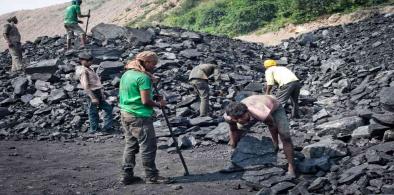
Importantly, coal reserves are concentrated in economically disadvantaged states, where people rely directly on mining jobs and indirectly on linked activities. Thus, while the closure of coal-based assets is central to a long-term transition, it will be highly disruptive for both the sector and local communities if the transition is not implemented with inclusive stakeholder participation.

Cloud Seeding: Unsure Science, Political Gimmickry

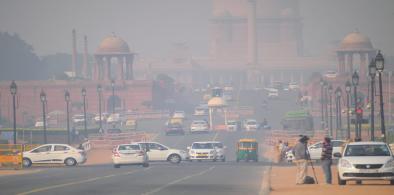
The most important thing to do in cities like Delhi is to plant more trees. There should be a major campaign to plant trees. Each One Plant One could be a good slogan for such a campaign. A green and healthy city normally has an average of > 35% area of city covered by trees and forest. Indian cities have < 10-15% tree cover. This single act of planting more trees in cities can reduce air pollution substantially 

Indian Foreign Policy: Rooted In Moral Conviction In Strategic Autonomy And Multilateralism

India, as a founding member of the NAM and an active participant in the SCO, continues to uphold the values of equality, liberty, justice, and non-violence in international relations. The recent SCO Summit (Tianjin, 2025) and improving India–US ties — including President Trump’s conciliatory gestures on trade — reflect India’s growing confidence and self-reliance in global diplomacy.

Is Globalization Flawed, Or Is It Its Implementation?

Research shows that globalization boosts economies, improves job opportunities, reduces conflict, and increases trade. However, it also widens income gaps and harms the environment. These challenges can be managed through effective institutions and public policies focused on education, health, and sustainability—not by rejecting globalization.

World Needed A Rare ‘Earth Deal’, Not Another Rare-Earth Deal!

The world needed the two largest emitters to show courage in Busan — especially when one of them, China, has already shown how ecology and economics can go hand in hand. Instead, they chose commerce over conscience.And the message to developing nations is painfully clear: When climate ambition competes with commercial bargaining — climate loses.

Taliban's Patriarchy And The Hindutva One: What Is Similar And What Is Different

Every form of politics that cloaks itself in religion tends to preserve feudal values and promote hostility toward the “other.” Even Christian fundamentalism reinforces patriarchal norms. Nazi Germany, too, confined women to the three Ks—Kirche, Küche, Kinder (Church, Kitchen, Children). As we condemn patriarchy and the denial of human rights, we must recognize that all sectarian nationalisms—those rooted in religious or racial superiority—share these regressive traits.

Rethinking Affirmative Action in India’s Universities: Needed Structural Reform, Not Symbolic Arithmetic

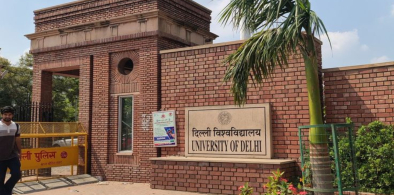
Reservation in education has achieved moral legitimacy and expanded access, but it has also created new inequalities and stagnation. Its future lies not in expansion or abolition, but in redefinition. Affirmative action must evolve from symbolic arithmetic to structural reform, grounded in data and fairness.

Are Corporates Driving India’s Ladakh Policy?

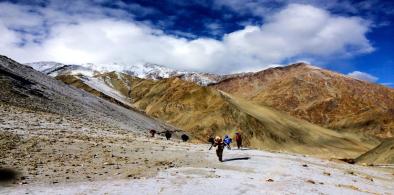
In Ladakh, it is not just 150 sq km of pasture land allotted to corporates for solar power projects, but also the mining on land of corporate choosing. Why bother about the ecology, environment and disasters? 

UAE Bank's Acquisition of Indian Bank: A New Paradigm In Growing UAE–India Cooperation

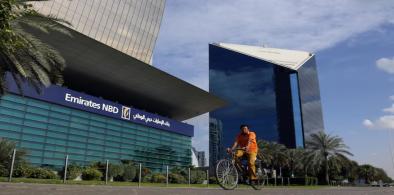
If executed smoothly, this transaction will serve as a template for future cross-border collaborations, especially within the framework of CEPA and the broader India–UAE economic corridor. It demonstrates that when capital, strategy, advisory prowess and bilateral ambition converge, remarkable outcomes follow. 

Afghanistan-Pakistan Truce And The Regional Conundrum

With nine terrorist camps destroyed by India in Op Sindoor, the Lashkar-e-Taiba (LeT) and Jaish-e-Mohammed (JeM) camps in Pakistan are being relocated deeper inside – in the Khyber Pakhtunkhwa region. This could bring them in conflict with the TTP, unless they decide to join hands. Notably, Pakistan has formed an alliance between the LeT and the Islamic State Khorasan Province (ISKP or ISIS-K)

2025 Economics Nobel Prize: Can India Offer Its Own Development Model?

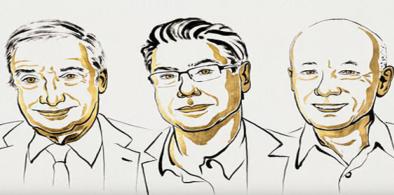
A possible model based on Spirituality + Technology = Sustainability and Happiness may help in reducing greed, provide equitable distribution of resources and provide a new paradigm of development not only for India but for mankind. Once the mighty engine of innovation starts in India then the Darwinian evolution of the disruptive model of Phillipe Aghion and Peter Howitt will follow.