Colombo Port City

China’s Criminal Footprint in Sri Lanka has Regional Security Implications

When a Chinese company won the contract to establish hybrid wind and solar energy projects on three islands off the northern Jaffna peninsula—just 45 km from Rameswaram in Tamil Nadu—the security implications extended far beyond economics. Against this backdrop, India’s concerns are entirely justifiable. Sri Lanka faces a pressing question: how will the nation confront the infiltration of Chinese global criminal networks? Since Mahinda Rajapaksa’s tenure, Chinese presence in Colombo has steadily increased, with Sri Lanka positioned as a partner state in Beijing’s Belt and Road Initiative.

Wolf World or a Multipolar World? How Major Powers Exercise Power Will Determine Emerging International Order

The growing role of middle powers adds another layer of complexity. Yet the term itself remains imprecise. Not every country outside the United States and China qualifies as a middle power, and many reject the label altogether. India, for example, increasingly sees itself as a leading power pursuing strategic autonomy rather than as a middle power seeking alignment with one bloc or another.

Is Northeast India's Permit System Inhibiting India-Japan Paradiplomacy? Colonial-Era System may be Stumbling Block to Subnational Exchanges

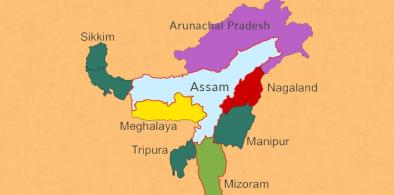
If India and Japan genuinely envision Northeast India as the gateway connecting South Asia with the Bay of Bengal and the Indo-Pacific, then the next chapter of the partnership cannot remain confined to New Delhi and Tokyo. It must also be written in Guwahati, Shillong, Aizawl, Imphal, Agartala, Kohima, Gangtok and Itanagar 

Bangladesh's Strategic Balancing and India's Neighbourhood Challenge: China Will Consolidate Influence if New Delhi Fails to Deliver

In several neighbouring countries, including Bangladesh, Sri Lanka and Nepal, China has demonstrated an ability to move from agreements to implementation far more rapidly than many competitors. India, despite enjoying unmatched geographic and cultural advantages, has often struggled with delays 

More on Geopolitics, Security and Strategic Affairs

Pakistan's Chinese bugbear: Growing attacks pose a new security challenge for Islamabad

The Chinese presence in Pakistan, with or outside of the CPEC, and the TTP's defiance, although not directly related, do pose growing security challenges to Pakistan and China, especially when the two want to combine forces to extend the CPEC to Afghanistan.

RSS leader's outreach to Muslims: Reconciliation or cooption?

Today the international image of India, courtesy the RSS-BJP, is a Hindu supremacist one where minorities are insecure, where identity issues are getting precedence over the issues of livelihood. RSS is the fountainhead of this politics; it needs introspection if it is serious about the process of dialogue and reconciliation.

India and Sri Lanka need to circumvent irritants, focus on diversification of ties

India could reset its approach by engaging with Sri Lanka as a country in the Indo-Pacific region and not just as a neighbour.

India ‘matters more', seeks to be the 'bridge', the 'voice' for the developing world; generous recognition for India's actions

For India, global governance reform starts with Security Council reforms and here New Delhi got support across blocs at the General Assembly meeting from both the US and Russia, as well as other countries. It is the only country to get the backing of both Washington and Moscow.

Bangladesh should tread cautiously in resolving growing border tensions with Myanmar, step up diplomacy

In a broadcast on Wednesday, Bangladesh Army Chief General S M Shafiuddin Ahmed stated that his troops were prepared to respond against Myanmarese provocations if necessary.

In the absence of water-sharing deal, India should help Bangladesh with Teesta water management

Building a reservoir on the Teesta will help Bangladesh create a climate-resilient infrastructure which will be useful in better managing the common river water.

Bangladesh making steady progress in ensuring labor rights

Functioning trade unions, decreasing number of child labourers and the introduction of labour courts and foundations are demonstrations of the extraordinary achievements of Bangladesh in ensuring labour rights.

Foreign policy in a divided world: Will India rise to the occasion?

Today, several other countries are gaining greater respect and acceptability in the comity of nations. India, certainly, is one of them. What is perhaps likely to happen is that global leadership would be a shared responsibility.

India badly needs a refugee policy: Harsh treatment of Rohingya goes against international principles

For a country that embraces the principle of Vasudhaiva Kutumbakam (“The World is One Family”), and is often referred to by Prime Minister Narendra Modi as Vishwaguru (“Teacher of the World”), the discriminatory and hostile treatment meted out to the Rohingya is not only against its ethos but also makes for bad optics on the world stage. 

From Kingsway to Kartavya Path: India comes of age

Resurgent and dynamic, a young nation, old in history and culture is finally coming to terms with the painful legacy of slavery, colonialism and the pain of partition

Economic integration of South Asia: India must seize the day

India may consider quickly extending lines of credit to Sri Lanka and Bangladesh on softer terms than IMF loans as we have enough forex reserves at present to cope with their small needs to prevent economic collapse. This will result in consolidation of South Asian economies around the Indian one and allow us as Big Brother to lift our smaller siblings out of trouble

India and Bangladesh: Taking neighbourhood diplomacy to the next level

India's provision of tariff-free transit facilities to Bangladesh for exports to Nepal and Bhutan is considered a major step in bilateral cooperation. Also, since India can use Chittagong seaport, not only the "Seven Sisters" of Northeast India will benefit from it, but Dhaka will also benefit

As Imran Khan duels the army, political turmoil, floods, inflation paint a grim picture for Pakistan

Political instability is a perennial phenomenon in Pakistan but the present one appears to be more damaging as it has occurred at a time when the country is also experiencing one of the worst economic crises in decades

Chinese disengagement in Ladakh is a small lollipop to India!

It is quite possible that the Indian side conveyed to Beijing that with China’s rigid stance on the border standoff, Prime Minister Narendra Modi may consider it difficult to attend the summit, and more importantly, a one-to-one meeting between PM Modi and Chinese President Xi Jinping may not be possible unless Beijing shows some progress on further disengagement

Sheikh Hasina’s India visit will take close India-Bangladesh ties to newer heights

Cooperation during the visit extended to all fields, including trade and commerce, power and energy, transport and connectivity, science and technology, rivers, and maritime affairs