Colombo Port City

China’s Criminal Footprint in Sri Lanka has Regional Security Implications

When a Chinese company won the contract to establish hybrid wind and solar energy projects on three islands off the northern Jaffna peninsula—just 45 km from Rameswaram in Tamil Nadu—the security implications extended far beyond economics. Against this backdrop, India’s concerns are entirely justifiable. Sri Lanka faces a pressing question: how will the nation confront the infiltration of Chinese global criminal networks? Since Mahinda Rajapaksa’s tenure, Chinese presence in Colombo has steadily increased, with Sri Lanka positioned as a partner state in Beijing’s Belt and Road Initiative.

Wolf World or a Multipolar World? How Major Powers Exercise Power Will Determine Emerging International Order

The growing role of middle powers adds another layer of complexity. Yet the term itself remains imprecise. Not every country outside the United States and China qualifies as a middle power, and many reject the label altogether. India, for example, increasingly sees itself as a leading power pursuing strategic autonomy rather than as a middle power seeking alignment with one bloc or another.

Is Northeast India's Permit System Inhibiting India-Japan Paradiplomacy? Colonial-Era System may be Stumbling Block to Subnational Exchanges

If India and Japan genuinely envision Northeast India as the gateway connecting South Asia with the Bay of Bengal and the Indo-Pacific, then the next chapter of the partnership cannot remain confined to New Delhi and Tokyo. It must also be written in Guwahati, Shillong, Aizawl, Imphal, Agartala, Kohima, Gangtok and Itanagar 

Bangladesh's Strategic Balancing and India's Neighbourhood Challenge: China Will Consolidate Influence if New Delhi Fails to Deliver

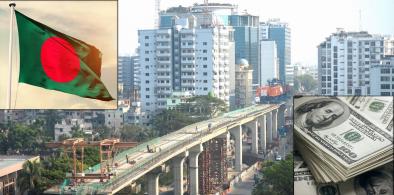
In several neighbouring countries, including Bangladesh, Sri Lanka and Nepal, China has demonstrated an ability to move from agreements to implementation far more rapidly than many competitors. India, despite enjoying unmatched geographic and cultural advantages, has often struggled with delays 

More on Geopolitics, Security and Strategic Affairs

Woven dry-grass mats across South Asia are an expression of common culture

Transcending narrow geographical borders, handicrafts often make their own presence felt as a representation of humanity, connecting communities. One such important handicraft item is the dry grass mats of the region of South Asia

Pakistan PM’s China visit will reinforce the anti-India axis

Indian policymakers should be ready for the next phase of synchronized China-Pakistan actions to undermine India.

South Asia in the Developing Asia perspective: Need to balance external borrowings and growth impulses

The situation however has been somewhat different in certain countries of South Asia which have raised resources through external borrowings despite having current account deficits - Afghanistan, Maldives, Bhutan, Nepal Pakistan, and Sri Lanka.  Caution needs to be exercised by them in resorting to such borrowings.

Pakistan: Another winter of discontent

The salvation for Pakistan’s body politic, wherein democracy is aspired by those who are not democrats themselves, may remain unfortunately with the men in uniform.

Rohingya crisis in Bangladesh: No light at the end of the return tunnel

There is no light at the end of the repatriation tunnel; one must look at other more viable and pragmatic scenarios rather than transporting almost a million people at gunpoint to Rakhine

Struggles for democracy and human rights in South Asia: Taking forward Asma Jahangir's legacy

From religious bigotry in India targeting Muslims, to Sri Lanka’s economic woes and food insecurity, to the plight of the Afghans, particularly women, discussions at the conference took up these and other issues like the impact of climate change, press freedom and creeping censorship, to transgender rights, enforced disappearances, and arbitrary detentions.

Celebrating India's festival diversity: Festivals can enhance income, employment, mutual understanding

India annually celebrated major festival days of all faiths, but these festivities are largely confined to their believers. If those communities, however, were to become more open to secular participation on the principle that if faiths are for believers, associated festivities are for all to enjoy.

Can Indian and Pakistani leaders rise above politics to build bridges through cricket?

Indian and Pakistani politicians can leverage the sport to resolve many outstanding issues between the neighbouring countries, provided there is an honest will on either side and the intentions are well-meaning. And the bilateral series can resume only if a Vajpayee-Musharraf-like initiative is taken by those occupying the highest positions in the two countries.

Lessons from Sri Lanka: Need for increased governmental accountability and transparency

South Asia must develop a common framework to hold politicians accountable and increase transparency in government dealings. Regional collaboration can reduce vulnerability.

Myanmar's suspected nuclear ambitions will pose a grave threat to region

If Myanmar acquires a nuclear capability, it would be a disaster for South and Southeast Asia. A nuclear Myanmar is not in India, China, or other neighbouring countries' interests.  Recent border tensions between Myanmar and Bangladesh are the best example to understand the gravity of the situation. 

The evolving terror funding matrix: Pakistan, ISI and D Company and its global criminal web

Since Dawood moved to Karachi, the D Company syndicate has expanded incredulously. He is said to have invested over USD $28 billion in assets in Karachi alone and has diversified his businesses in several countries such as India, Morocco, the UK, UAE, Switzerland, Hong Kong, Thailand, Sri Lanka, Italy and France.

An agenda for BBIN countries: An idea whose time has come

The demonstrable success of BBIN cooperation may draw Sri Lanka and Maldives also into its ambit in the near future.  India's government and corporate sectors must work together to make BBIN cooperation a success to mutual advantage.

Red flags in India's Northeast: Is Act East Policy losing focus?

The question also arises – is  Delhi losing focus and getting diverted from the AEP by QUAD, Chinese influence on RCEP, and so on. If so then Delhi must decentralise the AEP to make it effective

BJP seeks to etch new lines on the political map of Jammu & Kashmir: Will this end its electoral drought in the Valley?

This doesn’t erase the irrefutable fact that a community that used to align with Kashmiri parties until now was shifting its preferences, the impact of which is bound to be felt in the electoral battle in the forthcoming assembly polls. If the BJP succeeds in reaping the electoral benefits in Jammu & Kashmir, it will have much more to tell the nation ahead of the 2024 polls in the country.

Bangladesh's Rohingya camps are growing security and environmental hazard

Activities of militant organizations have developed around the Rohingya camps in Cox's Bazar. A web of militancy is spreading in the camps with the money coming from six countries including the Middle East and Pakistan.