Osama bin Laden's Compound

Never Forget Abbottabad: The Other Chapter of 9/11 Should not Fall Victim to Selective Memory

Abbottabad itself is symbolic. Just 30 miles north of Islamabad, along the historic Karakoram Highway, it is home to Pakistan’s premier military academy. For bin Laden to live there undetected is not simply a mystery—it is a reminder of the uncomfortable realities of counterterrorism

India’s Push-Ins Could Push Bangladesh Towards China

Amid strategic challenges from Beijing in Bangladesh, New Delhi cannot separate border management with foreign policy. New Delhi should hold high-level dialogue with Dhaka and develop a cooperative roadmap to facilitate the identification and repatriation of undocumented migrants from India. 

Growing Sri Lanka-India Defence Cooperation Throws Up Air-Defence Questions

The visit therefore should not be viewed simply as another bilateral defence engagement. It represents an attempt by New Delhi to institutionalise India's security relationship with Sri Lanka, while simultaneously reassuring Colombo that India's expanding security interests need not threaten Sri Lankan sovereignty.

Belgium and India: Building a Strategic Partnership Beyond Economics and Trade

Belgium views India as an opportunity to reduce its economic dependence on China and limit vulnerability to developments in the United States. India offers scale, growth, industrial capacity and ambition, while Belgium offers technology, specialised expertise, logistics and access to the European market.

More on Geopolitics, Security and Strategic Affairs

With Sheikh Hasina's Death Sentence, Bangladesh Entering Dangerous Waters

The Yunus regime insists that general elections will be held in February 2026. Few serious analysts believe this promise. There is a growing belief that Yunus, with backing from Pakistan, Turkey, segments of the EU, and parts of the US establishment, plans to remain in power indefinitely. Barring secular and leftist parties from participating is part of this plan. The election timetable is a smokescreen

Delhi Terror Attack: India Needs To Foster Truly Inclusive National Identity To Bridge Security Gap

When minorities feel alienated or discriminated against, their distrust of state institutions grows, undermining the social fabric essential for national security. Strengthening this fabric involves upholding constitutional equality and ensuring no community feels marginalised. By fully integrating minorities as valued members of the national community, India can diminish the impact of radical ideologies and foster a genuinely resilient society united against terror threats.

India-Bhutan Relationship Offers A Constructive Model For South Asia And A Peaceful Himalayan Region

Beyond India–Bhutan relations, the visit conveys a wider message to South Asia: cooperation grounded in respect, development, and stability remains essential in an uncertain global environment. As the region evolves, India appears to recognize the importance of maintaining strong partnerships without pressuring smaller neighbors or escalating strategic competition.  

Red Fort Blast: India Facing A New Form Of Jihad?

The involvement of four doctors, one of whom allegedly executed the Red Fort blast, indicates a model that blends 'inspired' radicalisation with limited external facilitation. Interactions with certain outfits, Kashmiri terror commanders, and external handlers—if confirmed—point to an infrastructure that encourages attacks while maintaining plausible deniability.

The Nuclear Reckoning: Moment Of Awakening For India

It is time for India, along with like-minded nations across Asia, Africa, and Latin America, to articulate a shared agenda of non-alignment 2.0, not as a posture of neutrality but as a strategy of autonomy. The original Non-Aligned Movement (NAM) emerged from the Cold War’s bipolar tension; its modern counterpart must respond to multipolar volatility. 

Endangered Indigenous Languages of South Asia: With Dominant Languages Replacing Mother Tongue, Are They Doomed To Die?

The world over, as is evident from the Atlas of endangered languages, there is a thrust of the dominant languages taking a precedence and most of the endangered languages are likely to disappear by 2100. Soon, possibly in the near future, the grand and great grand-children of the present generation may not be able to tell the story of their own mother tongue. Some of these languages will be lost forever and will only be limited to the pages of gazetteers and history books.

Demographic Changes And National Identity: Fragmented Identity Groups Risk Societal Divisions

India provides valuable lessons. Despite its complex religious, linguistic, and ethnic diversity, India has preserved unity through a robust constitutional framework, civic nationalism, and legal consistency. Even contentious debates from population balance to cultural identity are ultimately rooted in democratic institutions. Western democracies can learn from this: pluralism prospers only when supported by strong governance and well-defined civic responsibilities.

The Uncertain And Questionable Road to Democracy in Bangladesh

After an uprising in 2024, Bangladesh is currently walking on the path to its national election in early 2026. If the ousted Awami League and its allies remain ineligible to participate in the next parliamentary election, ultimately, the central question remains: how will their huge number of supporters exercise their right to vote? Excluding a major political ideology from the electoral process risks making the election less inclusive and could generate new tensions

Climate Credit Markets in South Asia: The Next Frontier of Rural Finance

South Asia’s climate finance story reflects a familiar paradox: abundant potential constrained by institutional inertia. Carbon credit can reprice the region’s natural capital, transforming rural landscapes into financial assets. Yet credibility, governance, and inclusivity will define their success. For now, Morgan Stanley observes “ For millions of farmers across South Asia, that credibility is the difference between surviving climate volatility and profiting from combating it.

India’s AI Journey Is Redefining Digital Leadership

India’s goal is clear: to be among the few nations that do not merely consume technology but create and govern it. With its scale, talent, and democratic legitimacy, India is poised to emerge as a true digital superpower—one that shapes, not follows, the rules of the multipolar world.

Wrestling with Giants: India’s Strategic Manoeuvres In A Tri-Polar World

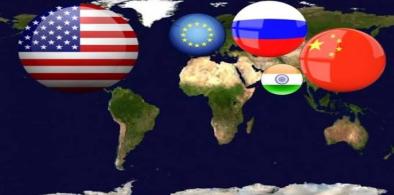
India’s position in the US-Russia-China tri-polar wrestling arena in 2025 is that of a clever, determined, and autonomous contender. It refuses to be pinned by Beijing’s might, Washington’s transactional approach, or Moscow’s nostalgia. Every move, whether economic, diplomatic, or military, is carefully calculated to preserve its space, grow its influence, and keep the balance constantly shifting. 

From Uprising To Uncertainty: Why The Bangladesh Transition Risks Losing Public Confidence

Muhammad Yunus has not yet successfully connected with the broader public or the key grassroots actors of the July movement, creating a perceptible disconnect. Without national consensus, holding peaceful and participatory elections remains difficult. Excluding the deposed ruling party from upcoming elections could undermine political inclusivity, depress voter turnout, and trigger unrest.

Mastering technology Will Not Only Win Wars, But Define Peace

The wars of the future will not be decided solely on land, sea, or air. They will be fought in code, space, and circuits. Nations that dominate these domains will command not just battlefields but geopolitics itself. The contest will be for speed of learning, adapting, and deploying innovation.

Narco-jihad: Pakistan’s ISI and Dawood Ibrahim threaten global security

Left unchecked, the narco-militant networks that flourish in shadow will continue to undermine social stability across South Asia and beyond. The choice, for policymakers in Washington, New Delhi, Dhaka and capitals across Europe, is to treat the problem as a criminal, financial and geopolitical threat - and respond with the seriousness it demands.

Bamiyan Buddhas Are A Test And Opportunity For The Taliban Now

The Taliban regime has started building a tourism complex and rebuilding a historic bazaar near the destroyed Bamiyan Buddhas without UNESCO consultations. Archaeological experts have warned that this could cause permanent damage to the UNESCO World Heritage Site. The damaged statues - where only the niches remain - are now belatedly being seen as a lucrative source of revenue for the financially crunched Taliban regime.