

Representational Photo

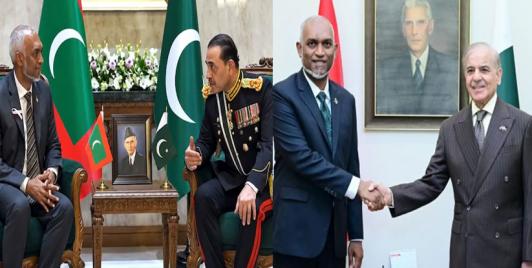
Muizzu’s Pakistan Visit: From Diplomatic Promises to Strategic Outcomes

The Maldives, like other small states, has an interest in diversifying its international partnerships, widening its economic choices and retaining room for diplomatic manoeuvre. Engagement with Pakistan does not necessarily come at India's expense

Lessons from Dhaka: Power, Policy Choices and the Existential Dilemma Facing Small States

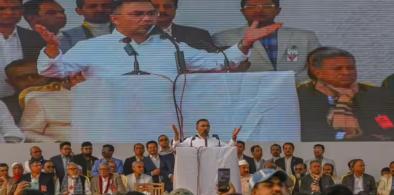
Three days of dialogue, debate, and engagement in Dhaka reinforced a sobering reality: despite ongoing discussions about multipolarity, middle powers, and strategic autonomy, great powers continue to shape the choices available to smaller states.

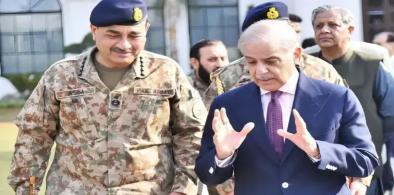
From Barracks to Embassies: Munir’s Expanding Military Footprint in Pakistan's Foreign Policy

It would be simplistic to assume that every retired general appointed as an ambassador is an instrument of Asim Munir's influence. It would be equally complacent to dismiss the wider institutional implications of placing so many former military officers in diplomatic positions across several regions.    

China's Strategy of Persistent Tension: Advancing Without Crossing the Threshold of War

Arunachal Pradesh presents a particularly important dimension of the problem. China claims the northeast Indian state, refers to it as Zangnan, or South Tibet, and periodically challenges India's sovereignty through statements and the assignment of Chinese names to places within the state.

More on Geopolitics, Security and Strategic Affairs

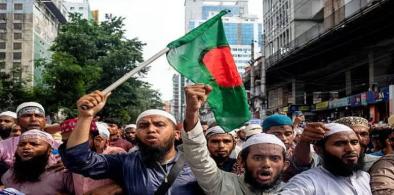
Bangladesh: Where Blasphemy Is A Trigger To Weaponize Religion

The ruling governments in Bangladesh often seek to use these laws in various ways. Critical expression, especially criticism of the government or raising questions about religion, can be met with swift arrest and harassment through laws such as the Digital Security Act (DSA). In addition, allegations of religious blasphemy are used to pressure and marginalize political opponents, opposition parties, and dissenting voices. Religious extremist groups use these laws to promote their ideology or to intimidate people of different faiths or those who hold non-religious views.


Is Washington’s Move The Spark For A New Age Of Regional Hegemony?

The question now is whether Washington’s ambitions end with Venezuela—or whether this marks a broader return to Cold War-style regional dominance. History suggests that when smaller states fail to act as “good neighbors,” interventions by great powers become inevitable. India’s interventions under Indira Gandhi illustrate this dynamic in South Asia. As Henry Kissinger observed, “to create order, it is necessary to create it within regions first and then relate them to each other.”   

Is Migration Poised To Become A Global Flashpoint?

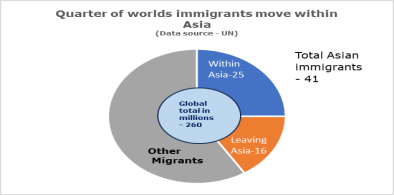
Contrary to popular belief, migration is not primarily a one-way movement from poor countries to rich ones. Nearly half of all migration from the Global South occurs between developing countries themselves, rather than towards the affluent Global North. Indeed, South-South migration, often taking place across contiguous borders with porous controls, is believed to account for nearly 80% of such flows.

Gender Diplomacy: A New Peace Project For India‑Pakistan And South Asia

Aside from digital platforms for women-owned business, another concrete example could be to foster women-led marketplaces. Located along borders between the two countries, these could be designed to be safe, offering clean facilities and childcare. Stable and lower cost customs and visa processes could help restore trade relations and the trust of local communities affected by conflict. 

With BRICS Presidency, India Will Have To Walk A Fine Balance

There is a difference between a BRICS common currency and de-dollarisation. While trade in local currencies is a compulsion due to sanctions and other changes in the global economic landscape, a BRICS common currency is not feasible due to economic and geopolitical reasons. India’s presidency of BRICS will be important, since it will have to walk a fine balance. While voicing the concerns of the Global South it would not want to get caught in a zero-sum geopolitical wrangling.

Pakistan in 2025: Deep State Grip

The year 2025 marked a mix of turbulent times for Pakistan with weakening yet stabilising economy, fractured, fragile polity and civil society, rise in enforced disappearances and heightened militancy. It also saw diplomatic initiatives with Asian states and resurgence of engagement with the United States. Overall, the Deep State with Pakistani Army leadership at the core continues to dominate the governance structures and institutions, further impinging on the democratic credentials of the country.

Lessons from the Venezuela Takeover: When Laws Are Irrelevant Without Enforcing Mechanism

It is clear that in those 'virtual' negotiations, the participating sides were the US, Russia and China. The EU, including Denmark, the country whose territory Greenland is, was not. India neither. The old rule that if you are not part of the negotiations, you are likely a subject to the decisions, holds true. Possible future steps would include annexation of Greenland, as indicated by Trump on multiple occasions, including also in interviews after the Venezuela takeover. This would achieve another objective – to weaken the EU further, as no EU state will likely challenge the US if the annexation happens.

Do Not Allow Politics To Colonise Our Shared Games

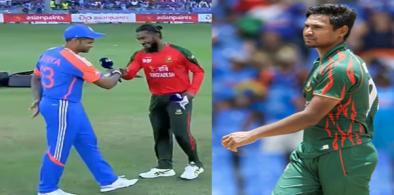
When cricket is weaponized against Bangladesh while India’s own internal challenges are ignored, the message is unmistakable: power, not principle, is guiding moral judgment. This undermines the very spirit of Neighborhood First, which depends on trust and even‑handedness. Over time, such practices erode confidence, deepen asymmetry, and weaken the foundations of cooperation.

South Asia's Youth Bulge Risks Becoming Long-Term Liability

South Asia’s unemployment challenge is unfolding differently across different regional countries, yet driven by almost similar structural failures. India’s scale magnifies the risks of jobless growth; Pakistan’s instability deepens youth disillusionment; Sri Lanka’s educated unemployment reflects long-standing policy neglect; and Bangladesh’s export-led success masks limited employment diversification. Unless these states move beyond fragmented schemes and adopt employment-centred growth, skill-linked education, and gender-inclusive labour reforms, the region’s youthful population will shift from being a potential dividend to a shared strategic vulnerability.

When Christmas Becomes a Test of India’s Pluralism

Uttar Pradesh, the country's most populous state, offers an even starker illustration of how symbolic minority marginalisation is being normalised. This year, the BJP government of Chief Minister Yogi Adityanath directed schools to remain open on December 25 and mandated programmes commemorating former prime minister Atal Bihari Vajpayee’s birth anniversary instead of observing Christmas as a holiday. In isolation, such decisions may appear administratively defensible. Taken together, they signal a deeper shift in which civic space for religious minorities is steadily shrinking.

Care Diplomacy: Redefining India-Israel Relations Beyond Defence And Technology

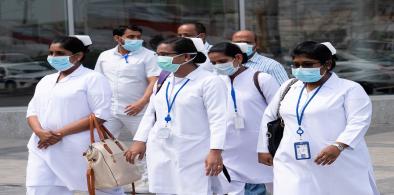
For example, the recent recruitment drive for thousands of home-based caregiver positions in Israel, promoted by the Labour, Employment, Skill Development and Entrepreneurship Department of the Mizoram state government in northeastern India, was a striking example of institutionalised labour diplomacy. The advertisement clearly outlined the eligibility criteria, certification requirements and employment terms.  Such initiatives would prove essential for state accountability and worker protection in the international political and legal arena.

Assault On The Aravallis: Development Models India Must Eschew

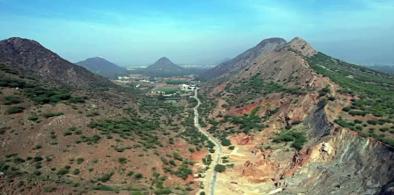
India today sits at the bottom of the rank of countries in the Environmental Performance Index (EPI), which combines a range of indicators like climate change mitigation, air pollution, waste management, sustainability of fisheries and agriculture, deforestation, and biodiversity protection. The EPI is produced by centres working under Yale and Columbia universities. The 2024 listing showed India at rank 176 out of 180, just ahead of Pakistan (rank 179) but behind Bangladesh (175), China (156), and Sri Lanka (134).

India’s Foreign Policy In 2025; Shrinking Options And Difficult Choices

Overall, 2025 was a tough year for India’s foreign policy with choices being curtailed and by the end of the year India’s foreign policy once again appears to be driven more by constraints, opportunities and choices.

AI For Early Warning On Climate Disasters In South Asia

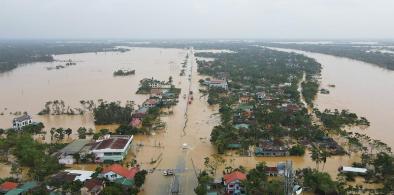
Through vulnerability analytics, AI can highlight populations more likely to struggle with recovery, including plantation communities, low-income families, and settlements located on flood plains. India has already allocated a US$450 million fund for Sri Lanka’s post-cyclone recovery. The joint committee established by India and Sri Lanka to manage this fund will be able to implement AI-based disaster warning systems under Sri Lanka’s digitalisation programme, which is being supported by India.

Tarique Rahman’s Return: A Narrow Window for Dhaka–Delhi Re-Engagement

For now, Rahman’s return is a consequential fact: it reshapes domestic dynamics and reframes the bilateral conversation at a critical moment in Bangladesh’s political calendar. If New Delhi reciprocates with measured outreach, this moment can be converted into durable, institutionalized cooperation.

Newsletter Subscription

The subscriber's email address.
Stay informed - subscribe to our newsletter.